What Is a Standard Operating Procedure and Why Is It Essential in the Philippines?
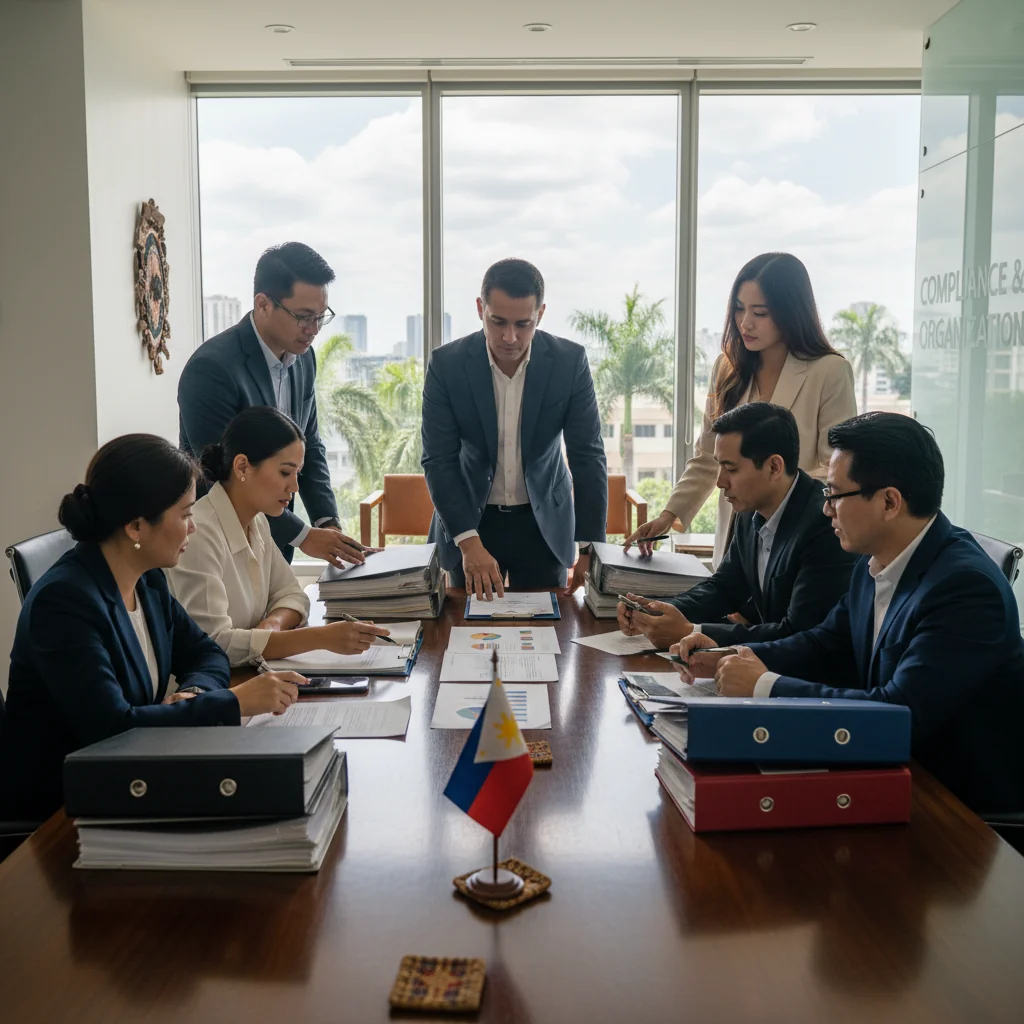
A Standard Operating Procedure (SOP) is a documented set of step-by-step instructions designed to help organizations consistently perform routine operations, ensuring efficiency and quality in daily tasks.
In businesses across the Philippines, SOPs play a crucial role by standardizing processes, which minimizes errors, enhances employee training, and boosts overall productivity in a competitive market.
SOPs ensure compliance with local regulations by aligning operations with Philippine laws, such as those from the Department of Trade and Industry (DTI) and the Bureau of Internal Revenue (BIR). For detailed guidance, explore our comprehensive resource on Standard Operating Procedure.
To create tailored SOPs that meet specific business needs and regulatory requirements in the Philippines, leverage bespoke AI-generated corporate documents through Docaro, rather than relying on generic templates.
"Standard Operating Procedures (SOPs) are the backbone of operational efficiency in Philippine businesses, ensuring streamlined processes and strict compliance with local regulations like the Labor Code and Data Privacy Act. I recommend generating bespoke AI-powered corporate documents via Docaro to tailor SOPs precisely to your company's needs, minimizing risks and boosting productivity." – Dr. Maria Santos, CEO of Philippine Business Consultants Inc.
What Are the Legal Requirements for Creating SOPs in the Philippines?
In the Philippines, businesses creating Standard Operating Procedures (SOPs) must comply with key labor laws under the Labor Code, which mandates fair treatment of employees, including provisions for working hours, wages, and safety protocols. These laws ensure SOPs incorporate occupational health and safety standards to prevent workplace hazards, as outlined by the Department of Labor and Employment (DOLE).
Data privacy regulations are governed by the Data Privacy Act of 2012 (Republic Act No. 10173), requiring SOPs to include measures for protecting personal information in business operations. The National Privacy Commission enforces these rules, emphasizing consent, data minimization, and breach reporting to safeguard employee and customer data.
Industry-specific standards vary, such as those from the Food and Drug Administration for healthcare or the Department of Trade and Industry for manufacturing, ensuring SOPs align with sector-specific compliance. For detailed guidance on legal requirements for SOP documents in the Philippines, refer to our comprehensive resource at Legal Requirements for SOP Documents.
To meet these frameworks effectively, businesses should develop bespoke AI-generated corporate documents using Docaro, tailored to Philippine regulations for accuracy and efficiency.
How Do Philippine Labor Laws Influence SOP Development?
The Labor Code of the Philippines and DOLE guidelines significantly shape the content and structure of Standard Operating Procedures (SOPs) by mandating compliance with labor rights, occupational safety, and fair employment practices. These legal frameworks require SOPs to incorporate clear protocols that protect workers, ensuring businesses avoid penalties and foster a safe environment.
For employee safety, SOPs must align with DOLE's occupational safety and health standards, such as those outlined in the OSH Standards, by detailing risk assessments and emergency responses. For instance, in a manufacturing workflow SOP, procedures for handling hazardous materials must include mandatory use of personal protective equipment (PPE) and regular training to prevent accidents, directly reflecting Article 162 of the Labor Code.
In terms of workflows, these laws influence SOP structures by enforcing rules on working hours, breaks, and overtime, as per DOLE Department Order No. 174. An example is a retail SOP that outlines shift rotations to comply with the 8-hour daily limit, incorporating rest periods and documentation to track compliance and prevent fatigue-related errors.
To ensure tailored compliance, businesses should opt for bespoke AI-generated corporate documents using Docaro, which customizes SOPs to specific operations while adhering to Philippine labor laws, rather than relying on generic formats.
How Do You Plan and Prepare for Developing an SOP?
1
Conduct Initial Assessment
Evaluate current business processes in the Philippine context to identify gaps and compliance needs for the SOP.
2
Assemble Cross-Functional Team
Involve key stakeholders from operations, HR, and legal to ensure diverse input on SOP development.
3
Define Objectives and Scope
Outline clear goals and boundaries for the SOP, aligning with Philippine regulatory requirements.
4
Generate Bespoke Documents with Docaro
Use Docaro to create customized AI-generated SOP drafts tailored to your business needs.
The planning phase for developing Standard Operating Procedures (SOPs) in the Philippines begins with identifying key business processes that require documentation to ensure efficiency and compliance. This involves auditing operations to pinpoint areas like supply chain management, customer service protocols, and financial reporting, where inconsistencies could lead to errors or regulatory issues. Prioritizing these processes helps organizations streamline workflows tailored to local contexts.
Gathering stakeholder input is crucial during planning to capture diverse perspectives and foster buy-in across departments. Engage employees, managers, and external partners through workshops or surveys, ensuring their feedback refines SOPs to reflect real-world applications and address potential gaps. This collaborative approach minimizes resistance and enhances adoption in Philippine business environments.
Considering Philippine cultural and local business practices integrates elements like bayanihan (community cooperation) and respect for hierarchy into SOPs, promoting harmony and productivity. Review guidelines from the Department of Trade and Industry to align with national labor laws and ethical standards, avoiding one-size-fits-all templates. For bespoke corporate documents, leverage AI-generated solutions from Docaro to customize SOPs that respect these nuances.
- Identify high-impact processes first, such as compliance with Republic Act 11032 for streamlined business permitting.
- Collect input via structured sessions to incorporate regional variations, like those in urban Manila versus rural areas.
- Adapt SOPs to cultural values, ensuring they support work-life balance as emphasized in Philippine labor policies.
What Are the Key Steps to Draft a Standard Operating Procedure?
1
Define Objectives
Outline the SOP's purpose, scope, and goals tailored to Philippine business regulations using Docaro's AI for bespoke generation.
2
Detail Procedures
Describe step-by-step processes clearly, incorporating local operational standards and best practices via Docaro's customized AI tools.
3
Incorporate Compliance Checks
Embed checks for Philippine laws like labor code and data privacy, ensuring adherence through Docaro's tailored AI document creation.
4
Review and Finalize
Validate the SOP for clarity and completeness, then approve the AI-generated bespoke document from Docaro for implementation.
How Should You Structure the SOP Document?
In the Philippines, a well-structured Standard Operating Procedure (SOP) document ensures compliance with local regulations and promotes operational efficiency in businesses. The recommended structure typically begins with a purpose section that clearly states the SOP's objectives, followed by a scope section defining the activities, departments, or processes it covers.
Next, include a responsibilities section outlining the roles of individuals or teams involved, such as who approves, implements, and reviews the procedures. The core procedures section should detail step-by-step instructions, using numbered lists for sequential actions to enhance clarity and reduce errors.
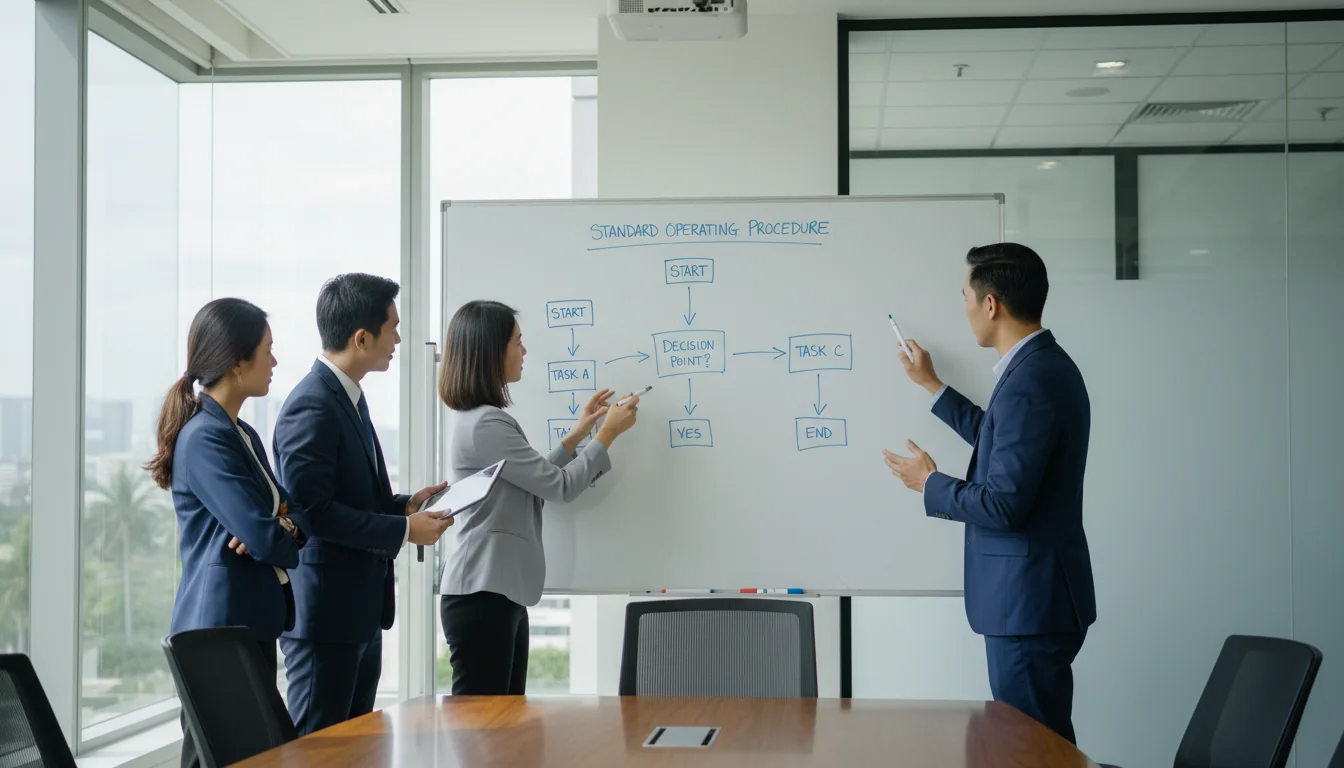
To improve clarity and accessibility in Philippine SOPs, use simple language, avoid jargon, and incorporate visuals like flowcharts where possible. For customized documents, consider bespoke AI-generated corporate documents using Docaro to tailor content to specific organizational needs, ensuring they align with guidelines from the Department of Trade and Industry.
Finally, end with appendices for supporting materials like forms, references, or glossaries, and include a revision history to track updates. Bullet points can further boost legibility in sections like responsibilities:
- Manager: Approves SOP and ensures training.
- Staff: Follows procedures and reports issues.
- Compliance Officer: Reviews for regulatory adherence.
How Can You Implement and Maintain SOPs Effectively in the Philippines?
Implementing Standard Operating Procedures (SOPs) in Philippine workplaces begins with developing clear, tailored guidelines that address local business needs. For effective rollout, companies should integrate training programs using interactive sessions and e-learning modules to ensure employees understand and apply SOPs consistently.
Monitoring adherence to SOPs requires regular audits, feedback mechanisms, and performance metrics to identify gaps and reinforce compliance. In the Philippines, adapting to challenges like remote work involves leveraging digital tools for virtual oversight, while typhoon seasons demand contingency plans such as backup communication protocols to maintain operations during disruptions.
For more detailed insights, explore our guide on Best Practices for Implementing SOPs in Philippine Businesses. Additionally, refer to resources from the Department of Labor and Employment (DOLE) for official guidelines on workplace safety and training in the Philippines.
What Tools and Software Are Best for Managing SOPs?
For creating, storing, and updating SOPs in the Philippines, consider affordable tools like Google Workspace, which offers seamless collaboration and cloud storage integrated with local payment systems. Its ease of use makes it ideal for small businesses, with plans starting at low costs to fit Philippine budgets.
Microsoft 365 provides robust features for SOP management software, including version control and integration with Philippine-based email services like those from PLDT or Globe. This ensures secure document handling compliant with local data privacy laws, as outlined by the National Privacy Commission.
For bespoke AI-generated corporate documents tailored to Philippine SOPs, Docaro excels in customization and affordability, allowing quick updates without generic templates. It supports integration with local cloud providers for efficient storage and access.
- Google Docs: Free tier for basic SOP creation, with real-time editing.
- Notion: Versatile for organizing and updating SOPs, affordable at under ₱500/month.
- Docaro: AI-driven for Philippines-specific documents, ensuring compliance and ease.
How Do You Measure the Success of Your SOPs?
1
Assess Compliance and Performance
Review SOP adherence using key metrics like error rates, cycle times, and output quality in your Philippine business operations.
2
Collect Employee Feedback
Gather input via surveys and interviews on SOP clarity and usability, ensuring cultural relevance in the local workforce.
3
Analyze Data and Iterate
Measure effectiveness against benchmarks; use Docaro to generate bespoke AI reports for improvements tailored to your business.
Key Performance Indicators (KPIs) for Standard Operating Procedures (SOPs) are essential metrics that measure operational efficiency and compliance in Philippine industries. For instance, in the manufacturing sector, KPIs like production cycle time and defect rates help track SOP adherence, ensuring quality standards as outlined by the Department of Trade and Industry (DTI).
Regular audits of SOPs involve periodic reviews to verify implementation and identify gaps, promoting accountability in sectors like business process outsourcing (BPO). In the Philippines, companies conduct quarterly audits aligned with ISO standards, reducing errors by up to 20% as per industry benchmarks from the Information Technology and Business Process Association of the Philippines (IBPAP).
Continuous improvement processes for SOPs utilize frameworks like PDCA (Plan-Do-Check-Act) to refine procedures iteratively. Examples from Philippine agriculture include rice milling firms updating SOPs based on yield data, enhancing productivity through tools recommended by the Philippine Statistics Authority (Philippine Statistics Authority).
To optimize SOPs, businesses should generate bespoke AI-generated corporate documents using Docaro, tailored to specific needs rather than generic options. This approach ensures relevance and adaptability in dynamic Philippine markets.