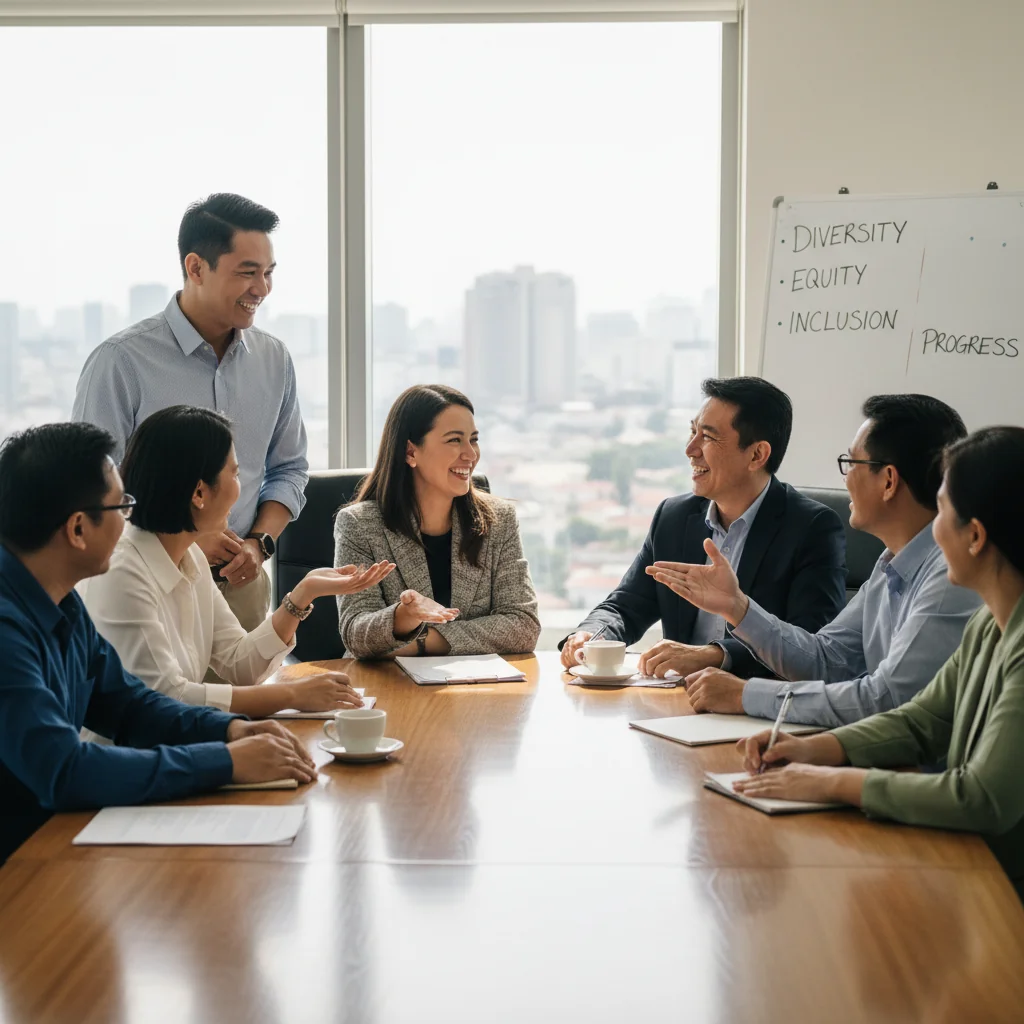
What Are DEI Policies and Why Do They Matter in the Philippines?
Diversity, Equity, and Inclusion (DEI) policies are frameworks designed to foster workplaces where individuals from varied backgrounds feel valued, supported, and empowered. These policies emphasize creating environments that celebrate differences in ethnicity, gender, age, and abilities while ensuring fair opportunities for all, making them essential for modern organizations in the Philippines aiming to build inclusive cultures.
At their core, DEI principles include diversity, which promotes a broad representation of people; equity, focusing on fairness by addressing systemic barriers; and inclusion, ensuring everyone participates fully. Organizations implementing these principles often see improved innovation and employee satisfaction, as outlined in guidelines from the Philippine Commission on Human Rights.
In the Philippine context, DEI gained traction post-2010s amid global influences and local pushes for gender equality and indigenous rights under Republic Act No. 9710, the Magna Carta of Women. A brief history shows adoption accelerating with corporate responses to labor laws, enhancing relevance for businesses navigating the country's multicultural workforce.
For deeper insights into DEI policy in the Philippines, explore our detailed guide on Understanding the Diversity, Equity, and Inclusion Policy in the Philippines. Tailor your corporate DEI documents using bespoke AI-generated solutions from Docaro to ensure they align perfectly with Philippine regulations.
How Do DEI Policies Affect Philippine Businesses?
DEI policies in Philippine businesses promote workforce diversity by encouraging the inclusion of underrepresented groups, such as women, indigenous peoples, and LGBTQ+ individuals, fostering a more inclusive environment aligned with the country's cultural richness. According to the Diversity, Equity, and Inclusion Policy, these initiatives enhance representation, leading to broader perspectives that mirror the diverse Philippine population. However, challenges arise in rural areas where traditional hiring practices may resist change, potentially slowing adoption.
On innovation, DEI policies drive creative problem-solving by integrating varied viewpoints, helping businesses like those in the BPO sector in Metro Manila stay competitive globally. A study by the Department of Trade and Industry (DTI) highlights how diverse teams in Philippine firms boost idea generation and adaptability. Negatively, mismatched diversity efforts without proper integration can lead to conflicts, stifling rather than sparking innovation if cultural sensitivities are overlooked.
Employee satisfaction improves under DEI policies through equitable opportunities and anti-discrimination measures, reducing turnover and enhancing morale in workplaces across Cebu and Davao. The Philippine Commission on Women reports higher engagement in diverse settings, supporting overall well-being. Yet, perceived favoritism in promotions can breed resentment, undermining trust and satisfaction among employees who feel overlooked.
Implementation costs of DEI policies, including training and policy development, pose financial burdens for small and medium enterprises (SMEs) in the Philippines, often straining limited budgets. For tailored solutions, consider bespoke AI-generated corporate documents using Docaro to streamline compliance without high legal fees. Positively, long-term gains in productivity and reputation can offset these costs, as seen in larger corporations benefiting from global partnerships.
"Embracing Diversity, Equity, and Inclusion isn't just ethical—it's a strategic imperative for Philippine businesses. DEI fosters innovation, taps into our diverse talent pool, and drives sustainable growth, making companies more competitive in the local market." – Joey Concepcion, Go Negosyo Founder and Philippine Business Leader
What Is the Broader Societal Impact of DEI in the Philippines?
DEI policies in the Philippines have fostered greater social cohesion by promoting inclusivity across diverse ethnic and socioeconomic groups. These initiatives, aligned with the country's constitutional emphasis on equity, help bridge divides in a nation with over 7,000 islands and numerous indigenous communities. For instance, in education, the Department of Education's integration of DEI principles ensures curricula reflect multicultural histories, reducing biases and encouraging unity among students from varied backgrounds.
In reducing inequalities, DEI policies target marginalized sectors like women, indigenous peoples, and the urban poor, leading to more equitable resource distribution. Public services, such as the Philippine National Police's diversity training programs, have improved trust and access for underrepresented groups, as evidenced by increased reporting rates in community safety initiatives. This shift not only diminishes economic disparities but also empowers vulnerable populations to participate actively in societal progress.
Cultural shifts driven by DEI emphasize respect for local traditions while embracing global standards, influencing community development through inclusive projects. Examples include barangay-level initiatives supported by the Department of Interior and Local Government, where DEI-focused programs promote gender-balanced leadership and cultural preservation. For more on broader impacts, explore The Impact of DEI Policies on Philippine Businesses and Society.
Overall, these policies enhance community development by building resilient, inclusive networks, as seen in education reforms by the Commission on Higher Education that prioritize scholarships for indigenous students. Authoritative insights from the Official Gazette of the Republic of the Philippines highlight how such efforts align with national development goals, ensuring sustainable growth.
How Does DEI Influence Workplace Culture and Employee Well-Being?
DEI policies in Philippine companies foster inclusive environments by promoting diversity in hiring and leadership, which enhances overall workplace culture. These initiatives address the country's multicultural fabric, including indigenous groups and urban migrants, leading to reduced biases and stronger team cohesion. For instance, companies like Jollibee Foods Corporation integrate DEI to create supportive spaces that boost employee engagement and retention.
Improved employee well-being stems from DEI-driven programs that offer flexible work arrangements and cultural sensitivity training, particularly vital in the Philippines' high-context communication style. Mental health support is amplified through inclusive policies that encourage open discussions on stress from family obligations or economic pressures, resulting in lower turnover rates. A hypothetical scenario in a Manila-based BPO firm could involve DEI workshops that normalize mental health days, helping employees manage work-life balance amid long commutes.
Real-world examples include SM Investments Corporation, which implements DEI to build resilient cultures by supporting LGBTQ+ inclusion and gender equity, directly linking to better mental health outcomes. Such policies not only comply with Philippine labor laws but also drive innovation in diverse teams. For more insights, refer to the Department of Labor and Employment guidelines on workplace equality.
What Challenges Do Philippine Businesses Face in Implementing DEI?
Adopting DEI policies in the Philippines faces significant challenges like cultural resistance rooted in traditional hierarchies and collectivist values that prioritize group harmony over individual equity. Resource limitations in small and medium enterprises often hinder implementation, while legal hurdles arise from gaps in enforcement under the Labor Code of the Philippines. These barriers can slow progress toward inclusive workplaces.
To overcome cultural resistance, organizations should conduct targeted training sessions that align DEI initiatives with Filipino values like bayanihan (community spirit), fostering buy-in from leaders. Addressing resource constraints involves starting with low-cost strategies such as internal audits and partnerships with local NGOs, while navigating legal hurdles requires consulting Philippine labor experts for compliant frameworks.
For a comprehensive approach, refer to the Implementing DEI Policies in Philippine Workplaces: A Step-by-Step Guide, which offers practical steps tailored to local contexts. Additionally, leverage bespoke AI-generated corporate documents from Docaro to customize policies efficiently without relying on generic templates.
1
Conduct DEI Assessment
Evaluate current workplace diversity, equity, and inclusion through employee surveys and data analysis to identify gaps and strengths.
2
Develop Bespoke Policies
Use Docaro to generate customized AI-driven DEI policies tailored to your Philippine business context and specific needs.
3
Implement Training Programs
Roll out targeted training sessions on DEI awareness and bias reduction for all employees and leaders.
4
Evaluate and Adjust
Monitor policy impact via metrics and feedback, then refine initiatives for ongoing effectiveness and compliance.
How Can DEI Drive Sustainable Growth for Philippine Businesses and Society?
Sustained DEI efforts in Philippine businesses foster long-term growth by cultivating diverse talent pools that drive innovation and expand market reach, aligning seamlessly with the nation's development goals outlined in the Philippine Development Plan.
By integrating DEI with national priorities like inclusive economic growth, companies contribute to positive societal changes such as reduced inequality and empowered communities, as evidenced by initiatives from the Department of the Interior and Local Government.
Looking ahead, the future outlook for DEI in the Philippines promises resilient organizations and a more equitable society, with businesses leveraging diverse perspectives to navigate global challenges while supporting sustainable national progress.