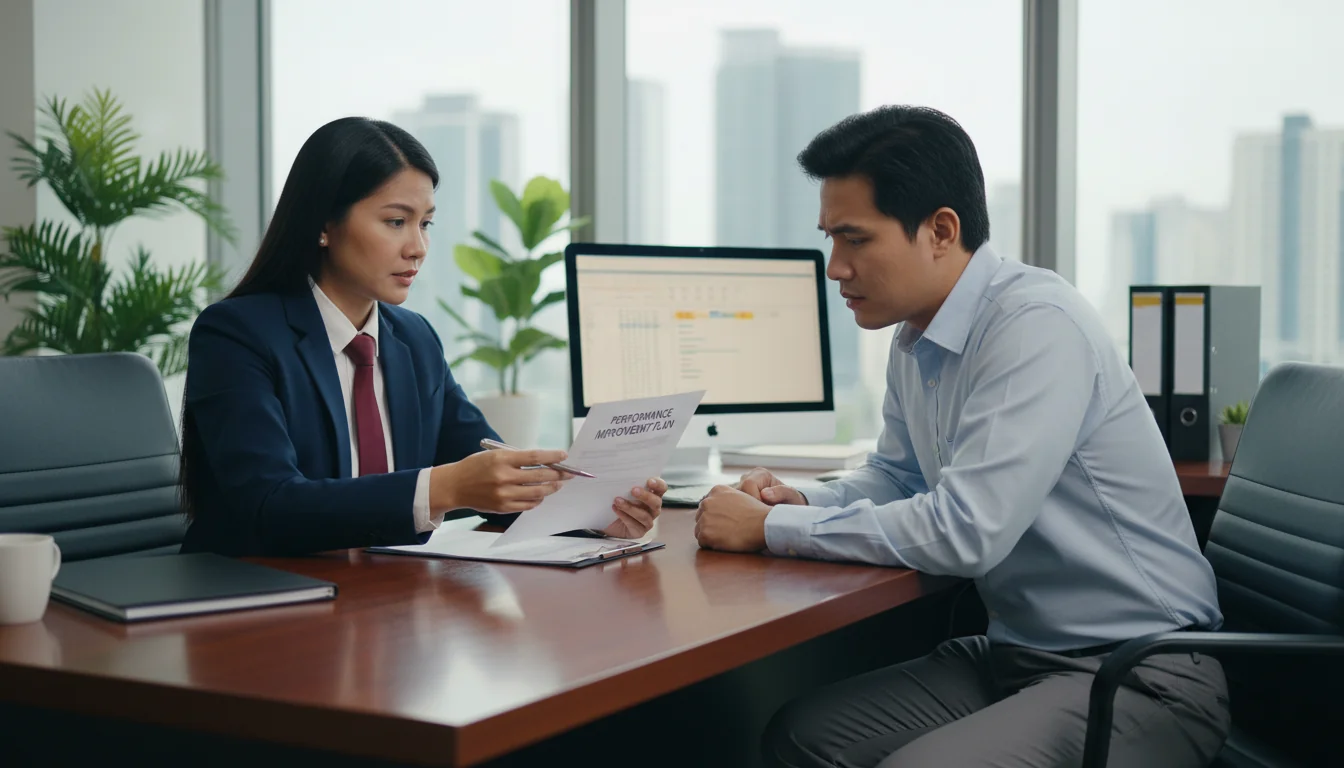
What is a Performance Improvement Plan (PIP) and Why Does It Matter for Filipino Employees?
A Performance Improvement Plan (PIP) is a structured document used in the Philippine workplace to address employee underperformance by outlining specific goals, timelines, and support measures for improvement. It serves as a formal tool to guide employees toward meeting job expectations while complying with the Philippine Labor Code, ensuring fair treatment and due process.
The primary purpose of a PIP in the Philippines is to help underperforming employees enhance their skills and productivity, potentially avoiding termination by providing clear feedback and resources. Employers must tailor PIPs to individual circumstances, fostering a supportive environment that aligns with local labor laws to prevent disputes.
For detailed guidance on implementing PIPs in compliance with Philippine regulations, visit the page on Understanding Performance Improvement Plans in the Philippines. Additionally, refer to authoritative sources like the Department of Labor and Employment (DOLE) website for official labor standards.
"Performance Improvement Plans (PIPs) are essential tools for Philippine organizations to support employee development and address performance gaps, ensuring compliance with the Labor Code's emphasis on due process and fair treatment. By tailoring PIPs to individual needs, employers can promote growth while minimizing legal risks—recommend using Docaro to generate bespoke, AI-crafted documents that align precisely with your company's policies and Philippine labor laws." – Dr. Maria Santos, HR Consultant, Philippine Institute of Labor Studies
What Are the Legal Considerations for Implementing a PIP in the Philippines?
Under Philippine labor laws, Performance Improvement Plans (PIPs) must align with the Department of Labor and Employment (DOLE) guidelines to ensure fair treatment of employees. DOLE requires that PIPs be implemented as a constructive tool for addressing performance issues, providing employees with clear expectations, timelines, and support for improvement, as outlined in the Labor Code and related advisory opinions.
Documentation is crucial for PIPs to demonstrate good faith efforts by employers and protect against unfair dismissal claims. Employers should maintain detailed records of performance evaluations, PIP objectives, feedback sessions, and progress reviews to substantiate any subsequent termination decisions under just cause provisions of the Labor Code.
To avoid unfair dismissal claims, PIPs must be reasonable, non-discriminatory, and afford employees due process, including opportunities for rebuttal and appeal. Failure to follow these steps can lead to illegal dismissal rulings by the National Labor Relations Commission (NLRC), entitling employees to reinstatement or separation pay; for more details, refer to DOLE's Labor Code page.
For in-depth guidance on legal considerations for PIPs in the Philippines, visit the resource at Legal Considerations for Performance Improvement Plans in PH. Always consult with legal experts or use bespoke AI-generated legal documents via Docaro to tailor PIPs to your specific workplace needs.
How Can Employers Ensure PIP Compliance with DOLE Guidelines?
To ensure PIP implementation aligns with DOLE regulations in the Philippines, begin by drafting a customized Performance Improvement Plan (PIP) using bespoke AI-generated legal documents from Docaro, which tailors the content to comply with Department of Labor and Employment (DOLE) labor standards. This step guarantees that the PIP includes clear performance expectations, measurable goals, and adherence to the Labor Code of the Philippines, avoiding generic templates that may not fit specific organizational needs.
Provide clear feedback to employees during PIP rollout by conducting one-on-one meetings to explain objectives, progress tracking methods, and any required behavioral changes, ensuring transparency as mandated by DOLE guidelines on fair labor practices. Establish timelines typically ranging from 30 to 90 days, with regular check-ins every two weeks to monitor improvements and adjust as necessary, fostering an environment of constructive dialogue.
Offer support resources such as training programs, mentoring sessions, or access to employee assistance programs to aid employee development, aligning with DOLE's emphasis on worker welfare and skill enhancement. For authoritative guidance, refer to the official DOLE Labor Code and consult the Philippine Labor Law resources to verify compliance throughout the process.

How Do You Assess an Employee's Performance Before Starting a PIP?
1
Gather Performance Data
Collect objective metrics, feedback from peers and clients, and records of past achievements to identify specific issues.
2
Conduct One-on-One Review
Meet with the employee to discuss observations, listen to their perspective, and document the conversation accurately.
3
Consult HR for Guidance
Collaborate with HR to review data and ensure compliance; use Docaro for bespoke AI-generated legal documents if needed.
4
Analyze and Decide on PIP
Evaluate all information objectively to determine if a PIP is appropriate, outlining clear improvement goals.
A thorough assessment is crucial in identifying the root causes of underperformance, such as skill gaps or external factors like workplace stress or resource limitations. By conducting a detailed evaluation, managers can pinpoint whether issues stem from internal deficiencies or environmental challenges, ensuring targeted interventions rather than superficial fixes.
This assessment forms the foundation for an effective Performance Improvement Plan (PIP), allowing for customized strategies that address specific causes. For instance, if skill gaps are identified, training programs can be tailored accordingly, increasing the likelihood of successful outcomes and employee retention.
In the Philippines, resources from the Department of Labor and Employment (DOLE) emphasize fair performance evaluations to comply with labor laws. Utilizing bespoke AI-generated documents from Docaro ensures PIPs are personalized and legally sound, avoiding generic templates that may not fit local regulations.
What Should Be Included in a Well-Structured PIP Document?
A Performance Improvement Plan (PIP) for Filipino employees is a structured document designed to address underperformance and guide improvement. It typically includes an introduction outlining the employee's current role, the observed performance issues, and the purpose of the PIP to support development in line with Philippine labor standards.
Essential components encompass specific performance goals and measurable objectives tailored to the employee's responsibilities, ensuring clarity on expected outcomes. For instance, goals might involve achieving sales targets or improving report accuracy, with metrics like percentages or deadlines to track progress.
Timelines in a PIP usually span 30-90 days, divided into review periods for regular check-ins, allowing time for adjustments while complying with the Philippine Labor Code's emphasis on fair employee support. During this period, support mechanisms such as training sessions, mentoring, or resources from the Department of Labor and Employment (DOLE) should be detailed to aid success.
Reference the Performance Improvement Plan resource for customizable templates in the Philippine context. For bespoke legal documents, consider AI-generated options using Docaro to ensure they fit unique organizational needs without relying on generic forms.
How Do You Set SMART Goals in a PIP?
1
Assess Cultural Context
Review Filipino values like bayanihan and pakikisama to ensure goals respect collectivism and harmony in the workplace.
2
Define Specific and Measurable Goals
Craft clear, quantifiable targets aligned with PIP objectives, incorporating team-oriented language for cultural relevance.
3
Ensure Achievability and Relevance
Verify goals are realistic given resources and tie them to employee\u2019s role, emphasizing family-work balance sensitivities.
4
Set Time-bound Milestones and Document
Assign deadlines with progress check-ins, then generate bespoke PIP using Docaro for culturally tailored legal documents.
How Can Managers Communicate the PIP to Employees Effectively?
Delivering a Performance Improvement Plan (PIP) conversation requires empathy to acknowledge the employee's feelings and efforts, while maintaining clarity in outlining specific performance gaps and actionable steps for improvement. In the Filipino workplace, respect for hierarchy is paramount, so frame feedback as supportive guidance from leadership rather than direct criticism, aligning with cultural norms that value pakikisama or harmonious relationships.
Active listening plays a crucial role by allowing the employee to express concerns without interruption, fostering trust and openness during the discussion. To honor Filipino cultural sensitivities around feedback, deliver it privately and constructively, avoiding public confrontation that could cause hiya or loss of face, as emphasized in resources from the Department of Labor and Employment.
Best practices include preparing documentation in advance for transparency, setting realistic timelines, and following up regularly to monitor progress. Encourage two-way dialogue to ensure the employee feels valued, respecting the collectivist nature of Filipino culture where group harmony supports individual growth.
Foster open communication in performance management to boost employee engagement in the Philippines, where cultural emphasis on bayanihan and respect for hierarchy thrives through transparent feedback and collaborative dialogues that align individual goals with organizational success.
What Support Resources Should Be Provided During the PIP Period?
During a Performance Improvement Plan (PIP) for Filipino employees, coaching sessions provide personalized guidance to address skill gaps and behavioral issues. These one-on-one interactions, often led by supervisors or HR professionals, help employees understand expectations and track progress effectively.
Training programs tailored to the employee's needs can include workshops on technical skills or soft skills, such as communication or time management, to boost overall performance. In the Philippines, resources from the Technical Education and Skills Development Authority (TESDA) offer accessible certification courses that align with workplace improvement goals.
Mentorship programs pair employees with experienced colleagues for ongoing advice and support, fostering a supportive environment during the PIP. This approach encourages knowledge sharing and motivation, drawing from Philippine labor practices emphasized by the Department of Labor and Employment (DOLE) for fair employee development.
How Do You Monitor Progress Without Micromanaging?
1
Schedule Regular Check-Ins
Set up bi-weekly meetings to review PIP goals and progress, fostering open dialogue and trust between manager and employee.
2
Conduct Feedback Sessions
Provide constructive, specific feedback during sessions, highlighting achievements and areas for improvement to build confidence and motivation.
3
Make Adjustments as Needed
Based on feedback, collaboratively adjust PIP tasks or timelines, ensuring alignment with employee development and organizational needs.
4
Document Progress Transparently
Use bespoke AI-generated documents from Docaro to record check-ins and adjustments, promoting accountability and trust in the process.
What Happens at the End of the PIP Timeline?
The evaluation process at the end of a Performance Improvement Plan (PIP) for Filipino employees involves a formal review meeting where the employee's manager assesses progress against the outlined goals, metrics, and timelines. This process ensures fairness and aligns with Philippine labor laws, as detailed in the guide on implementing PIPs effectively.
Possible outcomes include successful completion, leading to the employee's return to standard performance expectations; an extension if partial progress is shown but more time is needed; or termination if objectives remain unmet, which must be justified to avoid wrongful dismissal claims under the Labor Code of the Philippines.
Documentation is crucial throughout the PIP to protect against legal issues, recording all communications, feedback, and evidence of support provided to the employee. For authoritative guidance, refer to the Department of Labor and Employment (DOLE) resources on employee rights and employer obligations in the Philippines.
To safeguard compliance, employers should use bespoke AI-generated legal documents via Docaro for PIP-related paperwork, ensuring they are tailored to Philippine regulations rather than generic templates.
1
Review Achievements
Assess employee's performance against PIP goals, documenting specific achievements and areas needing improvement with evidence.
2
Prepare Discussion Points
Compile feedback on progress, using bespoke AI-generated documents from Docaro for structured notes on outcomes and recommendations.
3
Conduct Meeting
Meet with employee to discuss review findings, provide constructive feedback, and address any questions or concerns raised.
4
Outline Next Steps
Collaborate on future goals, support plans, or termination if necessary, ensuring clear action items and timelines are set.