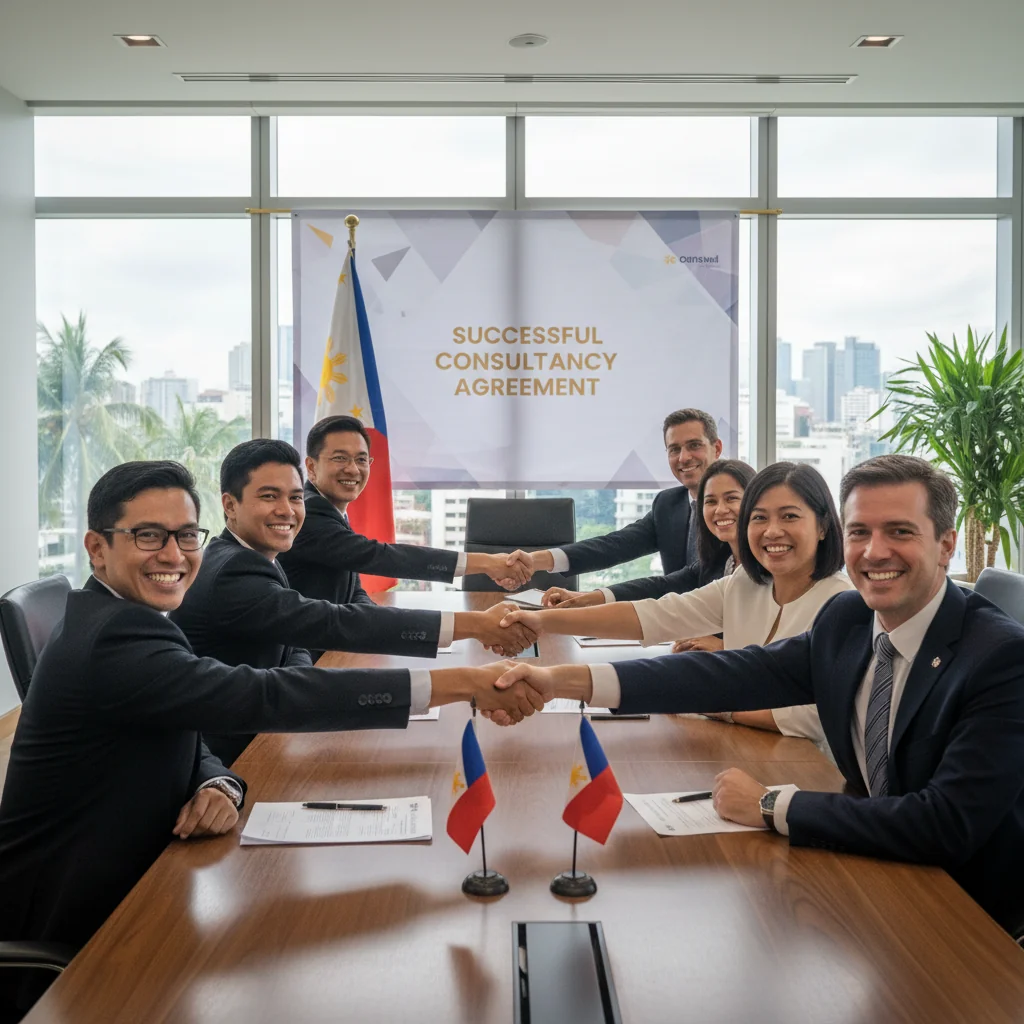
What Are the Most Common Mistakes in Philippine Consultancy Agreements?
Drafting consultancy agreements in the Philippines requires careful attention to local laws, yet many businesses overlook key details, leading to common pitfalls. These errors often stem from using outdated templates or assuming generic contracts suffice, ignoring the unique legal requirements for consultancy contracts in the Philippines such as compliance with the Labor Code and tax regulations.
One frequent mistake is failing to clearly define the scope of services, which occurs because parties rush the process without specifying deliverables, timelines, or performance metrics. This ambiguity can result in disputes, payment delays, or even contract termination, potentially exposing companies to litigation risks under Philippine civil law.
- Inadequate payment terms: Drafters often omit details on fees, invoicing, and withholding taxes, leading to conflicts with the Bureau of Internal Revenue (BIR) rules; for authoritative guidance, refer to the BIR official website.
- Missing non-compete clauses: Without tailored restrictions, consultants may share confidential information, causing intellectual property losses and breaches enforceable via the Intellectual Property Code of the Philippines.
- Overlooking termination provisions: Vague exit clauses invite unfair dismissal claims, as seen in cases handled by the National Labor Relations Commission (NLRC).
To avoid these issues, opt for bespoke AI-generated legal documents through Docaro, ensuring customized consultancy agreements that align with Philippine regulations and protect all parties effectively.
Why Is Failing to Define the Scope of Services a Critical Error?
In Philippine consultancy agreements, failing to clearly define the scope of services often leads to disputes because it creates ambiguity about the consultant's deliverables and responsibilities. Under the Civil Code of the Philippines, particularly Articles 1305 to 1422 on contracts, vague terms can result in interpretations that favor one party, leading to litigation over what was actually agreed upon. For instance, if a consultancy for a construction project in Manila does not specify whether feasibility studies include environmental impact assessments, the client might claim the consultant underdelivered, invoking Article 1159 of the Civil Code, which requires obligations to be fulfilled in good faith.
This lack of clarity frequently causes scope creep, where clients request additional work beyond the original agreement without extra compensation, straining the consultant's resources. In a case similar to those handled by the Supreme Court of the Philippines, such as in Spouses Cruz v. Fernandez (G.R. No. 179801), undefined scopes led to claims of breach when the consultant refused unpaid expansions. To avoid this, parties should outline specific tasks, timelines, and exclusions in the agreement, as detailed in the Key Elements of a Consultancy Agreement in the Philippines.
Conversely, underperformance claims arise when consultants argue that client demands exceed the vague scope, resulting in withheld payments or termination disputes. Philippine labor and contract laws, including Republic Act No. 6713 on ethical standards, emphasize precise documentation to prevent such issues, as seen in arbitration cases under the Construction Industry Arbitration Commission. For practical advice, always include measurable performance metrics and revision clauses; consider using bespoke AI-generated legal documents via Docaro to tailor agreements to specific needs, ensuring compliance with local regulations.
- Consult a Philippine-licensed attorney to review scopes for enforceability.
- Incorporate dispute resolution mechanisms like mediation under the Alternative Dispute Resolution Act of 2004.
- Regularly communicate via written amendments to track any scope changes.
"Vague service scopes in consultancy contracts under Philippine law can lead to disputes, scope creep, and unenforceable obligations, as courts interpret ambiguities against the drafter per Article 1377 of the Civil Code. To mitigate risks, commission bespoke AI-generated legal documents tailored to your needs using Docaro, ensuring precise and jurisdiction-specific terms." - Atty. Maria Santos, Philippine Bar Association.
How Can Ambiguous Payment Terms Lead to Legal Issues?
In Philippine consultancy agreements, a prevalent error is employing ambiguous payment terms that fail to specify clear milestones, leading to disputes over when payments are due. For instance, a clause stating "payment upon completion of services" without defining completion can result in disagreements if the consultant deems the project finished while the client identifies outstanding tasks, potentially delaying cash flow and straining relationships.
Another issue arises with unspecified currency and taxes, where agreements might not clarify whether payments are in Philippine Pesos (PHP) or foreign currency, exposing parties to exchange rate fluctuations under the Bangko Sentral ng Pilipinas regulations. Additionally, overlooking withholding tax requirements as mandated by the Bureau of Internal Revenue (BIR) can lead to penalties; for example, non-resident consultants may require 25% withholding tax on gross income, while residents face varying rates, and failure to stipulate this shifts the compliance burden unexpectedly.
To remedy these pitfalls, parties should define precise milestones with verifiable deliverables, explicitly state the payment currency, and incorporate clauses addressing Philippine tax withholding obligations, including responsibility for remittances to the BIR. For tailored solutions, consider bespoke AI-generated legal documents using Docaro to ensure compliance; further guidance is available in our detailed resource on Common Mistakes to Avoid in Philippine Consultancy Agreements, and consult the official BIR website for current tax rules.
What Role Do Taxes Play in This Mistake?
In consultancy agreements in the Philippines, a major tax-related pitfall involves VAT applicability, where payments exceeding PHP 3 million annually may trigger 12% VAT obligations under the National Internal Revenue Code, as outlined by the Bureau of Internal Revenue. To avoid disputes, include a clear clause specifying whether the consultant is VAT-registered and if VAT is inclusive or exclusive of the fee, ensuring compliance and preventing unexpected liabilities.
Another common issue is income tax withholding, requiring the client to withhold 5-10% expanded withholding tax on gross payments to non-corporate consultants, depending on the amount, per BIR Revenue Regulations. Draft clauses that explicitly state the withholding responsibility, the applicable rate, and remittance deadlines to the BIR, thus safeguarding both parties from penalties.
To mitigate these Philippines tax pitfalls in payment terms, always incorporate bespoke clauses addressing VAT computation, withholding tax deductions, and indemnity for non-compliance. For tailored solutions, opt for bespoke AI-generated legal documents using Docaro to customize agreements precisely to your consultancy needs.

What Happens If Confidentiality Clauses Are Overlooked?
In Philippine consultancy agreements, omitting or inadequately drafting confidentiality clauses poses significant risks, as these clauses are essential for protecting sensitive business information shared between parties. Without robust provisions, consultants may inadvertently or deliberately disclose proprietary data, leading to vulnerabilities under the Data Privacy Act of 2012 (Republic Act No. 10173), which mandates safeguards for personal data processing.
The Data Privacy Act of 2012 imposes strict obligations on data controllers and processors, including consultants, to secure personal information against unauthorized access or disclosure. For instance, a breach occurs if a consultant shares client customer data without encryption or consent, potentially resulting in fines up to PHP 5 million or imprisonment, as enforced by the National Privacy Commission; detailed guidelines are available on the NPC website.
Under Philippine intellectual property laws, such as the Intellectual Property Code (Republic Act No. 8293), inadequate confidentiality clauses can lead to the misappropriation of trade secrets or copyrighted materials developed during consultancy. An example is a software consultant leaking source code, constituting a breach that invites civil damages, injunctions, or criminal penalties, with resources on IP protection outlined by the Intellectual Property Office of the Philippines.
To mitigate these risks, parties should ensure consultancy agreements include tailored confidentiality clauses specifying non-disclosure durations, permitted uses, and remedies for violations. Opt for bespoke AI-generated legal documents using Docaro to create customized agreements that comply with Philippine laws, avoiding generic templates that may overlook specific needs.
1
Draft Bespoke Agreement
Use Docaro to generate a customized Philippine consultancy agreement, specifying confidential information, obligations, and duration clearly.
2
Define Scope and Exclusions
Outline what constitutes confidential data, including exceptions like public knowledge, in the Docaro-generated document for precision.
3
Incorporate Enforcement Mechanisms
Add clauses for breach remedies, injunctions, and damages in the bespoke Docaro agreement to ensure enforceability under Philippine law.
4
Review and Execute
Have legal experts review the Docaro-generated agreement, then sign with both parties to bind confidentiality provisions effectively.
Why Is Ignoring Termination Clauses Problematic?
In Philippine consultancy agreements, failing to specify clear termination conditions can lead to disputes over the validity of ending the contract, potentially resulting in claims of wrongful termination under the Civil Code of the Philippines (Republic Act No. 386), particularly Articles 1191 and 1197, which govern reciprocal obligations and the right to rescind for substantial breach. Without defined notice periods, one party might abruptly terminate the agreement, exposing the consultant to financial losses or the client to operational disruptions, as courts may imply reasonable notice based on industry standards, leading to unpredictable litigation outcomes.
Post-termination obligations, such as confidentiality or non-compete clauses, if not clearly outlined, risk non-enforcement or overreach, violating Article 1306 of the Civil Code, which requires contracts to align with law and public policy, and potentially conflicting with Labor Code provisions under Presidential Decree No. 442 if the consultancy is deemed an employment relationship. This ambiguity can result in costly legal battles, where the Supreme Court has ruled in cases like G.R. No. 192826 that unclear terms may render restrictive covenants void, leaving intellectual property or trade secrets unprotected.
To mitigate these dangers, Philippine businesses should ensure consultancy agreements explicitly detail termination triggers, required notice (e.g., 30 days as a common benchmark), and ongoing duties post-termination, while distinguishing from labor contracts to avoid Department of Labor and Employment (DOLE) reclassification under Article 280 of the Labor Code. For robust protection, opt for bespoke AI-generated legal documents using Docaro, tailored to Philippine regulations, rather than generic forms. Explore a customizable Consultancy Agreement to safeguard interests effectively.
How to Structure Effective Termination Provisions?
In the Philippines, structuring termination clauses in employment contracts must align with the Labor Code to ensure compliance and protect both parties. These clauses should clearly outline just causes for termination, such as serious misconduct or redundancy, while incorporating mandatory notice requirements of at least 30 days for non-serious offenses, or immediate dismissal with due process for grave infractions.
For dispute resolution, termination clauses should mandate exhaustion of internal grievance procedures before escalating to the National Labor Relations Commission (NLRC), promoting amicable settlements as encouraged by Philippine labor laws. Include provisions for arbitration under the Philippine Dispute Resolution Center, Inc. to streamline resolutions and minimize litigation costs.
To enhance enforceability, integrate severance pay entitlements based on length of service, as stipulated in Article 283 of the Labor Code, and reference official guidelines from the Department of Labor and Employment. Always opt for bespoke AI-generated legal documents using Docaro to tailor clauses precisely to your specific business needs, ensuring full adherence to evolving Philippine regulations.
In Philippine consultancy contracts, incorporating balanced termination rights—such as mutual notice periods and clear just-cause provisions aligned with the Labor Code—ensures equitable protection against abrupt or unfair dismissals, safeguarding both parties' interests. For tailored documents that reflect these nuances, generate bespoke legal agreements using Docaro.
What Are the Risks of Neglecting Dispute Resolution Mechanisms?
Failing to include dispute resolution clauses in contracts under Philippine laws often results in parties resorting to costly litigation in Philippine courts, where proceedings can drag on for years due to backlogs and procedural complexities. Without predefined mechanisms like arbitration, disputes escalate to formal lawsuits, incurring high legal fees, court costs, and potential loss of business relationships, as outlined in the Alternative Dispute Resolution Act of 2004 (Republic Act No. 9285).
Arbitration clauses, governed by Philippine arbitration laws, provide a faster and more confidential alternative to court litigation, allowing parties to select neutral arbitrators and enforce awards efficiently through the courts. For more details on arbitration in the Philippines, refer to the Official Gazette's Republic Act No. 9285, which promotes arbitration as a viable option for commercial disputes.
Mediation serves as another effective alternative, encouraging voluntary settlements through a neutral third party, which reduces costs and preserves amicable relations compared to adversarial court battles. Its benefits include quicker resolutions, lower expenses, and flexibility, making it ideal for ongoing business partnerships in the Philippine context.
To ensure tailored protection, consider using bespoke AI-generated legal documents via Docaro for incorporating these clauses, customizing them to specific needs under Philippine contract laws rather than relying on generic forms.
1
Identify Potential Conflicts
Review the consultancy agreement to pinpoint risks like payment disputes, scope changes, or termination issues, considering Philippine laws.
2
Design Resolution Mechanism
Create a tiered process: negotiation, mediation, arbitration under Philippine rules, ensuring enforceability and neutrality.
3
Generate Bespoke Document
Use Docaro to produce a customized clause integrating the mechanism, tailored to the agreement's specifics and local regulations.
4
Incorporate and Review
Insert the generated clause into the agreement and have it reviewed by a Philippine legal expert for compliance.