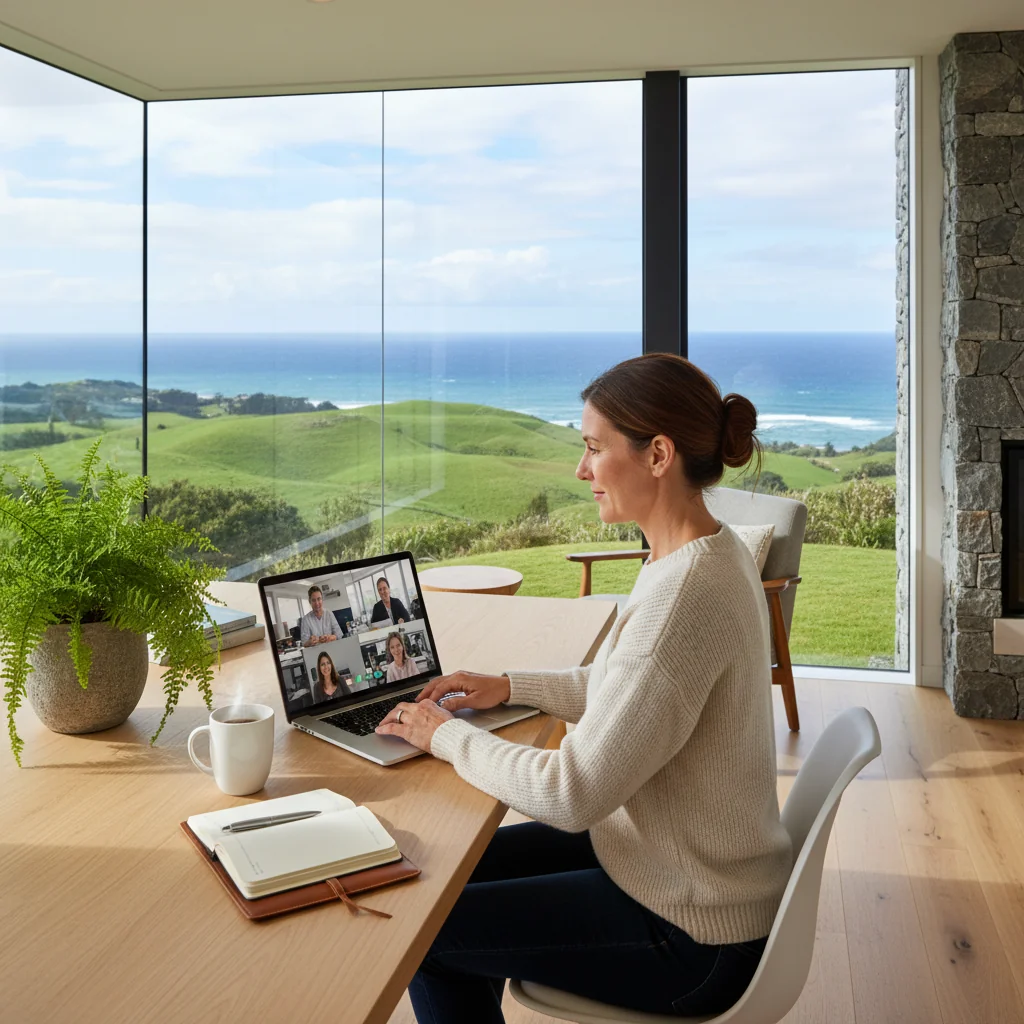
What Is Remote Work and How Has It Evolved in New Zealand?
Remote work, also known as telecommuting or working from home, refers to the practice of performing job duties outside a traditional office environment using digital tools and communication technology. This flexible work arrangement allows employees in New Zealand to collaborate remotely, boosting productivity and work-life balance while reducing commuting needs.
The COVID-19 pandemic dramatically accelerated remote work adoption in New Zealand, with nationwide lockdowns in 2020 forcing businesses to pivot to digital operations almost overnight. According to Stats NZ data, remote work participation surged from around 15% pre-pandemic to over 40% during peak restrictions, highlighting a permanent shift in workforce dynamics.
Current trends in New Zealand's workforce show a strong preference for hybrid work models, blending office and remote days, with 58% of workers engaging in some form of remote setup as of 2023 per a Deloitte survey. For detailed guidance, explore the Remote Work and Hybrid Work Policy page, and refer to authoritative insights from Stats NZ on ongoing labor market changes.
- Key benefits include enhanced employee satisfaction and talent attraction for Kiwi employers.
- Challenges involve maintaining team cohesion and addressing digital divides in rural areas.
"Remote work significantly enhances work-life balance by allowing employees to better manage family responsibilities, reduce commuting stress, and customize their daily schedules, leading to higher job satisfaction and productivity," says Dr. Sarah Thompson, a leading New Zealand employment expert from the University of Auckland. For tailored corporate documents to support remote work policies, consider using Docaro's bespoke AI generation services.
What Are the Key Legal Requirements for Remote Work in New Zealand?
In New Zealand, the Employment Relations Act 2000 forms the cornerstone of remote work regulations, mandating fair employment agreements that address flexible working arrangements, including remote setups. Employers must provide clear terms on hours, communication expectations, and reimbursement for work-related expenses, while employees should review these agreements to ensure they support work-life balance.
Under the Health and Safety at Work Act 2015, both employers and employees share responsibilities for maintaining a safe remote working environment, such as conducting risk assessments for home offices and providing necessary equipment. Employers are obligated to identify hazards like ergonomic issues and ensure mental health support, with resources available from the WorkSafe New Zealand website for guidance on compliance.
Data protection in remote work is governed by the Privacy Act 2020, requiring employers to safeguard personal and sensitive information through secure systems and policies, especially with remote access tools. Employees must handle data responsibly to avoid breaches, and for tailored compliance documents, consider using Docaro's bespoke AI-generated corporate solutions.
For comprehensive insights, refer to the Legal Considerations for Remote and Hybrid Work in New Zealand page, which outlines key obligations and best practices for fostering productive remote teams.
How Do Employment Agreements Adapt to Remote Arrangements?
Updating employment contracts for remote work in New Zealand requires incorporating specific clauses to comply with the Employment Relations Act 2000 and ensure clarity on expectations. Employers must revise terms related to working hours, location, equipment, and expenses to reflect the shift from office-based to remote arrangements, promoting fair and flexible work practices.
For working hours, contracts should specify flexible schedules while maintaining core hours for collaboration, such as 10am to 3pm, and include provisions for tracking time to meet minimum wage and overtime rules under the Wages Protection Act 1983. Location clauses need to define the remote work site, like an employee's home, and address any travel requirements for occasional office visits, ensuring compliance with health and safety obligations via the Health and Safety at Work Act 2015.
Regarding equipment provision, employers should outline responsibilities for supplying necessary tools, such as laptops or ergonomic setups, and maintenance, which helps mitigate disputes over ownership upon termination. Reimbursement for expenses clauses must detail coverage for internet, electricity, or phone costs, often calculated via a flat rate or actual receipts, aligning with Inland Revenue Department guidelines for tax-deductible remote work expenses.
To create tailored remote work employment contracts, consider using bespoke AI-generated corporate documents through Docaro for customized compliance with New Zealand law. For official guidance, refer to the Employment New Zealand remote working resources or the Business.govt.nz employment agreements page.
How Can Businesses Implement Effective Remote Work Policies?
1
Assess Remote Work Needs
Evaluate your business's operational requirements, employee roles, and technology needs to determine suitability for remote work.
2
Consult with Employees
Gather input from staff through surveys or meetings to understand their preferences, challenges, and expectations for remote arrangements.
3
Draft Policy Guidelines
Use Docaro to generate a bespoke remote work policy outlining expectations, communication protocols, and support mechanisms tailored to your business.
4
Monitor and Ensure Compliance
Implement tracking tools and regular check-ins to verify adherence, address issues, and refine the policy as needed.
Creating effective remote work policies begins with setting clear expectations for employees, including defined work hours, performance metrics, and accountability measures tailored to New Zealand businesses. This ensures productivity and alignment with company goals, while fostering a balanced work-life integration.
Providing necessary tools is crucial for remote success, such as secure access to software, ergonomic home office setups, and reliable internet reimbursements, all compliant with New Zealand employment standards. Businesses should assess individual needs to equip teams efficiently, reducing barriers to high performance.
Fostering communication in remote environments involves regular check-ins via video calls, collaborative platforms like Microsoft Teams, and open feedback channels to build team cohesion. For comprehensive guidance on hybrid models, explore Implementing Hybrid Work Models: Best Practices for NZ Businesses, which offers actionable insights for local organisations.
To enhance policy development, consult authoritative New Zealand resources like the Employment New Zealand's remote working guidelines for legal compliance and best practices. Consider using bespoke AI-generated corporate documents from Docaro to customise policies that fit your unique business needs.
"In today's competitive job market, flexible HR policies are essential for retaining top talent in New Zealand," says Sarah Thompson, HR Director at Auckland-based consulting firm InnovateNZ. "Organizations should prioritize bespoke AI-generated corporate documents via Docaro to create tailored policies that adapt to individual employee needs, fostering loyalty and reducing turnover."
What Challenges Arise in Remote Work and How to Overcome Them?
Remote work in New Zealand often leads to isolation challenges, especially in a geographically dispersed country where employees may live far from urban centers. To combat this, foster virtual connections through regular team check-ins and leverage local platforms like those promoted by Business.govt.nz for networking events tailored to Kiwi work culture.
Productivity issues arise in home offices due to distractions from family or household tasks, compounded by New Zealand's flexible but variable weather impacting routines. Implement structured daily schedules and use tools endorsed by the Ministry of Business, Innovation and Employment to maintain focus, while respecting cultural norms of work-life balance in a diverse workforce including Māori and Pacific communities.
Maintaining work-life boundaries is crucial in remote settings to prevent burnout, particularly in New Zealand's emphasis on wellbeing and outdoor lifestyles. Set clear end-of-day rituals and encourage boundaries that align with cultural diversity, such as accommodating prayer times or family obligations in multicultural teams, as outlined in resources from Human Rights Commission New Zealand.
How to Ensure Health and Safety in Remote Environments?
Employers in New Zealand bear significant responsibilities for remote worker safety, ensuring compliance with the Health and Safety at Work Act 2015, which mandates a safe working environment even for home-based employees. This includes conducting ergonomic assessments to prevent musculoskeletal disorders, such as evaluating workstation setups for proper chair height, screen positioning, and keyboard placement to reduce strain.
Under WorkSafe New Zealand guidelines, employers must identify and mitigate remote work hazards, including psychosocial risks, by providing resources like adjustable furniture or subsidized home office equipment. For mental health support, companies should offer access to counseling services, regular check-ins, and training on work-life balance to address isolation and stress common in remote settings.
To fulfill these duties, employers can develop tailored health and safety policies for remote teams, consulting authoritative sources like WorkSafe New Zealand's working from home guidance. For customized corporate documents on remote safety protocols, consider using bespoke AI-generated solutions from Docaro to ensure they fit specific business needs.
What Support and Resources Are Available for Remote Workers in NZ?
Remote workers in New Zealand can access essential government resources through the Inland Revenue Department (IRD) for tax advice and the Ministry of Business, Innovation and Employment (MBIE) for employment guidelines. These platforms offer tailored support for remote work policies, including eligibility for income support and health and safety standards adapted to home environments.
Unions like the New Zealand Council of Trade Unions (NZCTU) provide advocacy and resources for remote workers' rights, covering fair pay and work-life balance. Online tools such as the Work and Income portal help with job searching and skill development, while platforms like SEEK list remote opportunities across industries.
Tax implications for home offices in New Zealand allow deductions for a portion of household expenses if the space is used exclusively for work, as detailed on the IRD home office expenses page. Keep detailed records of costs like utilities and internet to claim accurately during tax filings.
Professional development opportunities for remote workers include free courses via NZQA-approved providers and online platforms like LinkedIn Learning, often subsidized through employer schemes. For navigating remote work policies in New Zealand, refer back to this comprehensive guide at Navigating Remote Work Policies Guide.