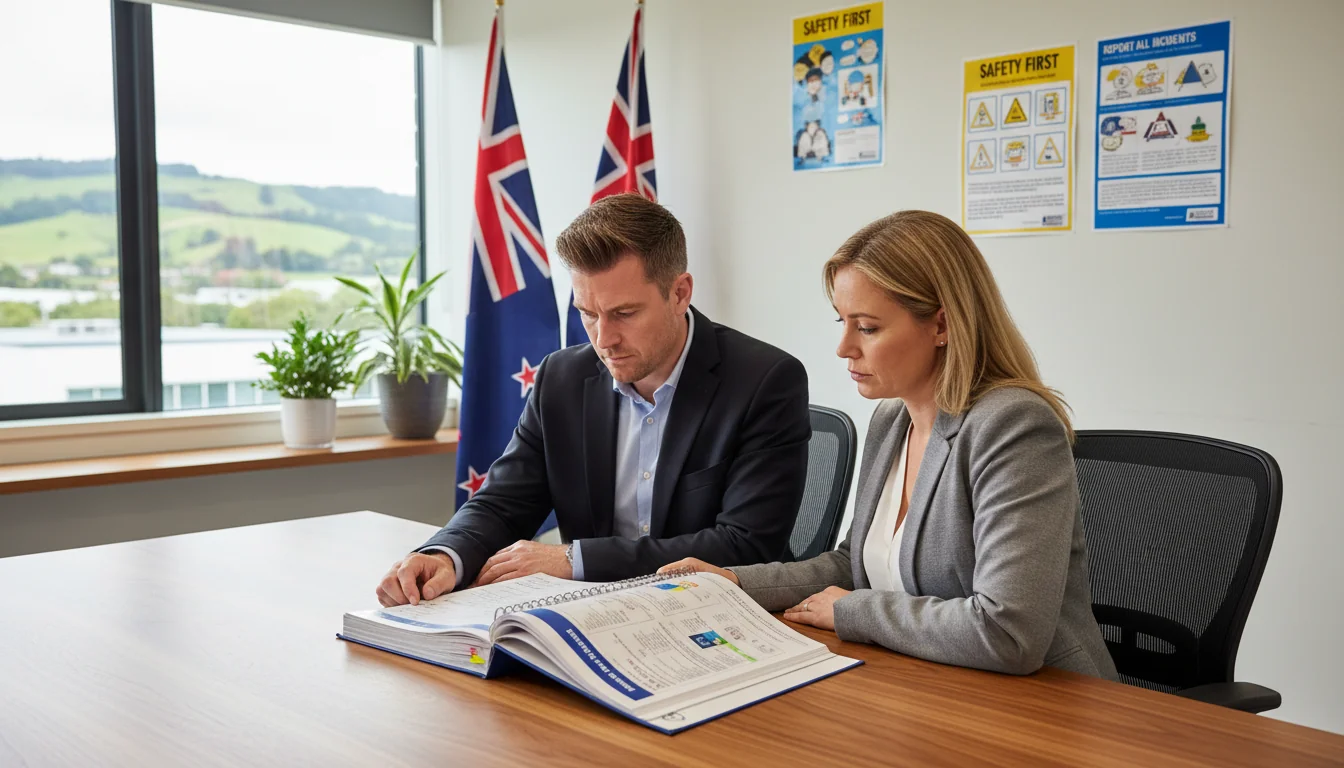
Why Free Templates Can Be Risky for Health and Safety Manuals
Relying on free templates for health and safety manuals can expose your business to significant risks. These generic documents often fail to address the unique aspects of your New Zealand operations, such as specific industry regulations, workplace environments, or local compliance requirements under the Health and Safety at Work Act 2015. Outdated or incomplete templates may overlook critical hazards, leading to non-compliance, potential fines, or even accidents. Moreover, they lack customization, making it difficult to integrate your company's policies, procedures, and risk assessments effectively.
AI-generated bespoke health and safety manuals offer a superior alternative by creating tailored documents specifically for your New Zealand business. Powered by advanced AI, our tool analyzes your inputs to produce comprehensive, up-to-date manuals that align with local legislation and your unique operational needs. This ensures full compliance, precise hazard identification, and seamless integration of your specific policies, providing a robust foundation for a safer workplace without the pitfalls of one-size-fits-all templates.
What is a Health and Safety Manual in New Zealand?
A Health and Safety Manual is an essential corporate document in New Zealand workplaces, outlining procedures to protect employees, contractors, and visitors from hazards. It serves as a comprehensive guide tailored to the specific risks of an organization, ensuring compliance with national standards.
The primary purpose of a Health and Safety Manual is to promote a safe working environment by detailing risk assessments, emergency protocols, and training requirements. This document helps businesses prevent accidents, reduce liabilities, and foster a culture of safety awareness among staff.
Under the Health and Safety at Work Act 2015, New Zealand employers with more than 20 workers must prepare a documented health and safety policy, which often forms the basis of the manual. For authoritative guidance, refer to the WorkSafe NZ workplace health and safety guide.
To create effective, customized documents, businesses should opt for bespoke AI-generated corporate documents using Docaro, ensuring they align precisely with the Act's requirements and organizational needs.
When should a Health and Safety Manual be used in a New Zealand business?
In New Zealand's high-risk industries like construction, mining, and manufacturing, a Health and Safety Manual is essential to mitigate workplace hazards and prevent accidents. These sectors face unique dangers such as heavy machinery operation and chemical exposure, making comprehensive manuals critical for employee training and emergency response protocols.
Mandatory compliance with the Health and Safety at Work Act 2015 requires New Zealand corporations to develop tailored health and safety systems, including manuals, to ensure legal adherence and avoid penalties. For detailed guidance on these requirements, refer to the internal resource on Understanding the Health and Safety Manual Requirements in New Zealand.
Corporations in agriculture or forestry, where remote locations amplify risks, rely on bespoke Health and Safety Manuals to outline site-specific procedures and foster a culture of safety. Using AI-generated tools like Docaro allows for customized documents that integrate the latest New Zealand workplace regulations, enhancing compliance and efficiency.
When should it not be used?
In low-risk office environments such as standard administrative settings with minimal physical hazards, a full Health and Safety Manual might not be necessary, as simpler policies can adequately address common risks like ergonomic workstation setup and fire evacuation procedures. These environments typically exclude high-risk activities, allowing organizations to focus on concise guidelines rather than comprehensive documentation.
For small businesses or remote work setups in New Zealand, basic health and safety policies suffice when hazards like machinery operation or chemical exposure are non-applicable, reducing the need for an exhaustive manual. Compliance with the WorkSafe New Zealand office guidelines ensures essential protections without overwhelming detail.
Key exclusions in such scenarios include non-applicable hazards like heavy lifting or hazardous materials, which are irrelevant to desk-based tasks and thus omitted from simplified policies. This targeted approach promotes efficiency while maintaining a safe workplace, tailored to the specific operations of the organization.
What are the key clauses to include in a Health and Safety Manual?
In New Zealand, risk assessment procedures under the Health and Safety at Work Act 2015 require employers to systematically identify workplace hazards, evaluate associated risks, and implement control measures to minimize harm. These procedures must be documented and regularly reviewed, with consultation involving workers to ensure comprehensive coverage of potential dangers like physical, chemical, or psychosocial hazards.
Emergency protocols are mandated to outline clear steps for responding to incidents such as fires, medical emergencies, or natural disasters, including evacuation plans, first aid provisions, and communication strategies. Compliance with WorkSafe New Zealand guidelines ensures these protocols are tested through drills and updated to reflect any changes in the workplace environment.
Training requirements emphasize providing workers with relevant health and safety education, tailored to specific job roles and risks identified in assessments. Employers must maintain records of training sessions and ensure ongoing refresher courses, as per regulations from WorkSafe New Zealand, to foster a proactive safety culture.
For tailored corporate documents incorporating these essential clauses, consider using bespoke AI-generated solutions from Docaro to meet unique business needs under New Zealand regulations.
"Ensure your health and safety documentation includes comprehensive, bespoke clauses tailored to your workplace risks—generate them efficiently with Docaro for maximum protection and compliance." – WorkSafe New Zealand
What rights and obligations do parties have under this document?
New Zealand health and safety laws, primarily under the Health and Safety at Work Act 2015, outline clear rights and obligations for employers, employees, and contractors to ensure workplace safety. Employers hold the primary duty to ensure, so far as is reasonably practicable, the health and safety of workers and others affected by their work, including providing safe systems, equipment, and training.
Employees and contractors must take reasonable care for their own health and safety and that of others, complying with instructions and using protective equipment provided. They have the right to a safe working environment and can refuse unsafe work without retaliation, while also obligated to report hazards or incidents promptly.
Duties to consult require employers to engage with workers and their representatives on health and safety matters, fostering participation through regular consultations and worker health and safety committees where applicable. This ensures collaborative decision-making on risk management and safety improvements.
Reporting incidents is mandatory for notifiable events like deaths, serious injuries, or illnesses, with employers required to notify WorkSafe New Zealand immediately and submit detailed reports within specified timeframes. For further details on compliance, refer to the official WorkSafe NZ guidelines or the Health and Safety at Work Act 2015.

Are there recent or upcoming legal changes affecting Health and Safety Manuals?
New Zealand's health and safety legislation has seen significant updates through the Health and Safety at Work Act 2015, with recent amendments focusing on improving compliance for businesses handling manuals and guidelines. These changes emphasise clearer documentation requirements to prevent workplace incidents, particularly in high-risk industries.
Upcoming revisions in 2024 aim to integrate digital tools for manual updates, ensuring that safety protocols are adaptable and accessible. For detailed insights, refer to our Key Updates to New Zealand's Health and Safety Manual Guidelines.
Businesses are encouraged to use bespoke AI-generated corporate documents via Docaro for customised compliance, rather than relying on generic templates. Authoritative resources include the official WorkSafe New Zealand guidelines on the Health and Safety at Work Act.
How can you implement a Health and Safety Manual effectively?
1
Conduct Risk Assessment
Identify workplace hazards and risks specific to your NZ business. Use bespoke AI-generated assessments from Docaro for tailored results.
2
Develop Custom Health and Safety Manual
Create a personalized manual using Docaro's AI tools, incorporating your risk assessment and NZ compliance needs.
3
Train Staff on Procedures
Deliver targeted training sessions based on the manual. Ensure all employees understand safety protocols and emergency responses.
4
Implement and Monitor
Roll out the manual across your workplace and regularly review for effectiveness. See <a href='/en-nz/a/implement-health-safety-manual-nz-workplace'>How to Implement a Health and Safety Manual in Your NZ Workplace</a> for details.
What common pitfalls should you avoid?
One frequent mistake in creating Health and Safety Manuals in New Zealand is ignoring site-specific risks, which can lead to generic documents that fail to address unique workplace hazards like machinery or environmental factors. This oversight often results in non-compliance with the Health and Safety at Work Act 2015, increasing the risk of accidents and legal penalties.
Another common error is failing to update documents regularly, leaving manuals outdated as regulations or workplace conditions evolve. For instance, not incorporating changes from WorkSafe guidelines can render the manual ineffective, exposing businesses to unnecessary dangers.
Businesses often overlook involving employees in the development process, leading to manuals that are not practical or understood by the team. To avoid this, consider generating bespoke AI-generated corporate documents using Docaro, tailored specifically to your New Zealand operations for better relevance and compliance.
You Might Also Be Interested In
A Document Outlining Company Policies, Procedures, Employee Rights, And Expectations In The Workplace.
A Formal Document Outlining Expected Standards Of Behavior, Ethical Principles, And Professional Conduct For Individuals Or Organizations.
A Corporate Policy Promoting Diverse Representation, Equitable Treatment, And Inclusive Practices In The Workplace.
A Corporate Document Outlining Guidelines For Employees Working Remotely Or In A Hybrid Model Combining Office And Remote Arrangements.
A Corporate Document Outlining Rules For Acceptable Use Of IT Resources To Ensure Security, Compliance, And Productivity.
A Corporate Policy Outlining How To Manage, Store, And Dispose Of Records And Data To Comply With Legal Requirements.
A Corporate Policy Outlining How Employees Can Report Misconduct Or Illegal Activities Internally Or Externally Without Fear Of Retaliation.
A Policy Document Outlining Processes For Handling Employee Misconduct, Complaints, And Disputes In The Workplace.
A Document Outlining The Responsibilities, Duties, Required Qualifications, And Reporting Structure For A Specific Position In An Organization.
A Structured Plan To Help An Employee Improve Performance Through Set Goals, Support, And Monitoring, Often Used Before Disciplinary Action.
A Corporate Document Outlining The Principles Guiding Employee Pay, Benefits, And Rewards To Align With Organizational Goals.
A Corporate Document Outlining The Reasons And Evidence For An Employee's Promotion.
A Form Used By Companies To Gather Employee Feedback Upon Resignation To Improve Retention And Workplace Practices.
A Documented Set Of Instructions Outlining Routine Procedures To Ensure Consistent And Efficient Operations.
A Documented Strategy Outlining Procedures For Detecting, Responding To, And Recovering From Security Incidents In An Organization.
A Strategic Document Outlining Procedures To Ensure Organizational Operations Continue During And Recover From Disruptions Or Disasters.
A Formal Document Outlining An Organization's Rules, Procedures, And Guidelines For Protecting Digital Assets And Mitigating Cyber Risks.
A Corporate Document Outlining Procedures, Standards, And Guidelines To Ensure Product Or Service Quality Meets Organizational Requirements.
A Corporate Document Outlining A Company's Performance And Initiatives In Environmental, Social, And Governance Areas.