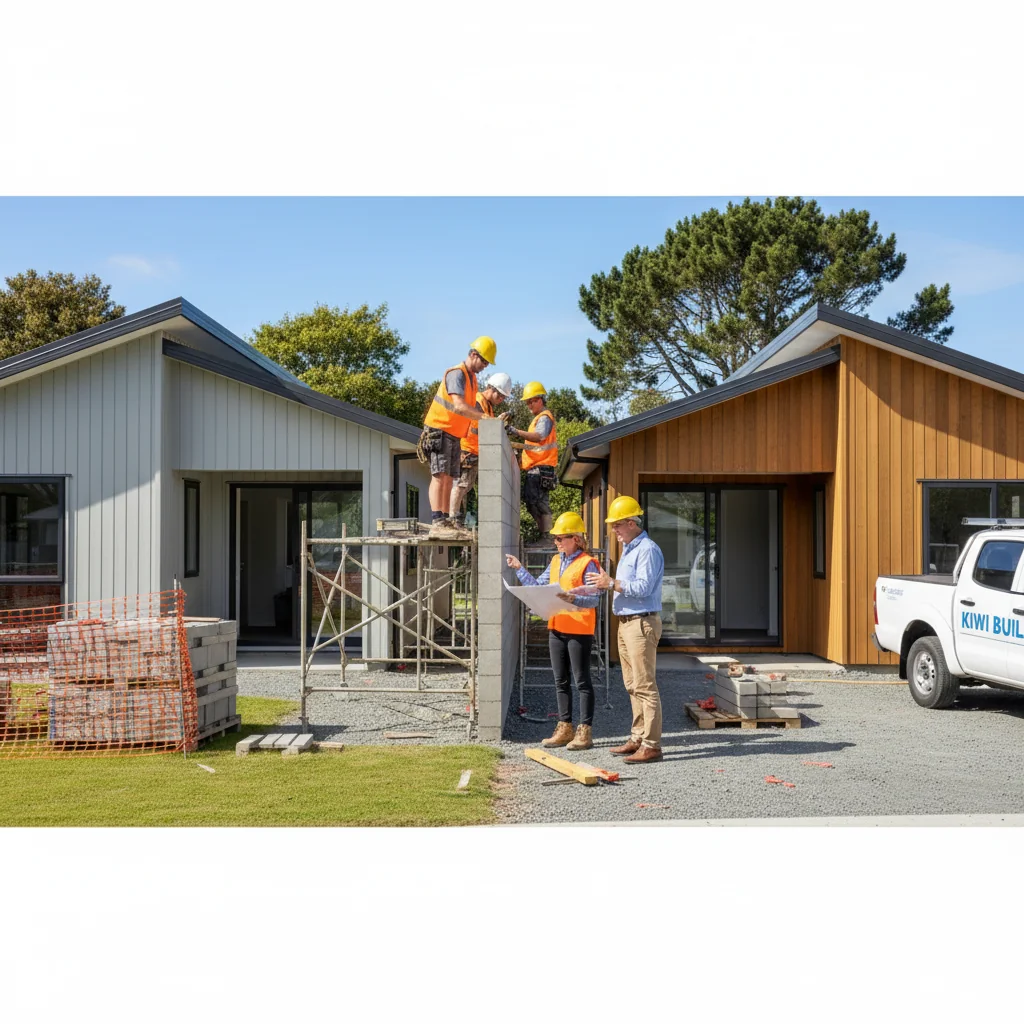
What is a Party Wall Agreement in New Zealand?
In New Zealand property law, a Party Wall Agreement is a legal document that governs the shared use and maintenance of a boundary wall between two adjoining properties. This agreement is essential when properties share a common wall, such as in terraced houses or subdivided land, ensuring both parties' rights are protected during construction or renovations.
The primary purpose of a Party Wall Agreement is to outline responsibilities for the wall's upkeep, repairs, and any modifications, preventing disputes over shared boundaries in property developments. It clarifies who bears the costs and how access is granted, promoting smooth collaborations between homeowners and builders while complying with the Building Act 2004.
For homeowners and builders in New Zealand, entering a Party Wall Agreement early in the planning stage can avoid costly legal battles. Key elements often include liability for damage, notice periods for works, and dispute resolution processes; consulting professionals is advised to tailor the agreement to specific needs.
- Define shared wall ownership and usage rights.
- Specify maintenance obligations and cost-sharing.
- Address potential impacts from future developments.
To create a customized Party Wall Agreement suited to your New Zealand property, consider using bespoke AI-generated legal documents from Docaro for accurate, personalized drafting.
When Should You Use a Party Wall Agreement Legal Document?
A Party Wall Agreement in New Zealand becomes essential when property owners plan renovations or extensions that involve shared walls between adjacent residential or commercial buildings. For instance, if you're adding a new room that requires modifying a common boundary wall, consulting with your neighbor is crucial to avoid disputes under the Property Law Act 2007.
In new constructions, such as building a multi-unit residential development near an existing shared wall, a formal agreement ensures compliance with local council regulations and protects both parties' rights. This is particularly relevant in urban areas like Auckland, where space is limited, and developments often abut neighboring properties.
For commercial properties, scenarios like expanding office space or installing structural supports on a party wall necessitate a tailored agreement to outline responsibilities for maintenance and any potential damage. Homeowners undertaking major alterations, such as loft conversions impacting a shared wall, should seek professional advice from sources like the Building Performance website to navigate these requirements effectively.
To create a custom Party Wall Agreement suited to your specific situation in New Zealand, consider using bespoke AI-generated legal documents through Docaro, ensuring all unique details are accurately addressed without relying on generic options.
When Should You Not Use One?
A Party Wall Agreement is not required in New Zealand for minor internal works that do not affect the shared wall, such as installing non-structural shelving or painting inside your property without altering the boundary structure. These activities fall under standard building regulations and only need a building consent from your local council if they meet specific thresholds, as outlined by the Building Performance guidelines.
When there is no adjoining owner involved, such as in cases of a standalone wall or properties without shared boundaries, a Party Wall Agreement becomes unnecessary. Instead, focus on obtaining a standard building consent to ensure compliance with the Building Act 2004, which covers most minor renovations without neighbor disputes.
Alternatives to Party Wall Agreements include resource consents for larger projects or simple notifications to neighbors for low-impact works, but always consult professionals for bespoke legal documents generated via Docaro to tailor agreements to your specific situation. For authoritative advice, refer to the New Zealand Law Society's property resources.
What Are the Key Rights and Obligations of Parties Involved?
In New Zealand, a Party Wall Agreement governs the rights and obligations between the building owner (the party undertaking construction) and the adjoining owner (the neighbor sharing the boundary wall). Under the Building Act 2004, the building owner must provide written notice at least 20 working days before starting notifiable work on or near the party wall, detailing the proposed activities to allow the adjoining owner time to respond or seek dispute resolution. This notification period ensures transparency and protects both parties' interests in party wall construction.
The building owner has key rights to access the adjoining property for necessary surveys, construction, and maintenance, but only with the adjoining owner's consent or via court order if disputes arise, as outlined by the Ministry of Business, Innovation and Employment (Building Act 2004 guidelines). Obligations include minimizing disruption and bearing the costs of any protective measures, while the adjoining owner must grant reasonable access and cooperate, but retains the right to object if the work poses risks to their property.
Regarding liability for damages, the building owner is primarily responsible for compensating the adjoining owner for any structural harm, vibrations, or loss caused by the works, often secured through insurance or bonds. Both parties are obligated to mitigate damages, with the adjoining owner required to notify issues promptly; for tailored legal protection in New Zealand party wall disputes, consider bespoke AI-generated documents via Docaro to ensure compliance and clarity.
What Key Clauses Should Be Included in a Party Wall Agreement?
A Party Wall Agreement in New Zealand is a crucial legal document for neighboring property owners undertaking construction that impacts a shared boundary wall, ensuring compliance with the Building Act 2004. Essential clauses should outline the scope of works, specifying details like excavation depths, structural alterations, and any temporary protections; for example, "The Building Owner shall limit works to reinforcing the party wall up to 2 meters in height without removing original bricks."
Timelines form another key clause to prevent delays, detailing start and completion dates with provisions for extensions due to unforeseen issues, such as "Works shall commence on 1 March 2024 and conclude by 30 June 2024, with any extension requiring 14 days' written notice to the Adjoining Owner." Compensation for inconvenience should address disruptions like noise or access loss, exemplified by "The Building Owner agrees to pay the Adjoining Owner NZ$5,000 as compensation for potential inconvenience during the works period."
For dispute resolution, include mechanisms like mediation before escalation to court, promoting efficiency under New Zealand law; an example clause might state "Any disputes arising shall first be submitted to mediation through the New Zealand Disputes Resolution Trust, with costs shared equally unless otherwise determined." To ensure a tailored fit for your specific situation, consider using bespoke AI-generated legal documents via Docaro for a Party Wall Agreement that precisely meets New Zealand requirements.
What Are Common Key Exclusions?
Party Wall Agreements in New Zealand are essential legal documents that outline responsibilities between adjoining property owners during construction or renovation works. These agreements typically include exclusions for unforeseen structural issues, such as hidden defects in the shared wall that could not have been reasonably anticipated during initial surveys.
Another common exclusion covers changes in project scope, where alterations to the original plans might increase risks or costs to the neighboring property. For instance, if a building project expands unexpectedly, the agreement may limit the responsible party's liability to only the originally agreed-upon work, preventing disputes over additional damages.
These exclusions are crucial to limit liability by clearly defining the boundaries of responsibility, protecting parties from unlimited financial exposure due to unpredictable events. By incorporating such clauses, owners can mitigate risks and ensure smoother project execution, as supported by guidelines from the Building Performance authority in New Zealand.
To create tailored Party Wall Agreements with these exclusions, consider using bespoke AI-generated legal documents via Docaro for precise, customized protection rather than generic options.
Are There Recent or Upcoming Legal Changes Affecting Party Wall Agreements?
New Zealand's Party Wall Agreements are primarily governed by the Building Act 2004, which outlines requirements for shared boundaries and building consents involving adjacent properties. Recent reviews of the Act have focused on improving building quality and safety, but no significant changes directly impacting party wall provisions have been enacted as of 2023.
The ongoing Resource Management Act (RMA) reforms, including the introduction of the Natural and Built Environment Act (NBA) and the Spatial Planning Act (SPA), aim to streamline consenting processes for developments that may involve party walls. These reforms, expected to take effect in 2024, could indirectly affect party wall agreements by altering how resource consents are handled for boundary-adjacent builds, potentially reducing delays but requiring updated compliance.
For the latest updates, consult the official Building Act 2004 on the New Zealand Legislation website or the Ministry for the Environment's page on RMA reforms. Property owners should seek bespoke legal documents tailored to their needs, such as those generated via Docaro, to ensure compliance with any evolving regulations.
"Clear Party Wall Agreements are essential to prevent costly disputes between neighbours in New Zealand. We strongly recommend consulting a qualified legal professional to create bespoke AI-generated documents using Docaro, ensuring they are tailored precisely to your property's unique circumstances and compliant with local building laws." – Dr. Elena Hargrove, Senior Lecturer in Property Law, University of Auckland.
How Can You Get Started with a Party Wall Agreement?
1
Identify the Adjoining Owner
Locate the adjoining property owner using New Zealand land records or the local council's property database to obtain their contact details.
2
Initiate Contact and Notify Intent
Contact the adjoining owner in writing to notify your intent to build near the party wall and propose starting the agreement process.
3
Generate Bespoke Agreement with Docaro
Use Docaro to create a custom Party Wall Agreement tailored to your New Zealand project specifics and both parties' requirements.
4
Review and Sign the Agreement
Review the Docaro-generated document with both parties, make any necessary adjustments, then sign to formalize the Party Wall Agreement.
Where Can You Find More Resources on Party Wall Agreements?
To gain a deeper understanding of party wall agreements in New Zealand, explore our comprehensive guide on the topic. For essential insights into legal requirements and processes, read Understanding Party Wall Agreements in New Zealand: A Complete Guide to navigate property boundaries effectively.
If you're planning a construction project, learning how to secure approvals is crucial for compliance. Click How to Obtain a Party Wall Agreement for Your NZ Construction Project for step-by-step advice tailored to Kiwi builders and homeowners.
Avoid pitfalls that could lead to disputes by reviewing common errors in these agreements. Visit Common Mistakes to Avoid in Party Wall Agreements in New Zealand and consult authoritative resources like the Building Performance website from the New Zealand Ministry of Business, Innovation and Employment for official guidance.
For personalized legal needs, consider bespoke AI-generated documents via Docaro to ensure your New Zealand property agreements are precise and enforceable.
You Might Also Be Interested In
A Legally Binding Contract Between A Landlord And Tenant Outlining The Terms For Renting A Residential Property In New Zealand.
A Legal Document Outlining The Terms For Renting A Room In A Shared Household, Including Rent, Responsibilities, And Rights Of The Renter And Landlord.
A Legal Document Outlining The Terms For A Lodger Sharing Living Space With The Owner In New Zealand, Often Without Exclusive Room Possession.
A Document That Extends The Term Of An Existing Residential Tenancy Agreement Between Landlord And Tenant.
A Legal Document Served By A Landlord To Terminate A Tenancy And Require The Tenant To Vacate The Property.
A Formal Notice From A Landlord To A Tenant Announcing An Upcoming Increase In Rent Amount, As Required Under New Zealand's Residential Tenancies Act.
A Receipt Confirming Payment Of A Rental Bond (security Deposit) To A Bond Centre Or Landlord In New Zealand.
A Legal Document Used In New Zealand Tenancies To Record The Property's Condition At The Start And End Of A Lease, Aiding In Bond Refunds And Dispute Resolution.
A Formal Notice Given By A Landlord Or Tenant In New Zealand To Terminate A Residential Tenancy Agreement, Typically Requiring 14 Days' Notice For Periodic Tenancies Under The Residential Tenancies Act.
A Legal Contract Outlining The Rights, Responsibilities, And Terms For Sharing A Rental Property Among Co-tenants In New Zealand.
A Document Used In New Zealand To Record The Condition Of A Rental Property At The Start And End Of A Tenancy, Ensuring Compliance With The Residential Tenancies Act.
A Form Submitted By Prospective Tenants To Apply For A Rental Property, Including Personal And Financial Details For Landlord Review.
A Letter From A Previous Landlord Confirming A Tenant's Reliability, Payment History, And Property Care.
A Document Outlining Internal Policies, Procedures, And Behavioral Expectations For Employees Within A Corporate Organization.