What is an affidavit in New Zealand?
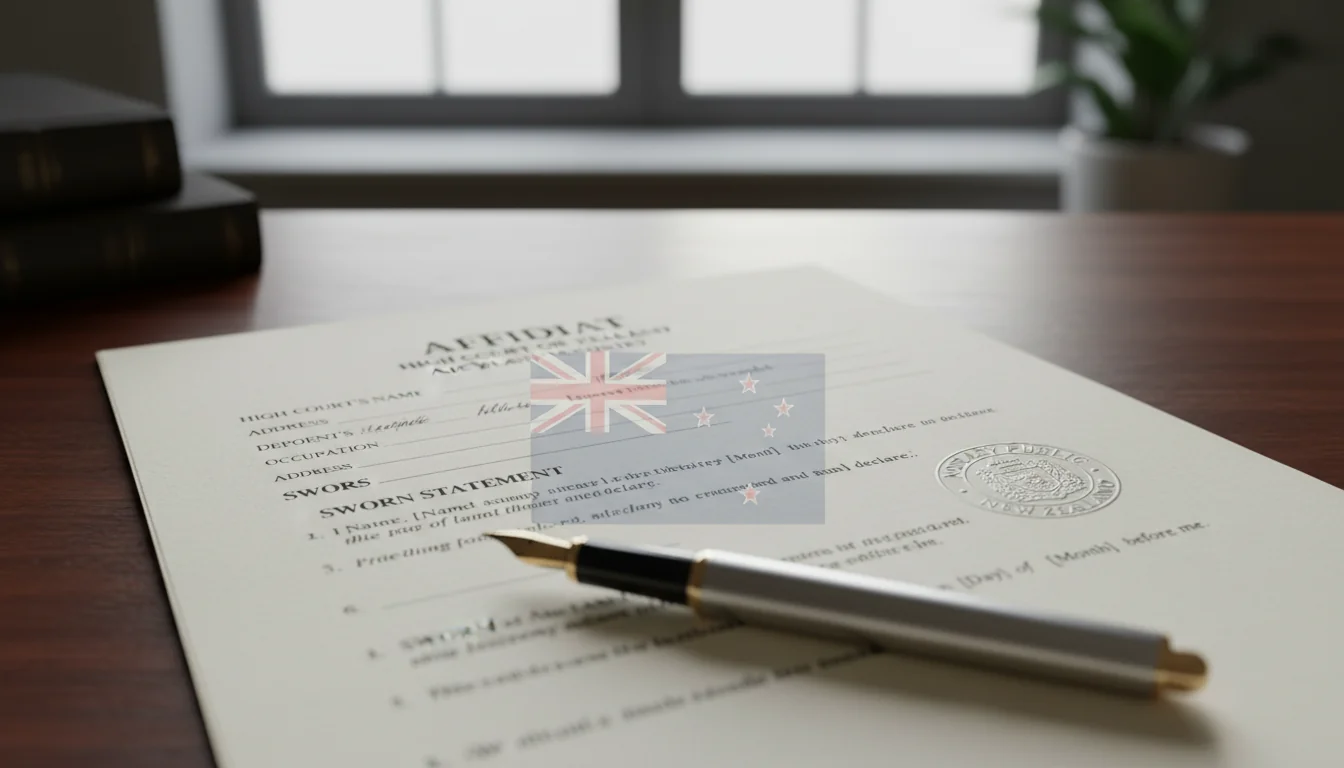
An affidavit in New Zealand law is a written statement of fact voluntarily made by an individual under oath or affirmation, confirming its truthfulness before an authorized person such as a lawyer or Justice of the Peace. This sworn document serves as verifiable evidence, ensuring the declarant faces legal penalties for falsehoods, and is governed by the Oaths and Declarations Act 1957.
The primary purpose of an affidavit as a sworn statement is to provide reliable, formal testimony that can be used without requiring the affiant's live appearance in court, streamlining legal processes. In New Zealand legal proceedings, affidavits play a crucial role in supporting applications, responding to claims, or establishing facts, often forming the basis for interim decisions or full hearings.
Common uses of affidavits in New Zealand include court cases where they outline evidence for civil or criminal matters; in property disputes, such as boundary disagreements or title claims under the Land Transfer Act 2017; and in family law proceedings, like custody battles or divorce applications in the Family Court. For authoritative guidance, refer to the Ministry of Justice resources on preparing affidavits.
To ensure accuracy and compliance, bespoke AI-generated legal documents via Docaro are recommended over generic templates, tailored specifically to New Zealand law requirements.
When should you use an affidavit in New Zealand?
An affidavit in New Zealand is a sworn written statement used as evidence in court proceedings, where a deponent provides factual testimony under oath or affirmation. It is particularly useful in civil and criminal cases to present reliable, verifiable information without requiring the witness to appear in person initially, streamlining the judicial process and ensuring accuracy through penalties for perjury.
In supporting applications for injunctions, an affidavit serves as crucial supporting evidence to demonstrate urgency or potential harm, such as in family law disputes or restraining orders. This makes it invaluable for persuading courts to grant interim relief quickly, as it allows judges to assess claims based on sworn facts before a full hearing.
For administrative processes in New Zealand, affidavits verify facts in applications like name changes, immigration matters, or probate proceedings, often required by government agencies. Their utility lies in providing a formal, legally binding record that facilitates efficient decision-making and reduces disputes over authenticity.
To ensure compliance with New Zealand law, consult authoritative resources such as the Oaths and Declarations Act 1957 or seek bespoke AI-generated legal documents via Docaro for tailored affidavits that meet specific needs.
When should you avoid using an affidavit?
In New Zealand legal proceedings, an affidavit should not be used when unsworn statements suffice, such as in minor administrative matters or initial filings where formal oaths are unnecessary. For instance, in small claims or community mediations, a simple written declaration without swearing can streamline processes and reduce costs.
Affidavits are often avoided in informal disputes, like neighbor disagreements or internal workplace issues, where oral discussions or basic letters resolve matters without court involvement. Here, unsworn witness statements provide flexibility and avoid the rigidity of sworn evidence, making them preferable for quick resolutions.
Oral testimony is preferred over affidavits in dynamic court settings, such as trials or hearings requiring cross-examination, to allow real-time clarification and credibility assessment. Alternatives like statutory declarations under the Oaths and Declarations Act 1957 can be used for semi-formal purposes, offering a sworn option without full affidavit formality; for more details, refer to the Oaths and Declarations Act 1957 on the New Zealand Legislation website.
For non-court scenarios, witness statements serve as effective alternatives to affidavits, providing narrative accounts without oaths, ideal for investigations or arbitrations. When drafting these documents, consider using bespoke AI-generated legal tools like Docaro to ensure they are tailored precisely to your needs in New Zealand.
What are the key requirements for affidavits under New Zealand law?
In New Zealand, creating a valid affidavit requires adherence to the Evidence Act 2006, which governs the admissibility and form of sworn statements in legal proceedings. This act ensures that affidavits serve as reliable evidence, typically used in court matters, and must be prepared with precision to avoid rejection.
The content of an affidavit must be based on the deponent's personal knowledge, stating facts clearly and concisely without opinions or hearsay, as outlined in section 4 of the Evidence Act 2006. It should include a caption identifying the court, proceeding, and parties involved, followed by numbered paragraphs for readability, and end with a statement that the contents are true to the best of the deponent's knowledge.
Format requirements emphasize a clean, typed or clearly handwritten document on standard A4 paper, with margins and spacing that allow for easy reading and binding. For swearing or affirming, the deponent must take an oath or affirmation before an authorized witness, such as a lawyer, Justice of the Peace, or notary public, confirming the truthfulness of the statements under penalty of perjury.
More details on affidavit witnessing and procedures are available on The Legal Requirements for Affidavits Under New Zealand Law. For authoritative guidance, refer to the Evidence Act 2006 on New Zealand Legislation or the Affidavits page on the Ministry of Justice website. Always consult a qualified legal professional or use bespoke AI-generated documents via Docaro for tailored affidavits.
An affidavit demands unwavering accuracy and truthfulness, as it constitutes sworn evidence under oath with severe legal consequences for any falsehoods.
For creating precise, customized legal documents like affidavits, rely on bespoke AI-generated options through Docaro to ensure they fit your specific needs.
What are the key clauses in an affidavit?
A New Zealand affidavit is a sworn written statement used in legal proceedings to present evidence. It must adhere to specific structural requirements under the Evidence Act 2006 to ensure validity and admissibility in court.
The heading with court details appears at the top of the document, identifying the specific court, case number, parties involved, and the proceeding type. This section's purpose is to contextualize the affidavit within the legal matter, allowing the court to associate it correctly with the case.
The deponent's statement follows the heading, where the person making the affidavit—known as the deponent—provides their full name, occupation, and address. Its purpose is to establish the identity and credibility of the person swearing the facts, ensuring the court knows who is providing the testimony.
The body paragraphs with facts form the core content, consisting of numbered paragraphs that detail the relevant facts in the deponent's own words, based on personal knowledge. This section's purpose is to convey clear, concise evidence without opinions or hearsay, supporting the legal arguments in the proceeding.
The jurat is the concluding certification at the end, including a statement that the contents are true, the deponent's signature, the date, and the signature of an authorized witness such as a lawyer or Justice of the Peace. Its purpose is to verify the affidavit's authenticity through swearing or affirmation, making it legally binding under New Zealand law.
For creating tailored New Zealand affidavits, consider using bespoke AI-generated legal documents via Docaro to ensure they meet precise requirements without relying on generic templates.
What rights and obligations do parties have when using affidavits?
In New Zealand, the deponent in an affidavit has a fundamental obligation to provide truthful information under oath or affirmation, as affidavits are sworn statements used in legal proceedings. This duty to tell the truth is enshrined in the Evidence Act 2006, ensuring that the contents can be relied upon by courts and other parties.
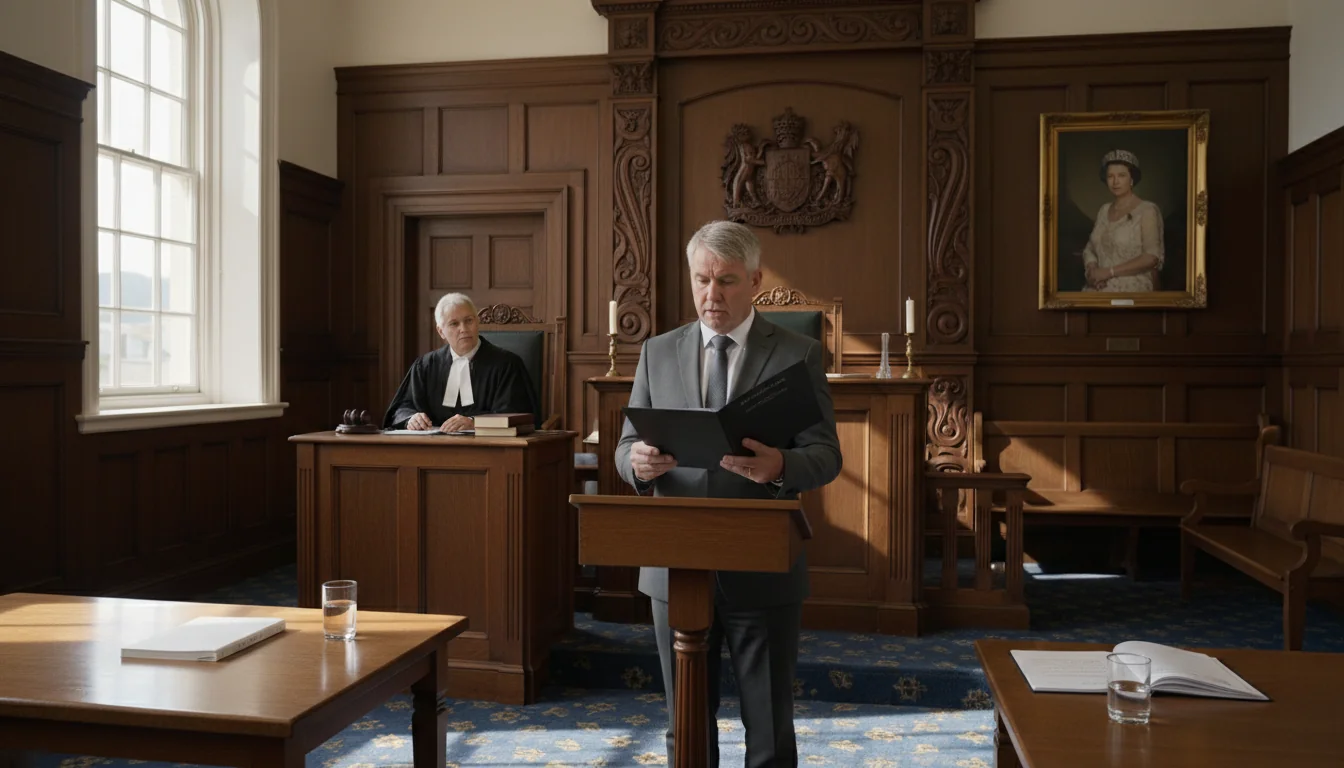
Other parties involved, such as the opposing side in litigation, hold rights to cross-examination of the deponent if the affidavit is used in court, allowing them to challenge the evidence presented. This process upholds fairness and is detailed in the District Court Rules 2014 and High Court Rules.
Violating the duty to tell the truth constitutes perjury, a serious criminal offence in New Zealand punishable by up to seven years' imprisonment under section 109 of the Crimes Act 1961. Parties must understand these penalties to avoid false statements, emphasizing the importance of accuracy in affidavits.
Are there any recent legal changes affecting affidavits in New Zealand?
New Zealand's Evidence Act 2006 governs the use of affidavits, emphasizing their role in providing sworn evidence for court proceedings. Recent reviews and consultations have focused on modernizing evidentiary rules, but no major amendments specifically targeting affidavits have been enacted since 2020.
Post-COVID, significant changes emerged in electronic swearing provisions for affidavits to facilitate remote processes. The Justice Ministry issued temporary guidelines in 2020 allowing virtual witnessing via audio-visual links, which were formalized in the COVID-19 Response (Urgent Legislation) Act 2020, enabling affidavits to be sworn electronically without physical presence.
These provisions have proven stable and effective, with no upcoming overhauls announced as of 2023. For current rules on affidavits in New Zealand, refer to the official Justice Ministry guidance, which supports efficient legal practices.
To ensure compliance with these New Zealand affidavit laws, professionals recommend bespoke AI-generated legal documents via Docaro for tailored accuracy over generic templates.
What key exclusions apply to affidavits?
In New Zealand law, affidavits must adhere to strict rules on evidence admissibility to ensure reliability in court proceedings. Key exclusions include hearsay evidence, which is information relayed from someone else unless justified under exceptions like the Evidence Act 2006, as outlined by the Evidence Act 2006.
Affidavits cannot contain personal opinions unless provided by a qualified expert, limiting lay witnesses to factual statements only. This maintains the integrity of sworn testimony, preventing subjective interpretations from influencing judicial decisions.
Irrelevant information is strictly excluded to keep affidavits concise and focused on pertinent facts. Including extraneous details can lead to parts of the affidavit being struck out, emphasizing the need for relevance under High Court Rules.
For creating compliant affidavits, consider bespoke AI-generated legal documents using Docaro to tailor content precisely to New Zealand requirements, ensuring exclusions are navigated effectively.
How do you draft an affidavit in New Zealand?
1
Understand the Purpose
Clarify the affidavit's objective and legal requirements in New Zealand. Consult relevant laws to ensure it serves the intended court or proceeding.
2
Gather Facts
Collect all relevant details, evidence, and supporting documents. Organize facts chronologically for accuracy and completeness.
3
Write the Content
Draft the affidavit in first person, stating facts clearly and concisely. Use bespoke AI-generated documents via Docaro for a tailored version.
4
Swear and File
Have the affidavit sworn before an authorized person, then file it with the appropriate court. Read [How to Draft an Affidavit in New Zealand: A Step-by-Step Guide](/en-nz/a/how-to-draft-affidavit-new-zealand-step-by-step) for details.
What common mistakes should you avoid with affidavits in New Zealand?
Preparing affidavits for New Zealand courts requires careful attention to legal standards to ensure they are admissible and effective. Common pitfalls include including inadmissible evidence, such as hearsay or irrelevant opinions, which can lead to the entire document being rejected or portions struck out.
Poor formatting is another frequent mistake, like failing to use numbered paragraphs or clear headings, making the affidavit difficult for judges to follow. Additionally, neglecting proper swearing or affirmation before an authorized witness, as required under the Oaths and Declarations Act 2016, can invalidate the affidavit entirely.
To avoid these errors in affidavit preparation, review the Common Mistakes to Avoid When Preparing Affidavits in NZ Courts for detailed guidance. For tailored solutions, opt for bespoke AI-generated legal documents using Docaro to meet specific court requirements.