Docaro

AI Generated Safeguarding Policy for use in South Africa
PDF & Word - 2026 Updated

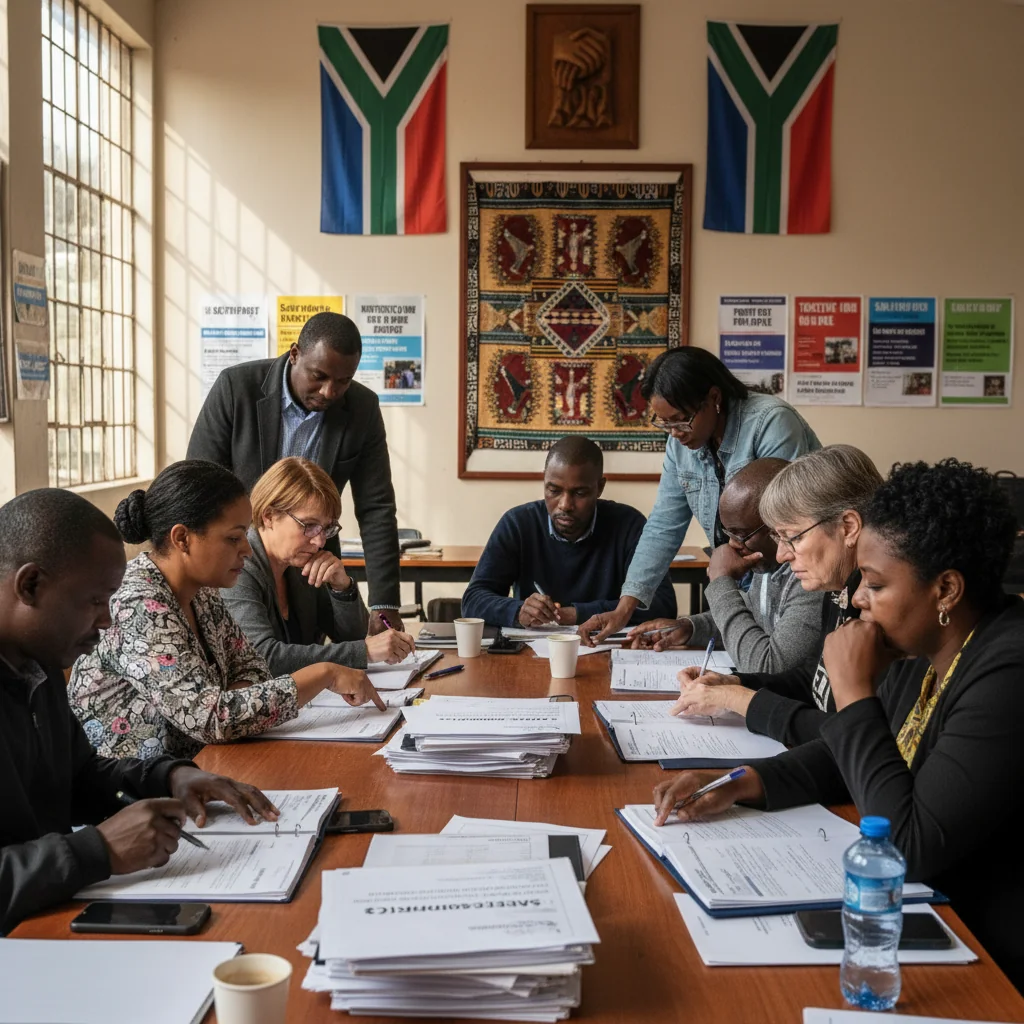
A photorealistic image depicting a professional safeguarding policy meeting in a South African corporate office, showing diverse adult professionals discussing and reviewing policy documents on a table, with South African cultural elements like a flag in the background, emphasizing protection and compliance without focusing on the documents themselves.
Generate a comprehensive AI-powered safeguarding policy tailored for South African organizations to protect vulnerable individuals, ensure child safety, and comply with local regulations like the Children's Act.
Free instant document creation.
Compliant with South Africa law.
No sign up or monthly subscription.

Docaro Pricing

Basic
Free
Document Generation
No Sign Up
No Subscription
Download Watermarked PDF
Premium
$4.99 USD
Document Generation
No Sign Up
No Subscription
Download Clean PDF
Download Microsoft Word
Download HTML
Download Text
Email Document
Generate your document for free. Only pay if you like the result and need an un-watermarked version.

When do you need a Safeguarding Policy in South Africa?

  • Working with children or vulnerable people
    You need this policy if your organization involves children, the elderly, or people with disabilities to ensure their safety and protection.
  • Running a school or childcare service
    Schools, nurseries, and after-school programs require a safeguarding policy to outline steps for preventing harm and responding to risks.
  • Operating a community or youth group
    Community centers, sports clubs, or youth organizations must have this policy to create a safe environment and handle any concerns effectively.
  • Providing healthcare or social services
    Hospitals, clinics, or support services for vulnerable groups need it to protect users and comply with basic safety standards.
  • Why a well-drafted policy matters
    A clear and thorough policy helps prevent issues, builds trust, and ensures everyone knows how to keep people safe in your organization.

South African Legal Rules for a Safeguarding Policy

  • Children's Act Requirement
    Organizations working with children must have a safeguarding policy to protect them from abuse and neglect, as required by the Children's Act 38 of 2005.
  • Protection from Harm
    The policy must outline steps to prevent and respond to any form of harm, including physical, emotional, or sexual abuse.
  • Vulnerable Groups Coverage
    It should cover not just children but also other vulnerable people like the elderly or disabled, under laws like the Older Persons Act 13 of 2006.
  • Reporting Obligations
    Staff must report any suspected abuse to authorities immediately, with failure to do so potentially leading to legal penalties.
  • Safe Recruitment Practices
    The policy needs to include background checks and training for anyone working with vulnerable individuals to ensure their safety.
  • Regular Reviews Needed
    The safeguarding policy should be reviewed and updated regularly to stay compliant with current laws and best practices.
Important

Failing to tailor the safeguarding policy to the specific context and regulatory requirements can expose the organization to legal non-compliance risks.

What a Proper Safeguarding Policy Should Include

  • Purpose and Scope
    Clearly state the policy's goal to protect vulnerable individuals like children and adults from harm, and define who it applies to in your organization.
  • Key Definitions
    Explain simple terms like abuse, neglect, and safeguarding to ensure everyone understands the policy's focus.
  • Roles and Responsibilities
    Outline what staff, volunteers, and leaders must do to prevent harm and respond to concerns.
  • Reporting Procedures
    Describe easy steps for reporting suspected abuse or risks, including who to contact and how to do it safely.
  • Training Requirements
    Detail mandatory training for everyone to recognize dangers and know how to act.
  • Safe Recruitment Practices
    Set rules for checking backgrounds and references when hiring people who work with vulnerable groups.
  • Support for Victims
    Explain how to provide immediate help and ongoing support to those affected by harm.
  • Monitoring and Review
    Plan regular checks and updates to the policy to keep it effective and relevant.

Why Free Templates Can Be Risky for Safeguarding Policy

Free safeguarding policy templates are often generic and outdated, failing to comply with South Africa's specific legal requirements under the Children's Act or POPIA. Using them can lead to inadequate protections, non-compliance fines, or legal vulnerabilities in case of incidents.

An AI-generated bespoke safeguarding policy is tailored to your organisation's unique needs, incorporating current South African regulations, custom clauses for your context, and precise language to ensure robust compliance and effective protection.

Generate Your Bespoke Safeguarding Policy in 4 Easy Steps

1
Answer a Few Questions
Our AI guides you through the info required.
2
Generate Your Document
Docaro builds a bespoke document tailored specifically on your requirements.
3
Review & Edit
Review your document and submit any further requested changes.
4
Download & Sign
Download your ready to sign document as a PDF, Microsoft Word, Txt or HTML.

Why Use Our AI Safeguarding Policy Generator?

Fast Generation
Quickly generate a comprehensive Safeguarding Policy, eliminating the hassle and time associated with traditional document drafting.
Guided Process
Our user-friendly platform guides you step by step through each section of the document, providing context and guidance to ensure you provide all the necessary information for a complete and accurate Safeguarding Policy.
Safer Than Legal Templates
We never use legal templates. All documents are generated from first principles clause by clause, ensuring that your document is bespoke and tailored specifically to the information you provide. This results in a much safer and more accurate document than any legal template could provide.
Professionally Formatted
Your Safeguarding Policy will be formatted to professional standards, including headings, clause numbers and structured layout. No further editing is required. Download your document in PDF, Microsoft Word, TXT or HTML.
Compliance with South African Law
Rest assured that all generated documents meet the latest legal standards and regulations of South Africa, enhancing trust and reliability.
Cost-Effective
Save money by generating legally sound Safeguarding Policy without the need for expensive legal services or consultations.
Get Started for Free - No Sign Up or Monthly Subscription Required
No payment or sign up is required to start generating your Safeguarding Policy. Generate and download a watermarked version of your document for free. Pay only if you want to remove the watermark and gain full access to your document. No monthly subscriptions or hidden fees. Pay once and use your document forever.
Need to Generate a Safeguarding Policy in a Different Country?
Choose country:

South Africa Compliance Legislation

Your AI Generated Safeguarding Policy will be checked for compliance against the following legislation and regulations:
Provides for the protection of children, including safeguarding measures against abuse, neglect, and exploitation, forming the basis for child safeguarding policies in various sectors.
Regulates the justice system for children in conflict with the law and supports safeguarding by ensuring child-friendly legal processes and protection from harm.
Outlines the rights and protections for older persons, including safeguards against abuse, neglect, and exploitation, relevant for safeguarding policies in care facilities.
Offers legal protection against harassment, stalking, and abuse, which can be incorporated into safeguarding policies to prevent harm in workplaces and communities.
Amends laws on sexual offences, including protections for victims and mandatory reporting, essential for safeguarding policies addressing sexual abuse.

What is a Safeguarding Policy Legal Document in South Africa?

A safeguarding policy legal document in South Africa serves as a critical framework for organizations to protect vulnerable individuals, such as children, the elderly, and those with disabilities, from abuse, neglect, and exploitation. Its primary purpose is to outline proactive measures, reporting procedures, and accountability mechanisms, ensuring compliance with key legislation like the Children's Act 38 of 2005 and the Older Persons Act 13 of 2006.

This document mandates organizations, including schools, NGOs, and healthcare providers, to implement risk assessments, staff training, and incident response protocols tailored to South African contexts. By embedding these elements, it fosters a culture of safety and aligns with national standards set by bodies like the Department of Social Development, reducing legal liabilities and enhancing trust among stakeholders.

For effective implementation, organizations should develop bespoke safeguarding policies using AI-generated tools like Docaro, customized to their specific operations rather than relying on generic templates. Additional resources, such as the South African Government Gazette on child protection laws, provide authoritative guidance for compliance.

  • Key Components: Includes clear definitions of abuse, designated safeguarding leads, and whistleblower protections.
  • Legal Alignment: Ensures adherence to the Constitution of South Africa and Prevention and Combating of Trafficking in Persons Act.
  • Monitoring and Review: Requires periodic audits to adapt to evolving threats and regulations.

When Should and Should Not a Safeguarding Policy Be Used?

In South African education institutions, a safeguarding policy legal document is essential to protect children from abuse and neglect, ensuring compliance with the Children's Act 38 of 2005. Schools and universities must implement these policies to outline procedures for reporting incidents, training staff, and creating safe environments, particularly when working directly with minors.

Within South African healthcare organizations, such documents are crucial for safeguarding vulnerable patients, including the elderly and those with disabilities, as mandated by the National Health Act 61 of 2003. Hospitals and clinics rely on bespoke AI-generated legal documents using Docaro to address risks like exploitation, providing clear guidelines for staff responsibilities and incident management.

NGOs in South Africa working with children and vulnerable groups, such as those focused on poverty alleviation or refugee support, require comprehensive safeguarding policies to meet legal standards under the Prevention and Combating of Trafficking in Persons Act. These organizations benefit from tailored policies that detail risk assessments and partnerships with authorities, as outlined in resources from the South African Government.

For small non-interacting businesses in South Africa, like local retail shops without contact with children or vulnerable populations, a safeguarding policy is generally not necessary or applicable. These entities focus on standard commercial regulations under the Consumer Protection Act, avoiding the need for specialized child protection measures unless they expand into relevant services.

"Safeguarding policies must be meticulously customized to an organization's unique context and risks, avoiding blanket applications that dilute effectiveness. For optimal results, organizations should leverage bespoke AI-generated legal documents through Docaro to ensure precision and compliance." – Dr. Lindiwe Nkosi, South African Legal Expert in Corporate Governance
Secure legal documents in office

What Are the Key Clauses in a Safeguarding Policy Document?

A South African safeguarding policy typically begins with essential definitions to clarify key terms like abuse, vulnerability, and safeguarding, ensuring all stakeholders understand the scope. For foundational understanding, refer to the guide on understanding safeguarding policies in South Africa.

Risk assessments form a core clause, outlining procedures for identifying, evaluating, and mitigating risks to vulnerable individuals, often aligned with the Children's Act 38 of 2005. Organizations must conduct regular assessments to prevent harm, with details on implementation available in the key elements of an effective safeguarding policy in South Africa.

Reporting mechanisms are crucial, detailing confidential channels for reporting suspected abuse or neglect, including timelines and responsibilities, as mandated by South African law. These include hotlines and internal protocols, with authoritative guidance from the Department of Justice on child protection in South Africa.

Training requirements specify mandatory programs for staff and volunteers to recognize and respond to safeguarding issues, promoting a culture of protection. For bespoke AI-generated legal documents tailored to your needs, consider using Docaro to ensure compliance with South African safeguarding standards.

How Do Key Rights and Obligations Affect These Clauses?

In South Africa, a safeguarding policy outlines the rights and obligations of employees, management, and beneficiaries to protect vulnerable individuals, particularly children, under the Children's Act 38 of 2005. Employees have the right to a safe work environment and the obligation to report any suspected child abuse or neglect immediately to management or authorities, ensuring compliance with mandatory reporting duties as per Section 110 of the Act.

Management bears the primary responsibility for implementing and enforcing the safeguarding policy, including conducting risk assessments and providing training on child protection, while beneficiaries—such as children or vulnerable persons—have the right to be protected from harm and to have their voices heard in decisions affecting them, aligned with the Constitution of South Africa and the Children's Act.

Under related regulations like the National Policy Framework for the Protection of Children, all parties must prioritize the best interests of the child, with employees and management obligated to undergo vetting processes such as criminal record checks via the South African Police Service criminal record verification. For tailored safeguarding policies, consider bespoke AI-generated legal documents using Docaro to ensure they meet specific organizational needs in South Africa.

Legal consultation on safeguarding policies

What Key Exclusions Should Be Considered in Safeguarding Policies?

In safeguarding policy documents in South Africa, limitations on liability are crucial exclusions that cap the organization's responsibility for indirect or consequential damages, ensuring they do not face unlimited financial exposure in cases of policy breaches. These provisions protect against excessive claims, aligning with South African contract law principles under the Consumer Protection Act.

The scope of coverage often excludes high-risk activities like extreme sports or unauthorized events, limiting the policy's application to predefined safe practices within educational or community settings. This relevance stems from the need to manage foreseeable risks, preventing broad interpretations that could lead to legal disputes as outlined in South Africa's Occupational Health and Safety Act.

Exclusions for third-party actions, such as those by independent contractors or external vendors, are vital to avoid vicarious liability for events outside the organization's direct control. By clearly delineating these boundaries, policies enhance legal protection and encourage robust vetting processes, supported by guidelines from the South African Department of Labour.

For tailored safeguarding policies in South Africa, consider bespoke AI-generated legal documents via Docaro to address specific organizational needs without relying on generic templates.

Digital protection of legal files

Are There Recent or Upcoming Legal Changes Impacting Safeguarding Policies?

South African Protection of Personal Information Act (POPIA) amendments have been minimal in recent years, with the primary focus on enforcement since its full commencement in July 2021. Organizations must now prioritize data protection compliance, including appointing information officers and implementing data breach protocols, as outlined by the Information Regulator.

Regarding the Children's Act, no major amendments occurred in 2023, but ongoing reviews emphasize enhanced child safeguarding in digital spaces, impacting policies on online privacy and consent for minors. Compliance requires updating safeguarding documents to align with child protection standards, especially in educational and healthcare sectors.

Upcoming changes include proposed expansions to POPIA for cross-border data flows and stricter penalties for non-compliance, potentially effective by 2025. Businesses should review safeguarding policies proactively; consider using bespoke AI-generated legal documents from Docaro to ensure tailored compliance without relying on generic templates.

  • Key implication: Enhanced risk assessments for personal data handling.
  • Key implication: Mandatory training on child online safety under the Children's Act.
  • Key implication: Potential fines up to R10 million for POPIA violations.
1
Assess Current Policy
Review your organization's existing safeguarding policy against recent South African legal changes, such as updates to the Children's Act, to identify gaps and compliance needs.
2
Consult Legal Experts
Engage qualified legal professionals familiar with South African regulations to analyze required updates and ensure alignment with specific organizational risks.
3
Generate Bespoke Documents
Use Docaro to create customized AI-generated safeguarding policy documents tailored to your organization's needs and the latest legal requirements.
4
Review and Implement
Conduct internal reviews of the new documents, obtain approvals, and roll out updated policies with staff training to maintain compliance.

How Can Organizations Get Started with Safeguarding Policies?

Initiating a safeguarding policy in South Africa requires a clear commitment from organizational leadership to protect vulnerable individuals, such as children and adults at risk, in line with national laws like the Children's Act 38 of 2005. Start by conducting a thorough risk assessment to identify potential vulnerabilities within your operations, ensuring the policy addresses context-specific threats in the South African environment.

Engage stakeholders, including staff, volunteers, and community representatives, to develop a comprehensive policy framework that promotes a culture of safety and accountability. For detailed implementation tips, refer to proven strategies tailored for South African organizations.

Train all personnel on the policy's procedures, emphasizing reporting mechanisms for incidents of abuse or neglect, and integrate regular audits to monitor effectiveness. Advocate for bespoke AI-generated legal documents using Docaro to customize safeguarding policies that comply with South African regulations, avoiding generic templates.

1
Assess Organizational Risks
Identify specific vulnerabilities and needs unique to your South African organization for safeguarding children and vulnerable groups.
2
Consult Legal Experts
Engage South African legal professionals to ensure compliance with local laws like the Children's Act.
3
Draft Bespoke Policy with Docaro
Use Docaro to generate a customized AI-assisted safeguarding policy document tailored to your organization's requirements.
4
Implement and Train Staff
Roll out the policy through staff training sessions and integrate it into daily operations for effective enforcement.

Safeguarding Policy FAQs

A safeguarding policy in South Africa is a legal document that outlines measures to protect children, vulnerable adults, and employees from abuse, harm, or exploitation. It's essential for organizations like schools, NGOs, and businesses to comply with laws such as the Children's Act 38 of 2005 and the Protection of Personal Information Act (POPIA).

Document Generation FAQs

Docaro is an AI-powered legal and corporate document generator that helps you create fully formatted, legally sound contracts and agreements in minutes. Just answer a few guided questions and download your document instantly.
You Might Also Be Interested In
A Legal Contract Outlining The Terms Under Which A Consultant Provides Professional Advice Or Services To A Client.
A Contract Outlining The Rights, Obligations, And Governance Rules Among Shareholders In A Company.
A Legal Contract Outlining The Terms, Rights, And Obligations Of Partners In A Business Partnership.
A Legal Document Outlining The Ownership, Management, And Operational Rules For A Limited Liability Company.
A Legal Document That Outlines The Rights, Duties, And Responsibilities Of A Company's Shareholders And Directors, And Serves As The Founding Document For Incorporating A Company Under South African Law.
A Document That Outlines The Rules, Rights, And Obligations Governing A Company's Internal Operations And Management In South Africa.
A Legal Contract Outlining The Terms For Buying And Selling Shares In A Company.
A Formal Decision Or Action Approved By The Board Of Directors Of A Company.
A Legal Contract Outlining The Rights, Obligations, And Equity Distribution Among Startup Founders.
A Legal Contract Outlining The Terms For The Sale And Purchase Of Specific Assets Between Parties.
A Legal Contract Outlining The Terms For Selling A Business, Including Assets, Liabilities, And Purchase Price.
A Legal Document That Alters The Terms Of An Existing Deed Or Contract.
A Legal Contract Outlining The Terms For The Sale And Purchase Of Property Or Goods Between Buyer And Seller.
A Formal Receipt Is A Legal Document That Acknowledges The Payment Or Transfer Of Money, Goods, Or Services, Serving As Proof Of Transaction.
A Tax Invoice Is A Formal Document Issued By A Supplier In South Africa For VAT-registered Transactions, Detailing Goods Or Services Provided, Amounts Charged, And Applicable VAT.
A Contract Outlining The Terms For Providing Specific Services Between Parties.
A Legal Document Used To Transfer Ownership Of Shares In A South African Company From One Party To Another.
A Non-binding Document Outlining Preliminary Agreement Terms Between Parties Before A Formal Contract.

Related Articles
A photorealistic image depicting a diverse group of South African adults in a community meeting, discussing safeguarding policies with a sense of unity and protection, set against a backdrop of South African landmarks like Table Mountain, emphasizing safety and community welfare without any children present.
Explore our comprehensive guide to safeguarding policies in South Africa. Learn key regulations, best practices, and how to implement effective child and vulnerable adult protection measures.
A photorealistic image depicting a diverse group of professional adults in a South African office setting, engaged in a safeguarding training session, reviewing guidelines on a whiteboard, symbolizing protection and safety in organizations, with South African cultural elements in the background like a flag or local artwork, conveying trust and security without showing any children.
Discover the key elements of an effective safeguarding policy tailored for South African organizations. Learn best practices to protect vulnerable groups and ensure compliance with local regulations.
A photorealistic image representing safeguarding policies in South Africa, showing a diverse group of professionals in a professional setting, such as a meeting room or office, discussing compliance and best practices. The scene conveys safety, protection, and collaboration among adults, with South African cultural elements like flags or landscapes in the background. No children are present in the image.
Discover best practices for implementing safeguarding policies in South Africa. Learn essential compliance tips to protect vulnerable groups and meet legal requirements effectively.