Docaro

AI Generated Occupational Health and Safety Manual for use in South Africa
PDF & Word - 2026 Updated

A photorealistic image depicting a diverse group of adult professionals in a modern South African corporate office, engaged in a safety training session. They are wearing safety helmets and vests, discussing hazard prevention with charts and equipment on a table, emphasizing occupational health and safety. The scene conveys teamwork, awareness, and professionalism in a workplace setting.
Generate a comprehensive Occupational Health and Safety Manual tailored for South African businesses using our advanced AI tool, ensuring compliance with OHS Act regulations and promoting workplace safety.
Free instant document creation.
Compliant with South Africa law.
No sign up or monthly subscription.

Docaro Pricing

Basic
Free
Document Generation
No Sign Up
No Subscription
Download Watermarked PDF
Premium
$4.99 USD
Document Generation
No Sign Up
No Subscription
Download Clean PDF
Download Microsoft Word
Download HTML
Download Text
Email Document
Generate your document for free. Only pay if you like the result and need an un-watermarked version.

When Do You Need an Occupational Health and Safety Manual in South Africa?

  • Starting a New Business
    If you're launching a company with employees, a health and safety manual helps set clear guidelines from the beginning to protect everyone involved.
  • Hiring Your First Employees
    Once you bring on staff, the manual outlines basic safety rules to ensure a secure workplace and reduce accident risks.
  • Expanding Your Operations
    As your business grows or adds new activities, updating the manual keeps safety measures current and relevant for all changes.
  • Facing Workplace Risks
    In environments with potential hazards like machinery or chemicals, the manual provides essential steps to prevent injuries and incidents.
  • Meeting Legal Requirements
    South African laws require businesses to maintain safe conditions, and a well-drafted manual shows you're committed to following these rules.
  • Avoiding Costly Problems
    A proper manual minimizes the chances of accidents, fines, or shutdowns, saving your business time and money in the long run.
  • Building a Positive Culture
    It demonstrates to your team that you care about their well-being, boosting morale and encouraging everyone to stay safe.

South African Legal Rules for an Occupational Health and Safety Manual

  • Main Law
    The Occupational Health and Safety Act (OHSA) of 1993 is the key law that requires employers to keep workplaces safe and healthy for everyone.
  • Employer's Duties
    Employers must identify risks, provide safe equipment and training, and create a health and safety plan to prevent accidents and illnesses.
  • Manual Requirement
    A health and safety manual helps meet OHSA rules by outlining procedures for risk management, emergency responses, and worker training.
  • Worker Involvement
    Employees have the right to participate in safety decisions, report hazards, and refuse unsafe work without fear of punishment.
  • Record Keeping
    Businesses need to keep records of incidents, inspections, and training to show they are following safety laws.
  • Enforcement
    The Department of Employment and Labour inspects workplaces and can issue fines or stop operations if safety rules are ignored.
Important

Failing to align the health and safety manual with South Africa's Occupational Health and Safety Act requirements may result in non-compliance and legal liabilities.

What a Proper Occupational Health and Safety Manual Should Include

  • Risk Assessment
    Identify potential hazards in the workplace and outline steps to evaluate and reduce them.
  • Emergency Procedures
    Detail clear plans for handling accidents, fires, or other emergencies, including evacuation routes and first aid.
  • Training and Awareness
    Explain how employees will be trained on safety rules and their role in maintaining a safe environment.
  • Personal Protective Equipment
    Specify the types of protective gear required for different tasks and how to use and maintain it.
  • Incident Reporting
    Describe the process for reporting injuries, near-misses, or unsafe conditions to prevent future issues.
  • Health and Welfare
    Cover measures to promote worker well-being, such as hygiene practices and access to medical support.
  • Compliance and Responsibilities
    Outline the duties of employers, supervisors, and employees in following safety standards.

Why Free Templates Can Be Risky for Occupational Health and Safety Manuals

Free templates for occupational health and safety manuals often rely on generic content that fails to address the unique risks and regulatory requirements specific to your South African business. These one-size-fits-all documents may overlook critical local compliance standards, such as those outlined in the Occupational Health and Safety Act, leading to potential legal liabilities, fines, or workplace incidents due to incomplete or outdated information.

An AI-generated bespoke occupational health and safety manual is tailored precisely to your company's operations, industry, and location in South Africa. By leveraging advanced AI, it incorporates the latest regulations and customizes content to mitigate your specific risks, ensuring a comprehensive, compliant, and effective document that enhances safety and reduces liability.

Generate Your Bespoke Occupational Health and Safety Manual in 4 Easy Steps

1
Answer a Few Questions
Our AI guides you through the info required.
2
Generate Your Document
Docaro builds a bespoke document tailored specifically on your requirements.
3
Review & Edit
Review your document and submit any further requested changes.
4
Download & Sign
Download your ready to sign document as a PDF, Microsoft Word, Txt or HTML.

Why Use Our AI Occupational Health and Safety Manual Generator?

Fast Generation
Quickly generate a comprehensive Occupational Health and Safety Manual, eliminating the hassle and time associated with traditional document drafting.
Guided Process
Our user-friendly platform guides you step by step through each section of the document, providing context and guidance to ensure you provide all the necessary information for a complete and accurate Occupational Health and Safety Manual.
Safer Than Legal Templates
We never use legal templates. All documents are generated from first principles clause by clause, ensuring that your document is bespoke and tailored specifically to the information you provide. This results in a much safer and more accurate document than any legal template could provide.
Professionally Formatted
Your Occupational Health and Safety Manual will be formatted to professional standards, including headings, clause numbers and structured layout. No further editing is required. Download your document in PDF, Microsoft Word, TXT or HTML.
Compliance with South African Law
Rest assured that all generated documents meet the latest legal standards and regulations of South Africa, enhancing trust and reliability.
Cost-Effective
Save money by generating legally sound Occupational Health and Safety Manual without the need for expensive legal services or consultations.
Get Started for Free - No Sign Up or Monthly Subscription Required
No payment or sign up is required to start generating your Occupational Health and Safety Manual. Generate and download a watermarked version of your document for free. Pay only if you want to remove the watermark and gain full access to your document. No monthly subscriptions or hidden fees. Pay once and use your document forever.
Need to Generate a Occupational Health and Safety Manual in a Different Country?
Choose country:

Useful Resources When Considering a Occupational Health and Safety Manual in South Africa

LABOUR.GOV.ZA
LABOUR.GOV.ZA

South Africa Compliance Legislation

Your AI Generated Occupational Health and Safety Manual will be checked for compliance against the following legislation and regulations:

What is an Occupational Health and Safety Manual in the South African Context?

An Occupational Health and Safety Manual serves as a comprehensive guide outlining workplace safety protocols, hazard identification, and emergency procedures tailored to a company's operations. In corporate settings in South Africa, it ensures compliance with legal requirements and promotes a culture of safety among employees.

The primary purpose of the Occupational Health and Safety Manual is to protect workers from risks, reduce accidents, and foster a secure environment that boosts productivity. It directly relates to the Occupational Health and Safety Act (OHSA) of 1993, which mandates employers to provide safe working conditions, with the manual acting as a practical tool for implementation. For deeper insights, explore Understanding the Occupational Health and Safety Act in South Africa.

The OHSA evolved from earlier apartheid-era laws, with its 1993 enactment marking a shift toward democratic, worker-centered protections amid post-apartheid reforms. Businesses in South Africa must adhere to this act, as non-compliance can lead to fines or shutdowns, underscoring the manual's role in risk management.

For businesses, an Occupational Health and Safety Manual is vital for minimizing liabilities, enhancing employee morale, and aligning with national standards set by the Department of Employment and Labour. Opt for bespoke AI-generated documents via Docaro to create customized manuals that fit your unique corporate needs.

"The Occupational Health and Safety manual is indispensable for preventing workplace incidents in South Africa, serving as the cornerstone for risk assessment, training, and compliance with the OHS Act. Employers should prioritize bespoke AI-generated corporate documents via Docaro to ensure tailored, effective safety protocols that adapt to specific operational needs."
Workers reviewing safety manual

When Should a Business Use an Occupational Health and Safety Manual in South Africa?

An OHS Manual is essential for medium to large corporations in South Africa, where complex operations demand structured guidelines to manage workplace hazards effectively.

In high-risk industries such as mining, construction, and manufacturing, an OHS Manual provides critical protocols for handling dangerous equipment and processes, ensuring compliance with the Occupational Health and Safety Act (OHSA).

  • Risk mitigation through proactive identification and control of potential dangers.
  • Enhanced employee safety by promoting awareness and training on safe practices.
  • Legal compliance to avoid penalties, as outlined by the Department of Employment and Labour.

Opt for bespoke AI-generated corporate documents using Docaro to tailor your OHS Manual precisely to your organization's needs, fostering a safer and more compliant workplace environment.

1
Assess Workplace Risks
Conduct a thorough evaluation of your workplace to identify potential hazards, injuries, and health risks that could affect employees.
2
Review Regulatory Requirements
Examine applicable occupational health and safety laws and standards for your industry and location to determine compliance obligations.
3
Evaluate Internal Needs
Analyze your business operations, size, and current safety practices to see if a manual is necessary for risk management and training.
4
Consult Legal Experts
Seek advice from qualified legal professionals to confirm requirements and generate a bespoke OHS Manual using Docaro for tailored compliance.

When Should a Business Avoid Using an Occupational Health and Safety Manual?

In small businesses with minimal operations and low-risk activities, such as a home-based consultancy or a single-person craft shop, a comprehensive Occupational Health and Safety (OHS) Manual may not be necessary. Instead, a simpler policy document or basic guidelines can suffice to address essential safety needs without imposing unnecessary administrative burdens.

Creating an overly detailed OHS Manual can be counterproductive in low-risk environments, leading to overcomplication that confuses employees and diverts focus from actual hazards. For instance, small enterprises in South Africa might find that adhering to the OHS guidelines for small businesses from the Department of Employment and Labour provides adequate protection without the need for extensive manuals.

Potential pitfalls include resource wastage and compliance fatigue, where small teams spend more time maintaining the manual than implementing practical safety measures. To avoid this, businesses should opt for bespoke AI-generated corporate documents using Docaro, tailored specifically to their unique low-risk context for clarity and efficiency.

Key Exclusions in OHS Manuals

OHS Manuals in South Africa outline workplace safety protocols under the Occupational Health and Safety Act (OHSA) of 1993, but they commonly include exclusions for activities outside the employer's control. These exclusions ensure that the manual focuses solely on work-related risks, preventing liability for personal incidents.

Non-work-related activities are a primary exclusion, such as employee commutes to and from work or personal errands during breaks, as these fall outside the employer's direct supervision. Similarly, voluntary participation in off-site social events not mandated by the employer is often exempted to limit scope to occupational hazards.

South African law provides specific industry exemptions under OHSA, like certain mining operations regulated separately by the Mine Health and Safety Act, or exemptions for small businesses with fewer than 20 employees from certain record-keeping requirements. For detailed regulations, refer to the official OHSA document from the Department of Employment and Labour.

To create tailored OHS Manuals with precise exclusions, opt for bespoke AI-generated corporate documents using Docaro, ensuring compliance with South African standards without relying on generic templates.

What Are the Key Clauses in an Occupational Health and Safety Manual?

An Occupational Health and Safety (OHS) Manual for South African corporations must include a clear policy statement outlining the company's commitment to compliance with the Occupational Health and Safety Act (OHSA) No. 85 of 1993. This statement typically emphasizes the employer's responsibility to provide a safe working environment, employee involvement in safety practices, and adherence to legal standards, serving as the foundation for all OHS activities. For detailed key compliance requirements, refer to the Key Compliance Requirements for Occupational Health and Safety Manuals in SA.

Risk assessments form a critical clause, requiring systematic identification, evaluation, and mitigation of workplace hazards to prevent accidents and illnesses. Corporations must document these assessments regularly, involving employees and updating them based on changes in operations or incidents, ensuring proactive management of risks as mandated by OHSA regulations. Authoritative guidance on this is available from the South African Department of Employment and Labour.

Emergency procedures in the manual detail responses to incidents like fires, chemical spills, or medical emergencies, including evacuation plans, first-aid provisions, and communication protocols. These clauses ensure swift action to protect lives and property, with regular drills and equipment checks to maintain readiness in line with South African OHS standards.

Training requirements specify mandatory programs for employees on hazard recognition, safe work practices, and use of personal protective equipment, tailored to specific job roles. Ongoing training, records of participation, and refresher sessions are essential to foster a culture of safety, with bespoke AI-generated documents from Docaro recommended for customized corporate compliance.

1
Review Business Context
Assess your business operations, risks, and industry requirements to identify relevant OHS areas for the manual.
2
Identify Key Clauses
Scan a standard OHS Manual to pinpoint clauses on hazard identification, training, and emergency procedures matching your needs.
3
Customize with Docaro
Use Docaro to generate bespoke AI-driven customizations for selected clauses, ensuring they fit your specific business context.
4
Validate and Integrate
Review customized clauses for compliance, integrate into the full manual, and consult experts for final approval.
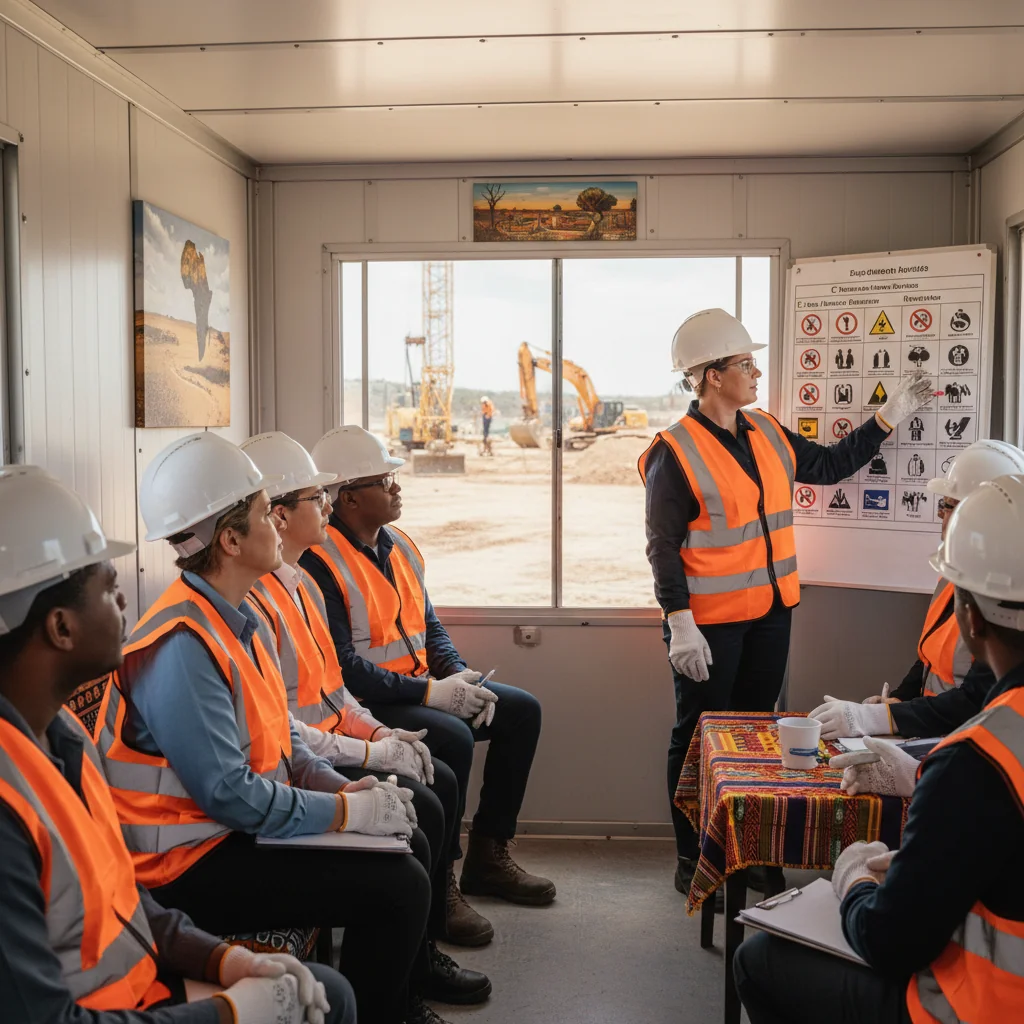
Safety officer conducting training

What Are the Key Rights and Obligations of Parties in an OHS Manual?

In South African occupational health and safety (OHS) regulations, primarily governed by the Occupational Health and Safety Act (OHSA) No. 85 of 1993, employers hold key obligations to ensure a safe working environment. Employers must provide a safe workplace, conduct risk assessments, implement safety measures, and supply necessary personal protective equipment, while also reporting incidents and hazards to the Department of Employment and Labour.

Employees, under the same OHSA framework, have the right to a safe workplace free from foreseeable risks and the duty to report any hazards or unsafe conditions to supervisors without fear of reprisal. They are obligated to follow safety protocols, use provided equipment correctly, and participate in safety training to contribute to a hazard-free environment.

Other parties, such as health and safety representatives and committees, play vital roles in OHS compliance by inspecting workplaces, investigating accidents, and recommending improvements as outlined in the OHSA. For detailed guidelines, refer to the official Occupational Health and Safety Act from the Department of Employment and Labour.

To create customized OHS manuals tailored to specific business needs, consider using bespoke AI-generated corporate documents via Docaro for compliance with South African regulations.

Section 25(2) of the Occupational Health and Safety Act states: "An employer shall take every precaution reasonable in the circumstances for the protection of a worker." Ensure your workplace policies prioritize employee safety by consulting professionals for compliance. For tailored corporate documents, use Docaro to generate bespoke AI-assisted solutions.

What Recent or Upcoming Legal Changes Affect OHS Manuals in South Africa?

The Occupational Health and Safety Act (OHSA) in South Africa has seen key amendments in recent years, particularly through the Hazardous Chemical Agents Regulations updated in 2021 to enhance protections against chemical exposures in workplaces. These changes require employers to conduct thorough risk assessments and implement stricter monitoring, directly influencing corporate OHS manuals by mandating detailed protocols for chemical handling and emergency responses.

Regarding COVID-19 protocols, the Department of Employment and Labour issued consolidated directions in 2022 that integrate ongoing pandemic measures into OHSA frameworks, emphasizing ventilation standards and vaccination status reporting for high-risk sectors. This integration compels businesses to revise their OHS manuals to include hybrid health guidelines, ensuring compliance with evolving public health mandates.

Upcoming regulations focus on environmental health integrations, with proposed amendments to OHSA incorporating climate change impacts like heat stress and air quality under the National Environmental Management Act. For authoritative details, refer to the Department of Employment and Labour guidelines, which outline how these updates will require OHS manuals to address sustainable practices and cross-disciplinary risks.

To adapt corporate OHS manuals effectively, organizations should prioritize bespoke AI-generated documents using tools like Docaro, tailored to specific industry needs and regulatory nuances in South Africa, rather than relying on outdated templates.

Implications for Businesses

Recent legal changes in South African OHS regulations, such as amendments to the Occupational Health and Safety Act, necessitate updates to existing OHS Manuals to ensure alignment with current safety standards and risk management requirements. Businesses must review and revise their manuals to incorporate these updates, preventing non-compliance penalties from the Department of Employment and Labour.

To achieve compliance with updated OHS laws, conduct a thorough audit of your current manual against the latest amendments, focusing on hazard identification, emergency procedures, and employee training protocols. For guidance on this process, refer to our resource on How to Develop an Effective OHS Manual for Your South African Business.

Opt for bespoke AI-generated corporate documents using Docaro to customize your OHS Manual efficiently, ensuring it meets specific business needs without relying on generic templates. This approach guarantees tailored compliance while integrating authoritative sources like the Department of Employment and Labour guidelines.

  • Identify key changes: Review official gazettes for new OHS directives.
  • Update sections: Revise policies on PPE, workplace inspections, and incident reporting.
  • Train staff: Implement sessions to familiarize employees with revisions.
  • Document updates: Maintain records of changes for audits.

How Can Businesses Implement an Effective OHS Manual?

Occupational Health and Safety Manual FAQs

An Occupational Health and Safety Manual, often referred to as a Health & Safety Manual, is a comprehensive document that outlines policies, procedures, and guidelines for maintaining a safe working environment in compliance with South Africa's Occupational Health and Safety Act (OHSA) No. 85 of 1993. It helps businesses identify hazards, prevent accidents, and ensure employee well-being.

Document Generation FAQs

Docaro is an AI-powered legal and corporate document generator that helps you create fully formatted, legally sound contracts and agreements in minutes. Just answer a few guided questions and download your document instantly.
You Might Also Be Interested In
A Document Outlining Company Policies, Procedures, Employee Rights, And Expectations For The Workplace.
A Formal Document Outlining Expected Standards Of Behavior, Ethical Principles, And Professional Conduct For Individuals Or Organizations.
A Corporate Document Outlining Commitments To Fair Employment Practices, Addressing Inequities, And Promoting Workforce Diversity In Compliance With South African Legislation.
A Corporate Document Outlining Guidelines, Rules, And Expectations For Employees Working Remotely Or In A Hybrid Model Combining Office And Remote Work.
A Corporate Policy Outlining The Permissible And Prohibited Uses Of Information Technology Resources To Ensure Security, Compliance, And Efficient Operations.
A Corporate Policy Outlining How Long To Keep Records And Manage Them To Comply With Legal And Business Needs.
A Corporate Policy Outlining Procedures For Employees To Report Illegal Or Unethical Activities Confidentially.
A Corporate Policy Document Outlining Processes For Addressing Employee Misconduct And Handling Workplace Complaints.
A Document Outlining The Responsibilities, Duties, Qualifications, And Reporting Structure For A Specific Role In An Organization.
A Formal Document Outlining Steps To Address An Employee's Poor Performance, Including Goals, Support, And Timelines For Improvement.
A Corporate Document Outlining The Principles Guiding An Organization's Approach To Employee Compensation And Rewards.
A Corporate Document That Provides Rationale And Evidence For Recommending An Employee's Promotion.
A Form Used In Corporate Settings To Gather Feedback From Departing Employees About Their Experiences And Reasons For Leaving.
A Documented Set Of Instructions Outlining Routine Operations To Ensure Consistency And Compliance In An Organization.
A Corporate Document Outlining Procedures For Detecting, Responding To, And Recovering From Security Incidents To Minimize Damage And Ensure Business Continuity.
A Strategic Document Outlining Procedures To Maintain Operations During And After Disruptions, Ensuring Quick Recovery From Disasters.
A Formal Document Outlining An Organization's Strategies, Rules, And Procedures For Protecting Digital Assets And Mitigating Cyber Risks.
A Corporate Document Outlining Policies, Procedures, And Standards To Ensure Product And Service Quality.
A Corporate Document Detailing A Company's Performance And Initiatives In Environmental, Social, And Governance Areas To Promote Sustainability And Ethical Practices.

Related Articles

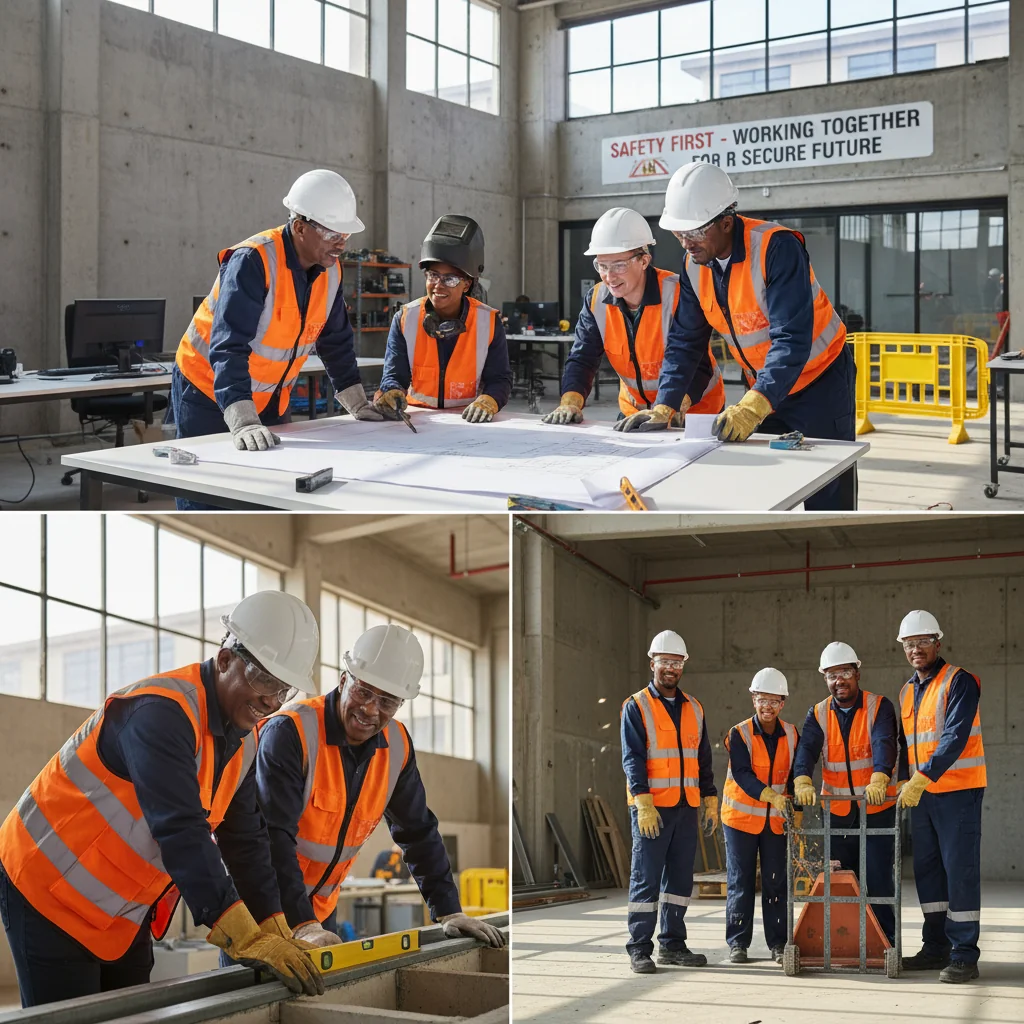
A photorealistic image depicting a diverse group of adult professionals in a South African workplace setting, such as a construction site or office, engaged in safe working practices: wearing helmets, using safety equipment, and collaborating safely, symbolizing occupational health and safety.
Discover the key provisions of the Occupational Health and Safety Act in South Africa. Learn how it protects workers, employer responsibilities, and compliance tips for a safer workplace.
A photorealistic image of a diverse group of adult professionals in a South African workplace, engaged in a safety briefing. They are wearing safety helmets and high-visibility vests, discussing occupational health and safety procedures around a construction site or office environment, emphasizing teamwork and compliance with OHS standards. The scene conveys professionalism, safety awareness, and a positive work atmosphere. No children are present.
Learn how to create a comprehensive OHS manual tailored for South African businesses. Ensure compliance with OHS Act, enhance workplace safety, and protect your employees with our expert guide.
A photorealistic image of a diverse group of adult professionals in a modern workplace, wearing safety gear like hard hats and vests, conducting a safety inspection or training session, symbolizing occupational health and safety compliance in South Africa. The scene is vibrant and professional, emphasizing safety and teamwork without any documents visible.
Discover the key compliance requirements for occupational health and safety manuals in SA. Learn essential OHS standards, legal obligations, and best practices to ensure workplace safety and regulatory adherence.