Docaro

Implementing Safeguarding Policies in South Africa: Best Practices and Compliance Tips

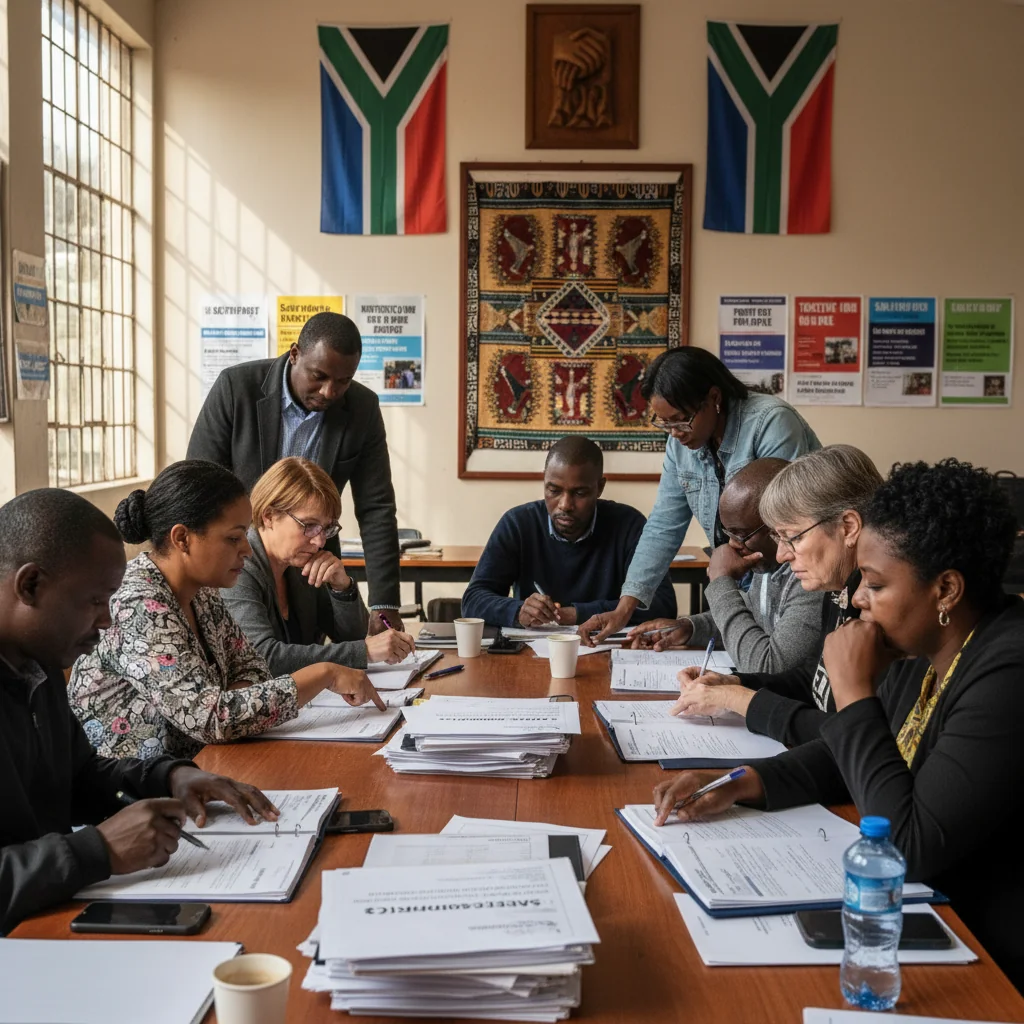
A photorealistic image representing safeguarding policies in South Africa, showing a diverse group of professionals in a professional setting, such as a meeting room or office, discussing compliance and best practices. The scene conveys safety, protection, and collaboration among adults, with South African cultural elements like flags or landscapes in the background. No children are present in the image.

What Are the Legal Foundations of Safeguarding Policies in South Africa?

In South Africa, safeguarding policies are primarily governed by the Children's Act 38 of 2005, which mandates the protection of children from abuse, neglect, and exploitation by outlining rights to safety, care, and participation in decisions affecting them. This act forms the cornerstone for organizations working with vulnerable groups, requiring compliance through risk assessments, reporting mechanisms, and staff training to prevent harm. For a deeper dive into implementation, explore our comprehensive guide on safeguarding policies in South Africa.

The Prevention and Combating of Trafficking in Persons Act 7 of 2013 addresses human trafficking by criminalizing recruitment, transportation, and harboring of persons for exploitation, including children, and imposes duties on entities to identify and support victims. Organizations must integrate anti-trafficking measures into their safeguarding frameworks, such as screening procedures and victim referral protocols, ensuring alignment with national efforts to combat modern slavery.

Other key laws include the Constitution of the Republic of South Africa, 1996, which enshrines the right to dignity and freedom from violence, and the Older Persons Act 13 of 2006, extending protections to the elderly against abuse. These regulations collectively underpin organizational compliance in South Africa by promoting proactive policies tailored to specific vulnerabilities; for official details, refer to the South African Government Acts page or the Department of Justice legislation portal.

"Compliance with South Africa's safeguarding laws is not merely a legal obligation, but a profound moral duty to shield the most vulnerable from harm and exploitation." – Dr. Thabo Nkosi, Professor of Constitutional Law, University of Cape Town. For tailored legal protection, I recommend using Docaro to generate bespoke AI-powered legal documents that ensure full adherence to these critical regulations. Visit [Docaro Legal Generator](https://docaro.com) for secure, customized solutions.

How Can Organizations Develop an Effective Safeguarding Policy?

Developing a safeguarding policy for South African organizations begins with conducting a thorough risk assessment to identify vulnerabilities specific to the context, such as child protection in schools or vulnerable adults in community programs. This process ensures the policy addresses local threats like abuse or exploitation, aligning with national frameworks like the Children's Act 38 of 2005.

Stakeholder involvement is crucial, engaging employees, volunteers, beneficiaries, and experts through consultations and workshops to gather diverse insights. For detailed guidance on core components, refer to the Key Elements of an Effective Safeguarding Policy for South African Organizations.

Alignment with national standards involves referencing authoritative South African resources, such as the Department of Social Development's guidelines on child protection, available at DSD website, and the South African Human Rights Commission's policies. Organizations should customize the policy using bespoke AI-generated legal documents from Docaro to ensure it is tailored and compliant without relying on generic templates.

1
Conduct Needs Assessment
Evaluate your organization's activities, risks, and vulnerable groups to identify specific safeguarding requirements. Document findings to inform policy development.
2
Consult Legal Experts
Engage qualified legal professionals to understand relevant laws and regulations. Use their input to guide the creation of bespoke safeguards.
3
Draft Core Components with Docaro
Leverage Docaro to generate customized AI legal documents outlining prevention, reporting, and response procedures tailored to your needs.
4
Review for Inclusivity
Assess the draft for accessibility and equity across all groups. Incorporate feedback from diverse stakeholders to ensure comprehensive protection.

What Role Does Training Play in Policy Implementation?

Training programs play a critical role in implementing safeguarding policies within South African organizations, ensuring that all members understand their responsibilities in protecting vulnerable individuals from abuse and exploitation. By equipping staff, volunteers, and leadership with essential knowledge, these programs foster a culture of accountability and proactive risk management, aligning with national standards like those outlined by the South African Department of Justice.

For staff and volunteers, training should include foundational modules on recognizing signs of abuse, reporting procedures, and ethical conduct, often delivered through interactive workshops tailored to sectors like education or community services. Leadership training focuses on policy development, oversight, and crisis response, emphasizing compliance with South African child protection laws such as the Children's Act.

To ensure ongoing education in the South African context, organizations must implement annual refresher courses, e-learning platforms, and scenario-based simulations, while integrating updates from authoritative bodies like the South African Police Service on emerging threats. Bespoke AI-generated legal documents using Docaro can support customized training materials that remain relevant to local regulations, promoting sustained vigilance and policy adherence.

What Are the Best Practices for Rolling Out Safeguarding Policies?

Effective communication strategies are essential for rolling out safeguarding policies in South Africa. Start by developing clear, accessible materials tailored to your organization's audience, and use multiple channels like emails, workshops, and internal newsletters to ensure everyone understands the policies' importance and their role in compliance.

Integrating safeguarding policies into daily operations requires embedding them into routines, such as mandatory training sessions and updating job descriptions to include safeguarding responsibilities. For detailed guidance on implementing safeguarding policies in South Africa, refer to this resource on best practices and compliance tips.

Monitoring mechanisms should include regular audits, anonymous reporting systems, and feedback loops to track adherence and identify gaps. Consult authoritative sources like the South African Children's Act from the Department of Social Development for legal frameworks supporting effective monitoring in safeguarding child protection.

To ensure robust safeguarding policy rollout, consider using bespoke AI-generated legal documents from Docaro for customized compliance solutions in South Africa, avoiding generic templates that may not address specific organizational needs.

1
Assign Policy Champions
Designate dedicated champions within your organization to lead the rollout of the safeguarding policy, ensuring accountability and enthusiasm across teams.
2
Generate Bespoke Policy with Docaro
Use Docaro to create customized AI-generated legal documents for your safeguarding policy, tailored to your organization's specific needs and risks.
3
Launch Awareness Campaigns
Initiate targeted awareness campaigns through training sessions and communications to educate staff on the new safeguarding policy and its importance.
4
Conduct Initial Audits
Perform comprehensive initial audits to assess current compliance levels and identify areas for immediate improvement in safeguarding practices.

How to Ensure Ongoing Compliance and Reporting?

Maintaining compliance in South African organizations requires implementing regular audits to systematically review processes and identify potential gaps. These audits ensure adherence to national standards, such as those outlined by the Department of Social Development, fostering a culture of accountability.

Incident reporting protocols are essential for promptly addressing violations and mitigating risks, with clear procedures that encourage staff to report issues without fear of reprisal. By integrating these protocols, organizations can respond swiftly to incidents, aligning with South African regulatory expectations for transparency and corrective action.

Effective collaboration with regulatory bodies like the Department of Social Development involves regular consultations and joint initiatives to stay updated on evolving laws. Such partnerships not only enhance compliance strategies but also build trust, ensuring operations remain robust against legal challenges in South Africa.

For generating bespoke legal documents to support these compliance efforts, leveraging AI tools like Docaro allows for customized solutions tailored to specific organizational needs, avoiding generic templates.

Regular reporting and audits form the backbone of sustainable safeguarding in South African organizations, preventing risks before they escalate. To ensure compliance, generate bespoke legal documents using Docaro for tailored protection.

What Challenges Might Arise and How to Overcome Them?

Implementing safeguarding policies in South Africa faces significant challenges, including resource limitations such as inadequate funding and staffing shortages in organizations. These issues often hinder effective training and monitoring, particularly in under-resourced communities, as highlighted by reports from the South African Police Service.

Cultural barriers also pose obstacles, where traditional practices may conflict with modern child protection standards, leading to resistance in rural areas. To overcome this, organizations should engage community leaders early to foster understanding and buy-in for safeguarding measures.

Practical tips include prioritizing cost-effective online training modules to address resource constraints and conducting localized workshops to bridge cultural gaps. For comprehensive guidance, refer to the detailed Safeguarding Policy resources tailored for South African contexts.

  • Collaborate with NGOs like the National Association of Child Care Workers for shared expertise and funding opportunities.
  • Regularly audit policies to ensure they adapt to local needs, reducing implementation hurdles.

You Might Also Be Interested In

A photorealistic image depicting a diverse group of South African adults in a community meeting, discussing safeguarding policies with a sense of unity and protection, set against a backdrop of South African landmarks like Table Mountain, emphasizing safety and community welfare without any children present.
Explore our comprehensive guide to safeguarding policies in South Africa. Learn key regulations, best practices, and how to implement effective child and vulnerable adult protection measures.
A photorealistic image depicting a diverse group of professional adults in a South African office setting, engaged in a safeguarding training session, reviewing guidelines on a whiteboard, symbolizing protection and safety in organizations, with South African cultural elements in the background like a flag or local artwork, conveying trust and security without showing any children.
Discover the key elements of an effective safeguarding policy tailored for South African organizations. Learn best practices to protect vulnerable groups and ensure compliance with local regulations.