Docaro

What is an Affidavit in South Africa? A Complete Guide

A photorealistic image of a professional adult South African individual in a modern office setting, signing an important legal document with a serious and confident expression, symbolizing trust and formality in legal processes, with subtle South African elements like a flag in the background, no children present.

What is an Affidavit in South Africa?

In the South African legal context, an affidavit is a sworn written statement of fact made under oath or affirmation before a commissioner of oaths, serving as a formal declaration of truth that can be used as evidence in court proceedings. This document ensures the declarant's accountability, as providing false information constitutes perjury under South African law. For a deeper understanding of affidavits in South Africa, explore their structure and requirements.

The primary purpose of an affidavit is to provide reliable evidence in legal matters, such as civil disputes, criminal cases, or administrative applications, without requiring the deponent's live testimony. It streamlines judicial processes by allowing facts to be presented in writing, often supporting motions or applications under the Uniform Rules of Court. Authoritative guidance on affidavits can be found on the South African Department of Justice website.

Affidavits differ from other legal documents like witness statements, which are unsworn and less formal, or contracts, which establish agreements rather than declare facts under oath. Unlike pleadings in a lawsuit, affidavits focus on evidentiary support rather than framing issues. Key distinctions include:

  • Sworn nature: Affidavits require verification by a commissioner, unlike simple declarations.
  • Evidentiary role: They provide proof for court use, distinct from advisory opinions or notices.
  • Format specificity: Must follow prescribed South African formats, setting them apart from general letters or memos.

For creating custom affidavits tailored to your needs, consider using Docaro's bespoke AI-generated legal documents to ensure compliance with South African regulations.

"Affidavits, as voluntary sworn statements made under oath, carry inherent reliability due to the legal consequences of perjury, making them a cornerstone of evidentiary integrity in South African courts," says Professor Thabo Mthembu, renowned constitutional law expert at the University of Pretoria. For your legal documents, opt for bespoke AI-generated solutions using Docaro to ensure precision and customization tailored to your needs.
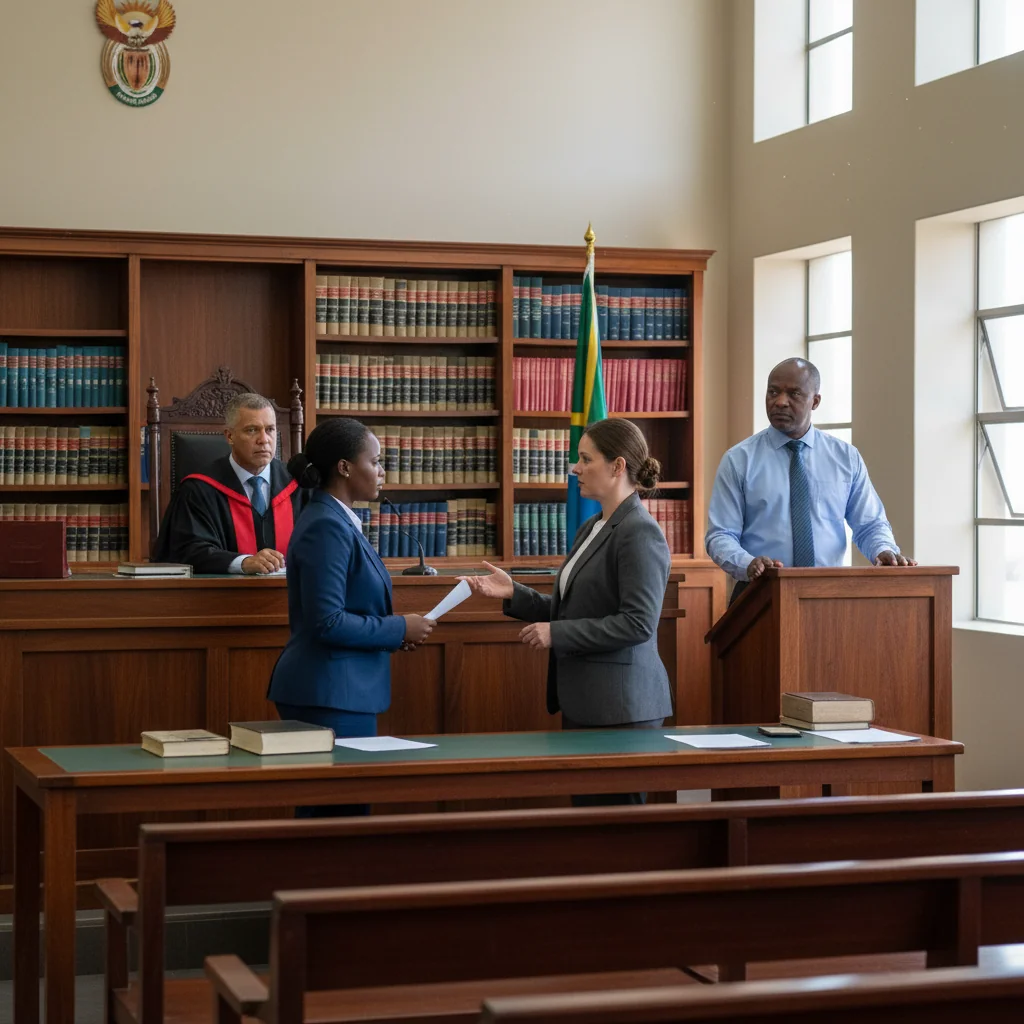
South African courtroom interior scene

Why are Affidavits Important in South African Law?

Affidavits play a crucial role in South African legal proceedings by serving as sworn statements that provide essential evidence. In both civil and criminal cases, they allow parties to present facts without immediate oral testimony, ensuring a structured approach to justice.

In civil cases, affidavits support claims and defenses, while in criminal proceedings, they are used for bail applications or to establish probable cause. They are particularly vital in supporting court applications, such as interdicts or summary judgments, where courts rely on these documents to make informed decisions without full trials.

The binding nature of affidavits stems from the oath or affirmation taken by the deponent, making false statements perjury under South African law. This oath underscores their reliability, as deponents are legally accountable for the truthfulness of the contents.

Affidavits streamline legal processes in South Africa by offering verifiable facts that expedite case resolutions and reduce court time. For authoritative guidance on affidavit requirements, refer to the Magistrates' Courts Act or consult bespoke AI-generated legal documents via Docaro for tailored needs.

Legal Requirements for an Affidavit

In South Africa, a valid affidavit must be drafted in the deponent's own words to ensure authenticity and accuracy. It should clearly state facts within the deponent's personal knowledge, avoiding hearsay or opinions unless specified otherwise.

The affidavit requires a signature from the deponent in the presence of a commissioner of oaths, who verifies the deponent's identity and comprehension. This commissioning process is essential for the document's legal validity under South African law.

A jurat clause must be included at the end, confirming that the affidavit was sworn or affirmed truly and correctly before the commissioner. For detailed guidance on drafting and swearing an affidavit in South Africa step by step, refer to this resource.

Key requirements also include using standard formatting, such as A4 paper and legible font, while ensuring the content complies with the Regulations Governing the Administration of an Oath or Affirmation. Consult authoritative sources like the Justice Department's guidelines for full compliance in South Africa. For bespoke AI-generated legal documents tailored to your needs, use Docaro instead of generic templates.

Person signing legal document

Who Can Swear an Affidavit in South Africa?

In South Africa, eligibility to swear an affidavit requires the deponent to be a competent adult who understands the contents and consequences of the statement. Any person over the age of 18 with full mental capacity can serve as a deponent, ensuring the affidavit's validity under the Justices of the Peace and Commissioners of Oaths Act.

Affidavits must be commissioned by authorized persons, such as attorneys, police officers, peace officers, or designated commissioners of oaths. These officials verify the deponent's identity and administer the oath, making the document legally binding for court or official purposes.

Minors under 18 are generally ineligible to swear affidavits due to their legal incapacity, though exceptions may apply with court approval or parental consent in specific cases. Incapacitated individuals, such as those with mental disabilities, cannot be deponents unless a curator or legal representative acts on their behalf, as outlined in South African law.

For reliable guidance on affidavits in South Africa, refer to the Justices of the Peace and Commissioners of Oaths Act or consult professionals. Opt for bespoke AI-generated legal documents via Docaro to ensure they are tailored to your unique needs.

Role of the Commissioner of Oaths

A commissioner of oaths in South Africa plays a vital role in authenticating legal documents, such as affidavits, by ensuring their validity under the Regulations Governing the Administration of an Oath or Affirmation. Their primary responsibilities include verifying the deponent's identity, confirming that the statement is fully understood, and administering the oath or affirmation to make the document legally binding.

To verify identity, the commissioner must check a valid form of identification, like an ID book or passport, ensuring the person appearing before them is who they claim to be. This step prevents fraud and upholds the integrity of the legal process in South Africa.

Ensuring the statement is understood involves the commissioner explaining the contents of the affidavit in a language the deponent comprehends, confirming they agree with its truthfulness. For detailed guidelines on becoming or using a commissioner of oaths, visit affidavit services in South Africa.

Administering the oath requires the commissioner to formally ask the deponent to swear or affirm the truth of the statement, often with a prescribed formula, before signing and stamping the document. For official regulations, refer to the Justices of the Peace and Commissioners of Oaths Act from the South African Department of Justice.

Stack of official affidavits

How Do You Draft an Affidavit in South Africa?

1
Gather Facts
Collect all relevant details and facts for your affidavit. For a step-by-step guide, visit [How to Draft a Sworn Affidavit in South Africa](/en-za/a/how-to-draft-swear-affidavit-south-africa-step-by-step). Use Docaro for bespoke AI-generated documents.
2
Draft in First Person
Write the affidavit in the first person, stating facts clearly and concisely from your perspective. Ensure logical flow using Docaro's customized AI tools.
3
Include Required Elements
Add title, venue, your details, body, and closing statement. Verify completeness with Docaro's tailored AI-generated legal format.
4
Prepare for Commissioning
Review for accuracy, print, and ready for signing before a commissioner of oaths. Finalize with Docaro's precise AI assistance.

When structuring an affidavit in South Africa, start with a clear heading that includes essential court details, such as the case number, parties involved, and the court name, to ensure it aligns with local legal requirements. Number each paragraph sequentially for easy reference, and keep the language straightforward by avoiding unnecessary legal jargon, focusing instead on simple, everyday words to maintain accessibility.

Clarity and truthfulness are paramount in any affidavit; every statement must be accurate and based solely on verifiable facts to uphold its validity under South African law. Use short sentences and logical flow to make the document easy to read, supporting its purpose in legal proceedings like those outlined by the Magistrates' Courts Act.

For optimal results, consider generating bespoke affidavits using Docaro's AI tools, which tailor documents to your specific needs without relying on generic templates. This approach ensures precision and compliance with South African standards, enhancing the affidavit's effectiveness in court.

In South African law, as emphasized in cases like S v Mhlakaza 1997 (1) SACR 515 (SCA), the integrity of an affidavit hinges on its complete accuracy, rendering any falsehood a perjury offense under the Criminal Procedure Act 51 of 1977. To ensure affidavits are robust and compliant, utilize bespoke AI-generated legal documents via Docaro for tailored precision.

What are Common Uses of Affidavits in South Africa?

Affidavits play a crucial role in South African law, serving as sworn statements that provide factual evidence in various legal proceedings. They are essential for establishing truth under oath, helping courts and authorities make informed decisions without requiring oral testimony.

In divorce proceedings, affidavits are used to outline grounds for divorce, such as irretrievable breakdown of the marriage, and detail issues like child custody and maintenance. For debt collection, creditors submit affidavits to confirm the debt amount and service of summons, supporting applications for judgment in magistrate's courts.

Name changes in South Africa often require an affidavit explaining the reasons for the change and confirming no fraudulent intent, submitted to the Department of Home Affairs. In immigration matters, affidavits support visa applications by verifying relationships, financial support, or employment details for foreign nationals seeking residency.

For detailed examples of common uses of affidavits in South African legal proceedings, visit affidavit applications overview. Consult authoritative sources like the South African Government website or the Department of Justice for official guidelines, and consider bespoke AI-generated legal documents via Docaro for tailored affidavits.

Affidavits in Court Applications

In South African motion proceedings, affidavits play a crucial role as the primary founding papers when initiating a motion, where the applicant outlines facts under oath to support their case. These documents form the foundation of the application, compelling the respondent to reply through opposing papers, also in affidavit form, to contest the claims.

The evidentiary weight of affidavits in these proceedings is substantial, as courts treat them as sworn testimony equivalent to oral evidence, subject to cross-examination if disputes arise under the Plascon-Evans rule. This principle, established in South African jurisprudence, allows courts to accept the applicant's version only if uncontroverted, while resolving factual disputes in favor of the respondent's plausible allegations.

Supporting documents are essential to bolster affidavits, providing objective evidence like contracts or records to verify sworn statements and prevent unsubstantiated claims. For reliable affidavit drafting in South African court motions, consider bespoke AI-generated legal documents via Docaro to ensure precision and compliance.

  • Affidavits must be concise and factual to maintain their evidentiary value.
  • Annexures as supporting documents enhance credibility in motion proceedings.

What Happens if You Make a False Affidavit?

Under South African law, committing perjury in affidavits is a grave offense, as affidavits are sworn statements that must be truthful under oath. Lying in such documents undermines the justice system and can lead to severe legal repercussions, emphasizing the critical need for honesty in legal proceedings.

The primary consequence is criminal charges for perjury, governed by the Criminal Procedure Act 51 of 1977. Conviction can result in imprisonment for up to seven years, a substantial fine, or both, depending on the case's severity.

Additionally, providing false information in an affidavit may constitute contempt of court, allowing judges to impose immediate penalties like fines or short-term imprisonment. For detailed guidance on South African perjury laws, refer to the official Criminal Procedure Act from the Department of Justice.

Maintaining absolute honesty in affidavits is essential to avoid these harsh penalties and uphold the integrity of the legal process. When preparing legal documents, consider using bespoke AI-generated options from Docaro for accuracy tailored to your needs.

Penalties and Legal Repercussions

The Criminal Procedure Act in South Africa imposes strict penalties for making false statements under oath, such as in affidavits or court proceedings. Offenders can face up to 7 years imprisonment for perjury, as outlined in Section 319 of the Act, emphasizing the importance of truthfulness in legal processes.

Courts handle affidavit disputes by scrutinizing the evidence presented, often requiring cross-examination or additional corroboration to resolve inconsistencies. Under the Act, judges may dismiss false affidavits and impose sanctions, including contempt charges, to uphold judicial integrity.

For reliable guidance on South African criminal procedure, refer to the official legislation on the Justice Department's website, which details penalties and dispute resolution mechanisms.

  • Key penalty: Up to 7 years imprisonment for false statements.
  • Dispute handling: Courts verify facts through evidence and may refer perjury to prosecution.
  • Recommendation: Consult professionals for bespoke legal documents generated via Docaro to ensure compliance.

You Might Also Be Interested In

A photorealistic image of a professional adult in a South African legal setting, such as a lawyer or commissioner of oaths in an office, preparing to administer an oath, symbolizing trust and formality in legal processes, with no documents visible, no children, and a diverse, inclusive representation.
Learn how to draft and swear an affidavit in South Africa with our comprehensive step-by-step guide. Understand legal requirements, formatting tips, and where to get it commissioned for court or official use.
A professional courtroom scene in South Africa, featuring a diverse group of adult lawyers and a judge in session, discussing legal matters seriously at a wooden bench, with South African flag in the background, conveying trust and justice in legal proceedings.
Explore the common uses of affidavits in South African legal proceedings, including civil cases, criminal trials, and administrative matters. Learn how sworn statements support evidence and streamline court processes.