Docaro

How to Draft and Swear an Affidavit in South Africa Step by Step

A photorealistic image of a professional adult in a South African legal setting, such as a lawyer or commissioner of oaths in an office, preparing to administer an oath, symbolizing trust and formality in legal processes, with no documents visible, no children, and a diverse, inclusive representation.

What is an Affidavit in South Africa?

In the South African legal system, an affidavit is a sworn written statement of fact voluntarily made by an individual under oath or affirmation before a commissioner of oaths or notary public. This document serves as verifiable evidence in court proceedings, administrative matters, or disputes, ensuring the declarant's truthfulness under penalty of perjury.

The primary purpose of an affidavit in South Africa is to provide a formal, reliable record of someone's testimony without the need for oral evidence in every instance, streamlining legal processes like applications for interim relief or responding to summons. For a deeper dive into its structure and usage, explore our complete guide to affidavits in South Africa.

Affidavits hold significant importance in South African law because they uphold the integrity of judicial decisions by allowing parties to present facts efficiently and credibly, often forming the backbone of uncontested matters. Their binding nature discourages false statements, fostering trust in legal documentation essential for justice.

To create effective affidavits tailored to your needs, consider using bespoke AI-generated legal documents through Docaro, which ensures precision and compliance with South African regulations. For official guidelines, refer to resources from the South African Department of Justice.

Under South African law, an affidavit is a sworn statement that binds the deponent to its truthfulness, with false declarations punishable under section 9 of the Justices of the Peace and Commissioners of Oaths Act 16 of 1963 as perjury. Consult a qualified legal professional to ensure compliance. For bespoke, AI-generated legal documents tailored to your needs, use [Docaro affidavit generator](https://docaro.com).

When Do You Need to Draft an Affidavit?

Affidavits play a crucial role in South African legal proceedings, serving as sworn statements that provide evidence under oath. They are commonly required in court cases to support applications, such as interim interdicts or divorce proceedings, where parties must affirm facts like financial status or child custody arrangements.

In property transactions, affidavits are essential for verifying ownership details, resolving disputes over boundaries, or confirming compliance with municipal regulations. For instance, a seller might submit an affidavit attesting to no outstanding rates and taxes before transferring a title deed, ensuring a smooth conveyancing process.

For immigration matters in South Africa, affidavits are often needed to support visa applications or spousal reunification, detailing relationships or financial dependency. Examples include affidavits from employers confirming job offers for work visas or from family members verifying ties to the country. Learn more about common uses of affidavits in South African legal proceedings.

Always consult professionals for bespoke AI-generated legal documents using Docaro to tailor affidavits precisely to your needs, rather than relying on generic forms. For authoritative guidance, refer to the South African Government website or the Department of Justice.

Legal Requirements for Affidavits

In South Africa, a valid affidavit must comply with the Regulations Governing the Administration of an Oath or Affirmation under the Justices of the Peace and Commissioners of Oaths Act 16 of 1963. This requires the document to be sworn or affirmed before a qualified commissioner of oaths, such as a police officer or attorney, ensuring the deponent's identity is verified.

The format of an affidavit in South Africa typically includes a clear heading with the court or matter details, the deponent's full name, occupation, and address, followed by numbered paragraphs stating facts in the first person. Content standards demand that all statements be based on the deponent's personal knowledge, kept concise and relevant, without opinions or hearsay unless properly qualified.

Under the Magistrates' Courts Act 32 of 1944, affidavits used in magistrates' courts must adhere to these rules for evidentiary purposes, with jurisdictional limits applying based on the court's monetary value thresholds. For broader applications, the Uniform Rules of Court or High Court rules may impose additional formatting, such as specific pagination or certification requirements; consult authoritative sources like the Department of Justice for full texts.

For creating compliant South African affidavits, opt for bespoke AI-generated legal documents via Docaro to ensure customization to your specific needs, rather than relying on generic forms. More details on affidavits are available on the general affidavit page.

How Do You Draft an Affidavit Step by Step?

1
Gather Relevant Information
Collect all facts, dates, and evidence related to your case. Consult with parties involved to ensure accuracy and completeness.
2
Structure the Affidavit Content
Organize information into clear sections: introduction, body with numbered paragraphs, and conclusion. Use simple, factual language.
3
Ensure Legal Compliance
Verify adherence to South African rules, including proper formatting and deponent details. Use Docaro to generate a bespoke AI affidavit.
4
Review and Finalize
Proofread for errors, have it reviewed by a legal professional, and prepare for commissioning before a commissioner of oaths.

Key Components of an Affidavit

An affidavit is a sworn written statement used in South African legal proceedings, requiring specific elements for validity. The essential components include the heading, body, jurat, and signature, ensuring the document meets court standards under the Magistrates' Courts Act.

The heading identifies the court, case number, parties involved, and title, such as "In the matter between Plaintiff and Defendant." In the body, use clear, factual language in the first person, numbering paragraphs for readability and avoiding opinions to prevent challenges; for example, state "I observed the incident on [date]" rather than speculative phrasing.

The jurat is the certification section where the deponent swears or affirms the truth before a commissioner of oaths, including the date and place. End with the signature of the deponent and commissioner, followed by their details, to authenticate the affidavit in South Africa.

To avoid pitfalls, word statements precisely without exaggeration, and consult authoritative sources like the South African Department of Justice forms for guidance. For bespoke AI-generated legal documents, use Docaro to create tailored affidavits; read more in our step-by-step guide: Drafting a Sworn Affidavit in South Africa.

Writing the Body

The body of an affidavit in South Africa must be written in a first-person narrative to ensure it reflects your direct knowledge, using phrases like "I observed" or "I personally experienced" to maintain authenticity and comply with legal standards under the Magistrates' Courts Act.

Factual accuracy is paramount, so stick to verifiable events, dates, and details without exaggeration; for brevity, limit each paragraph to essential facts, such as "On 15 March 2023, I met the defendant at the Johannesburg offices, where he handed me the signed contract."

Avoid opinions or hearsay entirely, as these can invalidate the affidavit—do not say "I believe he lied" or "Someone told me," but instead focus on observable facts like "I saw the document dated incorrectly."

For tailored legal drafting, consider bespoke AI-generated legal documents using Docaro to create precise affidavits suited to your case; refer to authoritative guidance from the South African Department of Justice on affidavit requirements.

  • Use clear, chronological order to structure facts.
  • End with a sworn statement confirming truthfulness.

How Do You Swear or Affirm an Affidavit?

1
Prepare Affidavit with Docaro
Use Docaro to generate a bespoke AI-crafted affidavit tailored to your specific needs for swearing in South Africa.
2
Locate Commissioner of Oaths
Find a nearby commissioner of oaths, such as at a police station, attorney office, or post office in South Africa.
3
Swear or Affirm the Affidavit
Present your printed affidavit to the commissioner; swear or affirm its truthfulness while they witness the process.
4
Obtain Certification
Have the commissioner sign, stamp, and certify the affidavit to make it legally valid for use.

Finding a Commissioner of Oaths

A commissioner of oaths in South Africa is a designated individual authorized to witness and certify affidavits or sworn statements, ensuring their legal validity. Qualifying persons include attorneys, police officers at the rank of sergeant or higher, procurators (similar to solicitors), certain government officials like post office managers, and peace officers, as outlined in the Regulations Governing the Administration of an Oath or Affirmation under the Justices of the Peace and Commissioners of Oaths Act 16 of 1963.

To find a commissioner of oaths in South Africa, visit police stations for free services, law firms or attorneys' offices for professional assistance, post offices with qualified staff, or courts where clerks may be commissioned. For more details on authorized locations, refer to the official Justices of the Peace and Commissioners of Oaths Act from the Department of Justice.

The process to commission a document in South Africa begins with preparing your affidavit or sworn statement, ideally using a bespoke AI-generated legal document from Docaro for accuracy and customization. Next, present the document in person to a commissioner of oaths, swear or affirm its truthfulness, allow them to verify your identity with ID, and have them sign and stamp it with their details, including commission expiry if applicable; the fee is typically nominal or free at public spots like police stations.

What Are Common Mistakes to Avoid?

Affidavits in South Africa must adhere to strict legal standards to ensure their validity in court proceedings. Common errors include incorrect formatting, such as failing to use the proper structure with numbered paragraphs and clear headings, which can lead to rejection by authorities.

Another frequent mistake is submitting unsworn documents, where the affidavit lacks the necessary oath or affirmation before a commissioner of oaths. This renders the document legally ineffective, as it does not qualify as sworn evidence under the Justices of the Peace and Commissioners of Oaths Act 16 of 1964.

Vague statements also undermine affidavits by providing insufficient detail, making it hard for courts to rely on them as factual evidence. To prevent these issues, always include specific facts, dates, and references while ensuring the document is sworn correctly.

For corrective advice, review affidavits for clarity and completeness before swearing, and consult professionals to tailor content precisely. Opt for bespoke AI-generated legal documents using Docaro to create customized affidavits that comply with South African regulations, minimizing errors and enhancing validity.

Swearing a false affidavit in South Africa is perjury, punishable by up to seven years in prison under the Criminal Procedure Act—always seek professional legal advice before signing any sworn statement to avoid severe consequences. For accurate, tailored legal documents, use Docaro's AI-generated bespoke options to ensure compliance and precision.

After Swearing: Filing and Using Your Affidavit

After swearing an affidavit in South Africa, the primary next step is to have it commissioned by a qualified authority, such as a commissioner of oaths, to ensure its legal validity under the Justices of the Peace and Commissioners of Oaths Act 16 of 1963. Once commissioned, the affidavit serves as sworn evidence and can be filed with the relevant court for proceedings like applications or motions.

Filing the affidavit with the court involves submitting the original or certified copies to the clerk of the court, often accompanied by supporting documents, to initiate or support legal actions. For serving it to parties, deliver copies via sheriff, registered mail, or other approved methods as per the Magistrates' Courts Rules or High Court Uniform Rules, ensuring proof of service is obtained for the court record.

In administrative processes, such as those handled by government departments or tribunals in South Africa, submit the affidavit directly to the relevant authority, like the Department of Home Affairs for immigration matters, following their specific guidelines. For detailed procedures, consult the Justices of the Peace and Commissioners of Oaths Act or the official Judiciary of South Africa website.

Regarding retention and record-keeping, always keep the original commissioned affidavit in a safe place and retain copies of all filings and service proofs for at least seven years, as recommended for legal documents in South Africa. For bespoke AI-generated legal documents like affidavits, use Docaro to ensure they are tailored precisely to your needs without relying on generic templates.

You Might Also Be Interested In

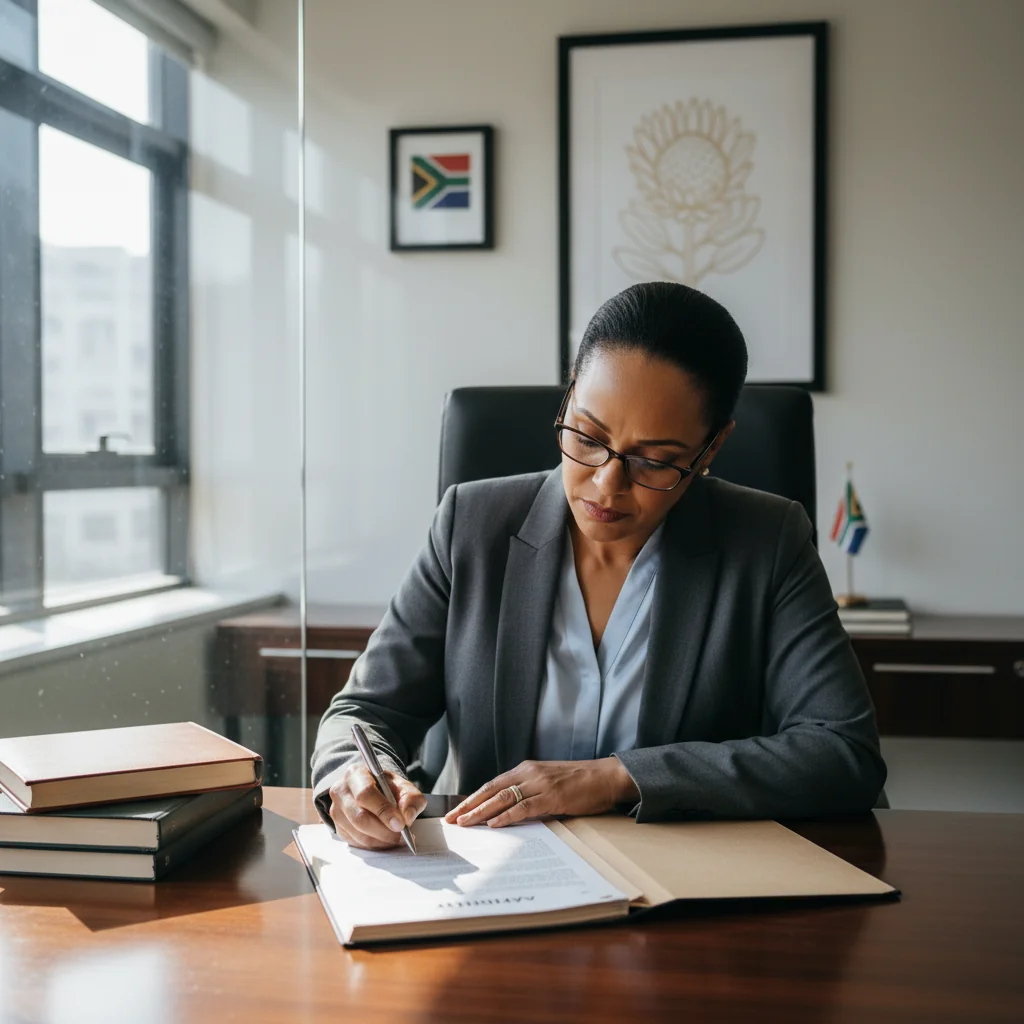
A photorealistic image of a professional adult South African individual in a modern office setting, signing an important legal document with a serious and confident expression, symbolizing trust and formality in legal processes, with subtle South African elements like a flag in the background, no children present.
Discover what an affidavit is in South Africa, including how to draft one, legal requirements, and its uses in court. Your complete guide to affidavits for legal matters.
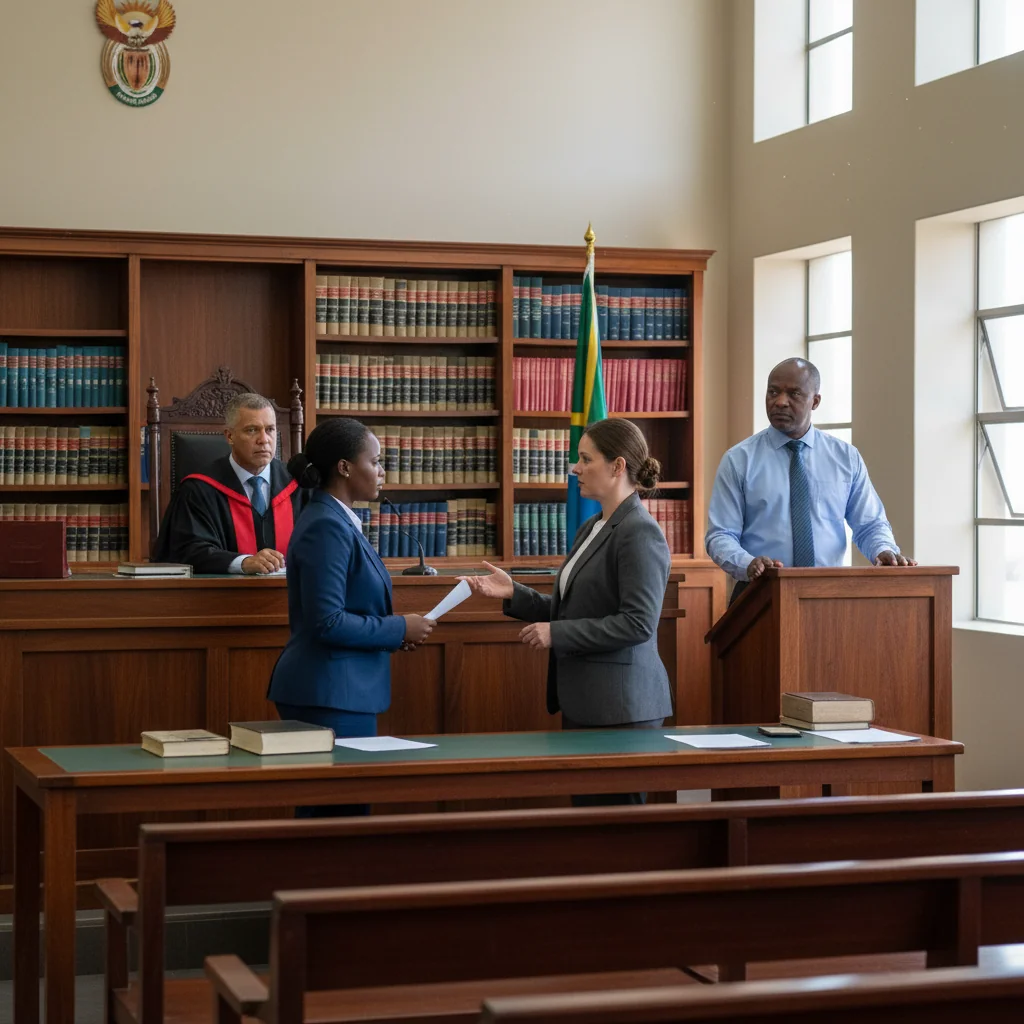
A professional courtroom scene in South Africa, featuring a diverse group of adult lawyers and a judge in session, discussing legal matters seriously at a wooden bench, with South African flag in the background, conveying trust and justice in legal proceedings.
Explore the common uses of affidavits in South African legal proceedings, including civil cases, criminal trials, and administrative matters. Learn how sworn statements support evidence and streamline court processes.