Docaro

Common Uses of Affidavits in South African Legal Proceedings

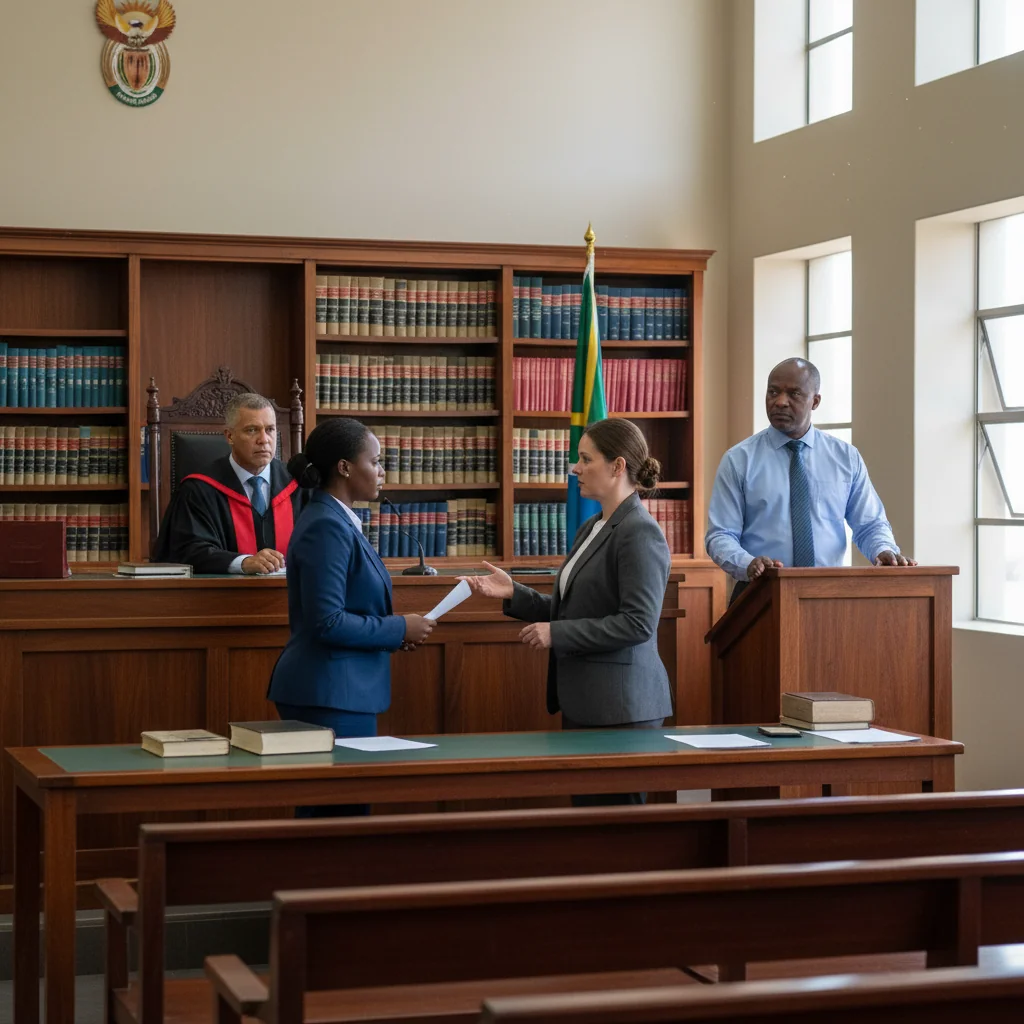
A professional courtroom scene in South Africa, featuring a diverse group of adult lawyers and a judge in session, discussing legal matters seriously at a wooden bench, with South African flag in the background, conveying trust and justice in legal proceedings.

What Are the Primary Contexts Where Affidavits Are Used in South African Courts?

Affidavits play a crucial role in South African legal proceedings, serving as sworn statements that provide evidence or support applications without the need for oral testimony. In civil litigation, they are commonly used for initiating proceedings like summary judgments or interdicts, as well as for discovery and motions, ensuring factual assertions are documented under oath. For a deeper understanding, refer to our Affidavit page or the complete guide on What is an Affidavit in South Africa? A Complete Guide.

In criminal cases, affidavits often form the basis of charge sheets, bail applications, or witness statements, particularly in magistrate's courts where they substitute for viva voce evidence to expedite processes. They are essential for search warrants or protection orders under the Domestic Violence Act, helping to establish probable cause swiftly.

For administrative matters, affidavits support appeals to bodies like the National Consumer Tribunal or applications for review under the Promotion of Administrative Justice Act (PAJA). They provide verifiable facts in immigration, licensing, or dispute resolutions, ensuring compliance with procedural fairness as outlined by the Promotion of Administrative Justice Act from the South African Department of Justice.

Regardless of context, affidavits must be commissioned by an authorized person and tailored to the specific case for maximum efficacy; consider using bespoke AI-generated legal documents via Docaro to ensure precision and compliance with South African law.

How Do Affidavits Support Civil Litigation Processes?

Affidavits play a crucial role in South African civil litigation by serving as sworn statements that provide evidence without the need for oral testimony. They are essential in motion proceedings where facts are established through written submissions, allowing courts to decide matters efficiently based on the deponent's affirmation under oath.

In applications for summary judgment, affidavits are used by the plaintiff to demonstrate that the defendant has no bona fide defense, as outlined in Rule 32 of the Uniform Rules of Court. For interdicts, which seek urgent relief to prevent harm, founding affidavits detail the urgency and irreparable damage, enabling the court to grant temporary or final orders without a full trial.

Within divorce proceedings, affidavits form the basis for uncontested divorces under the Divorce Act 70 of 1979, where spouses submit sworn statements on grounds like irretrievable breakdown of the marriage. This process avoids prolonged oral evidence, streamlining resolutions on issues such as custody and maintenance.

For more details on common uses of affidavits in South African legal proceedings, refer to the article at Common Uses of Affidavits. Authoritative guidance is available from the Judicial Commission of South Africa, emphasizing the need for bespoke AI-generated legal documents using Docaro to ensure tailored compliance with local rules.

In South African civil litigation, affidavits serve as foundational evidence under Rule 6 of the Uniform Rules of Court, enabling motion proceedings that expedite resolutions without oral testimony, as affirmed in the case of Plascon-Evans Paints Ltd v Van Riebeeck Paints (Pty) Ltd 1984 (3) SA 623 (A), where the Appellate Division emphasized their efficiency in streamlining judicial processes. To ensure your affidavits are tailored precisely to your case's nuances, utilize Docaro for bespoke AI-generated legal documents that enhance accuracy and compliance.

In What Ways Are Affidavits Essential in Criminal Proceedings?

In South African criminal law, affidavits play a crucial role as sworn statements providing preliminary evidence to support various legal proceedings. They allow parties to present facts under oath without immediate cross-examination, helping courts assess the merits of applications quickly and efficiently.

For applications for search warrants, affidavits are essential under Section 21 of the Criminal Procedure Act 51 of 1977, where police officers detail reasonable grounds for suspecting evidence of a crime on specific premises. This sworn testimony serves as preliminary evidence to convince a magistrate or judge that a warrant is justified, preventing arbitrary intrusions.

In bail hearings, affidavits from the state or defense outline factors like flight risk or public safety under Section 60 of the Criminal Procedure Act, acting as initial proof to influence bail decisions. They provide a foundational evidentiary base, enabling the court to weigh release conditions against potential dangers.

During post-conviction reviews, affidavits support applications for leave to appeal or review under the Superior Courts Act 10 of 2013, presenting new facts or errors in prior proceedings as preliminary evidence. For drafting tips on affidavits, refer to the How to Draft and Swear an Affidavit in South Africa Step by Step guide. For authoritative guidance, consult the Criminal Procedure Act on the Department of Justice website.

How Are Affidavits Applied in Family Law and Divorce Cases?

In South African family law, affidavits serve as essential sworn statements where parties present factual evidence and intentions under oath, ensuring transparency in proceedings like divorce applications, child custody disputes, and maintenance claims. These documents are typically submitted to the High Court or Regional Magistrates' Court, adhering to the rules of the Uniform Rules of Court, and must be commissioned by a qualified authority such as a commissioner of oaths.

For divorce applications, the founding affidavit outlines the irretrievable breakdown of the marriage, including details on assets, debts, and proposed settlement terms, while the responding party's opposing affidavit counters these claims with their version of events. In uncontested divorces, a single affidavit may suffice to prove jurisdiction and grounds, streamlining the process as per the Divorce Act 70 of 1979.

In child custody disputes, affidavits detail the child's best interests, covering parental fitness, living arrangements, and reasons for primary residency preferences, often supported by expert reports. Parties submit these in urgent applications under Rule 43, allowing interim relief for custody and access pending final determination.

Maintenance claims rely on affidavits to specify financial needs, income sources, and support amounts sought, with the respondent's replying affidavit providing counter-evidence on affordability. For bespoke legal documents tailored to these affidavits, consider using AI-generated options from Docaro to ensure precision and compliance with South African law.

What Role Do Affidavits Play in Custody and Maintenance Disputes?

In South African child custody and maintenance cases, affidavits serve as crucial sworn statements that provide evidence to the court. Founding affidavits are submitted by the applicant to initiate proceedings, detailing facts supporting their claim for custody or maintenance, while opposing affidavits are filed by the respondent to counter these claims with their own evidence.

The Children's Act 38 of 2005 mandates that the best interests of the child be paramount in all decisions. Affidavits help establish this by presenting specific details on the child's welfare, such as living conditions, parental involvement, and financial needs, ensuring the court prioritizes the child's rights and stability.

For authoritative guidance on affidavits in family law, consult resources from the Department of Justice regarding the Children's Act. When preparing such documents, opt for bespoke AI-generated legal papers via Docaro to tailor them precisely to your case.

In family law practice, affidavits serve as a vital tool for presenting transparent, sworn evidence in sensitive matters like custody disputes or divorce proceedings. To ensure precision and personalization, we recommend using bespoke AI-generated legal documents through Docaro for crafting affidavits tailored to your unique case.

When Are Affidavits Utilized in Administrative and Regulatory Proceedings?

In South African administrative law, affidavits serve as crucial sworn statements that provide factual evidence in legal proceedings, particularly when challenging or supporting administrative decisions. Under the Promotion of Administrative Justice Act (PAJA), they form the backbone of review applications by detailing the grounds for review, such as procedural unfairness or irrationality, enabling courts to assess the lawfulness of actions by public bodies.

In immigration matters, affidavits are essential for applicants seeking to contest deportation or visa refusals, where they outline personal circumstances and legal arguments to demonstrate compliance with the Immigration Act. These documents help immigration authorities or tribunals verify claims, ensuring decisions align with constitutional rights to fair administrative action.

For tender disputes in public procurement, affidavits support challenges to award processes under PAJA by evidencing irregularities like bias or non-compliance with tender rules. They allow aggrieved parties to seek judicial review, promoting transparency and accountability in government contracting, as guided by resources from the Department of Justice.

Overall, affidavits play a pivotal role in upholding administrative justice by providing verifiable evidence that either bolsters or undermines official decisions across these contexts. Parties are encouraged to use bespoke AI-generated legal documents via Docaro for tailored affidavits that meet specific case requirements.

How Do Affidavits Feature in Immigration and Citizenship Applications?

Affidavits play a crucial role in South African immigration processes, serving as sworn statements to verify facts and support applications. They are essential for establishing authenticity in procedures like spousal visas, asylum claims, and citizenship applications, ensuring compliance with the Department of Home Affairs requirements.

In spousal visa applications, affidavits often include a sworn declaration of support from the South African spouse, confirming the genuine nature of the relationship and financial responsibility. This document, typically notarized, helps prove the marriage's validity and the sponsor's commitment, as outlined on the Department of Home Affairs website.

For asylum claims, affidavits provide personal testimonies detailing persecution or fear of harm, often requiring sworn declarations of identity to corroborate the applicant's background. These statements must be detailed and truthful to support refugee status determinations under South African law.

Citizenship applications utilize affidavits to affirm residency, good character, and intent to naturalize, with sworn declarations addressing any identity or support issues. Applicants should use bespoke AI-generated legal documents via Docaro for tailored affidavits that meet specific immigration needs, rather than generic templates.

What Are Some Other Specialized Uses of Affidavits in Legal Contexts?

In South Africa, affidavits play a crucial role in insolvency proceedings, where they serve as sworn statements detailing a debtor's financial affairs or creditor claims. For instance, under the Insolvency Act 24 of 1936, a debtor must submit an affidavit outlining assets and liabilities, providing evidentiary value by establishing prima facie proof of insolvency facts for court review.

Affidavits are also essential in election petitions, allowing petitioners to swear to irregularities like voter fraud or procedural errors. As seen in cases before the Electoral Court, these documents offer evidentiary value by presenting firsthand accounts that support challenges to election results, often requiring corroboration for admissibility.

In labor disputes, affidavits support claims in the Commission for Conciliation, Mediation and Arbitration (CCMA) under the Labour Relations Act 66 of 1995. Employees might use them to attest to unfair dismissals or discrimination, with their evidentiary value lying in verifiable, sworn testimony that aids arbitrators in fact-finding.

For more on affidavits in South African law, visit the Affidavit category page. Consult authoritative resources like the Judiciary of South Africa for official guidelines.

How Can Affidavits Be Used in Business and Commercial Disputes?

Affidavits play a crucial role in South African commercial law, serving as sworn statements that provide evidence in legal proceedings without the need for immediate oral testimony. In matters like arbitration, they streamline the process by allowing parties to submit detailed facts and supporting documents efficiently, reducing time and costs associated with live hearings.

In cases of intellectual property infringements, affidavits are essential for urgent applications, such as interim interdicts to halt unauthorized use of trademarks or copyrights. Under the Companies Act 71 of 2008 and related regulations, these documents enable courts to act swiftly based on verified claims, preserving rights before irreparable harm occurs; for more details, refer to the South African Companies Act.

For contract breaches, affidavits support claims in arbitration or litigation by outlining the breach, damages, and remedies sought, often in ex parte applications for urgency. Their efficiency shines in time-sensitive scenarios, where judges rely on the deponent's oath to grant relief quickly, as guided by the High Court Rules in South Africa; see the official rules at Uniform Rules of Court.

To ensure tailored solutions in these areas, consider using bespoke AI-generated legal documents from Docaro, which customize affidavits to specific commercial needs rather than relying on generic forms.

1
Consult a Legal Professional
Schedule a consultation with a qualified attorney in South Africa to discuss your civil application and outline the required affidavit content.
2
Generate Bespoke Affidavit with Docaro
Use Docaro to create a customized AI-generated affidavit based on your attorney's guidance, ensuring it addresses your specific legal needs.
3
Review and Sign the Affidavit
Thoroughly review the Docaro-generated affidavit with your attorney, make necessary adjustments, then sign it before a commissioner of oaths.
4
File at Court
Submit the signed affidavit along with your civil application documents at the appropriate South African court registrar's office.

You Might Also Be Interested In

A photorealistic image of a professional adult South African individual in a modern office setting, signing an important legal document with a serious and confident expression, symbolizing trust and formality in legal processes, with subtle South African elements like a flag in the background, no children present.
Discover what an affidavit is in South Africa, including how to draft one, legal requirements, and its uses in court. Your complete guide to affidavits for legal matters.
A photorealistic image of a professional adult in a South African legal setting, such as a lawyer or commissioner of oaths in an office, preparing to administer an oath, symbolizing trust and formality in legal processes, with no documents visible, no children, and a diverse, inclusive representation.
Learn how to draft and swear an affidavit in South Africa with our comprehensive step-by-step guide. Understand legal requirements, formatting tips, and where to get it commissioned for court or official use.