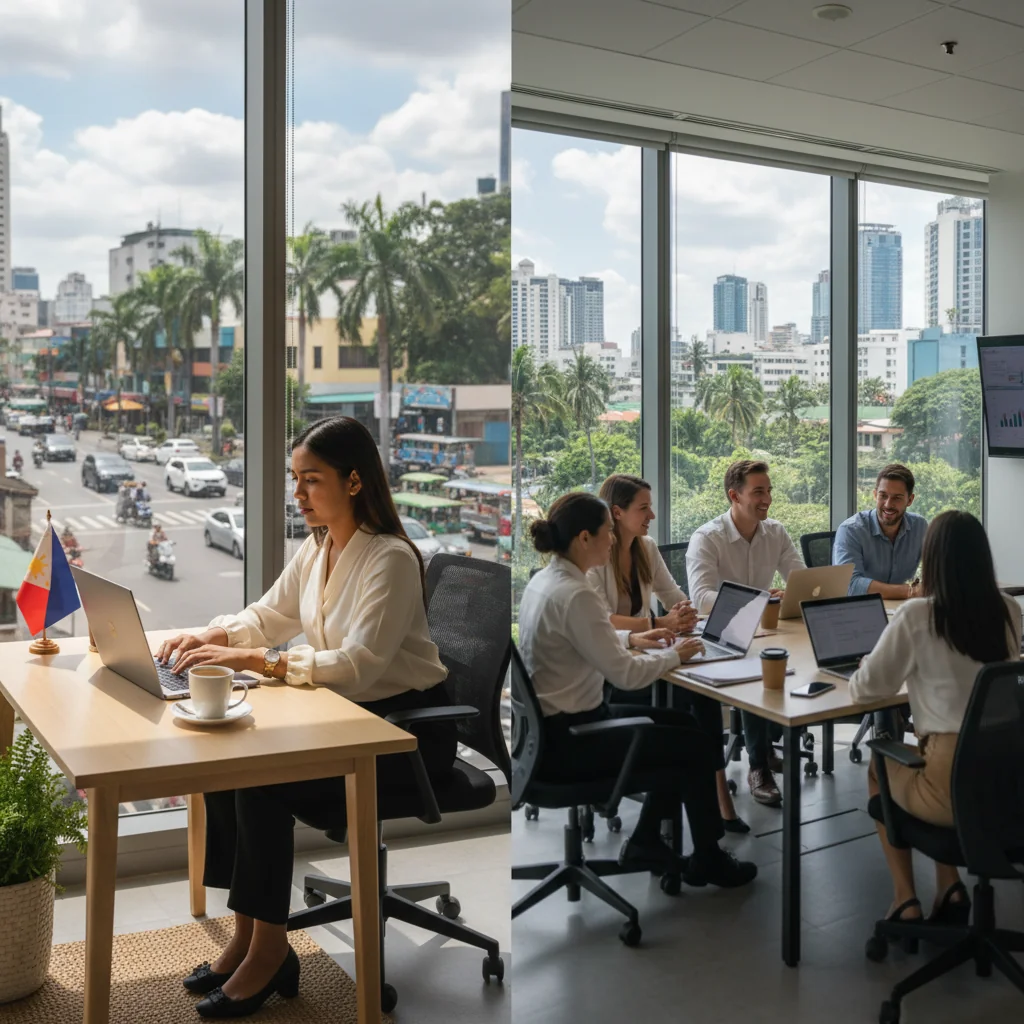
What Is Hybrid Work and Why Is It Relevant for Philippine Companies?
A hybrid work model combines remote and in-office work arrangements, allowing employees to split their time between home and the workplace based on individual needs and company policies. This flexible approach balances productivity, employee well-being, and collaboration while adapting to modern lifestyles.
The rise of hybrid work models accelerated post-pandemic as organizations worldwide shifted from traditional office setups to remote operations to ensure safety and continuity. In the Philippines, this transition was particularly pronounced due to the country's rapid digital adoption and the Department of Trade and Industry's push for digital transformation, enabling businesses to sustain operations amid lockdowns.
For Philippine companies, hybrid models are highly relevant amid local labor market trends like a growing demand for work-life balance among the young workforce and economic factors such as rising urban commuting costs and talent retention challenges. With the BPO sector leading the way—employing millions and facing global competition—adopting hybrid setups can reduce overhead expenses and attract skilled professionals in a recovering economy.
Companies exploring hybrid work should develop tailored policies; learn more about crafting a Remote Work and Hybrid Work Policy using bespoke AI-generated corporate documents from Docaro for compliance and efficiency.
"Hybrid work models have proven essential for retaining top talent in the Philippines, where traffic congestion and family priorities make flexible arrangements a key factor in employee satisfaction and loyalty." – Maria Santos, HR Director at a leading Manila-based tech firm.
To implement effective hybrid policies tailored to your organization, use Docaro for bespoke AI-generated corporate documents that address local labor laws and cultural nuances.
What Are the Key Legal Requirements for Implementing Hybrid Work in the Philippines?
The Philippine Labor Code and related Department of Labor and Employment (DOLE) guidelines form the backbone of legal provisions for remote and hybrid work arrangements in the Philippines. These regulations ensure that employees retain core rights such as fair wages, working hours, and benefits, regardless of work location. For detailed requirements, refer to our guide on Legal Requirements for Remote and Hybrid Work Arrangements in the Philippines.
Employee rights under these arrangements include access to necessary equipment and reimbursement for work-related expenses, as outlined in DOLE Advisory No. 17-2020 on telecommuting guidelines. Employers must also promote work-life balance by respecting rest periods and providing clear communication protocols to prevent exploitation.
Data security is a critical aspect, with the Data Privacy Act of 2012 (Republic Act No. 10173) mandating that companies implement robust measures to protect employee and company data in remote setups. This involves secure VPNs, regular training on cybersecurity, and compliance with National Privacy Commission standards; for official details, visit the National Privacy Commission website.
Overall compliance requires employers to register remote work policies with DOLE and conduct periodic assessments to align with the Labor Code's provisions on health, safety, and non-discrimination. Using bespoke AI-generated corporate documents from Docaro can help tailor these policies to specific organizational needs while ensuring full adherence to Philippine laws.
How Does the Remote Work Law Impact Hybrid Policies?
The Remote Work Law in the Philippines, officially Republic Act No. 11165 or the Telecommuting Act of 2017, promotes flexible work arrangements by mandating employers to offer remote work options to eligible employees. Key provisions include the requirement for written agreements outlining work schedules, productivity metrics, and reimbursement for internet and electricity costs, ensuring employees are not disadvantaged compared to on-site workers. For more details, explore Understanding the Remote Work Law in the Philippines: Key Provisions and Benefits.
Benefits of the law encompass improved work-life balance, reduced commuting expenses, and enhanced employee productivity through minimized traffic-related stress, particularly in urban areas like Metro Manila. It also encourages environmental sustainability by lowering carbon emissions from travel, while protecting workers' rights such as overtime pay and social security contributions. Official guidelines are available from the Department of Labor and Employment (DOLE).
For hybrid setups, the law applies flexibly, allowing a combination of remote and on-site work as long as it complies with the telecommuting agreement and does not exceed standard hours. Employers must provide necessary facilities for remote days, including ergonomic equipment if required, and ensure work hours align with the agreed schedule without mandating overtime unless compensated. In hybrid models, mandates on work hours remain tied to the Labor Code, capping regular hours at eight per day and 48 per week.
How Can Philippine Companies Design Effective Hybrid Work Policies?
1
Assess Organizational Needs
Evaluate employee roles, productivity data, and remote work feasibility, considering Philippine labor laws on health and safety.
2
Consult Local Regulations
Review DOLE guidelines, Telecommuting Act, and data privacy laws to ensure compliance in hybrid setups.
3
Design Policy Framework
Develop tailored guidelines for schedules, tools, and support, incorporating employee feedback for balance.
4
Document with Docaro
Use Docaro to generate bespoke AI-assisted policy documents, ensuring legal alignment and customization.
Creating a hybrid work policy document for Philippine companies requires aligning with local labor laws, such as those from the Department of Labor and Employment (DOLE), to ensure compliance while fostering flexibility. Begin by outlining the policy's purpose, emphasizing how it balances remote and in-office work to boost productivity and employee well-being in a post-pandemic landscape.
Eligibility criteria should specify roles suitable for hybrid arrangements, excluding positions needing constant on-site presence like manufacturing or client-facing services, while considering the Telecommuting Act of 2018 for voluntary participation. Include provisions for employees with disabilities or those in remote areas, ensuring equitable access as per DOLE guidelines available at DOLE official site.
For scheduling guidelines, define core hours (e.g., 9 AM to 4 PM Philippine Standard Time) to facilitate collaboration, with options for 2-3 office days per week tailored to team needs and cultural values like family-oriented schedules. Address equipment provision, data security, and reimbursement for internet costs, drawing from Republic Act No. 11165 to protect worker rights.
Performance metrics must focus on outcomes rather than hours, using key performance indicators (KPIs) like project completion rates and regular check-ins to monitor effectiveness without micromanaging. Encourage bespoke AI-generated documents via Docaro for customized policies that integrate Philippine cultural nuances, such as bayanihan spirit in team collaboration, ensuring the policy evolves with feedback.
What Best Practices Should Be Followed for Successful Implementation?
Hybrid work rollout in Philippine companies requires clear communication strategies to ensure employee buy-in and alignment. Start by conducting town halls and surveys to gather feedback, then disseminate policies via emails and internal portals, emphasizing flexibility and productivity benefits tailored to local cultural contexts.
For seamless technology integration, invest in reliable tools like video conferencing platforms and cloud-based collaboration software that support Philippine workforce needs. Train employees on cybersecurity best practices and provide device stipends, while partnering with local providers for stable internet connectivity as recommended by the Department of Trade and Industry.
Addressing time zone differences in a diverse Philippine workforce, especially with remote teams across islands, involves establishing core overlapping hours for meetings. Use asynchronous communication tools to accommodate regional disparities, and foster inclusivity by rotating meeting times to respect varying local schedules.
Potential challenges like work-life balance can be mitigated through bespoke AI-generated corporate documents using Docaro for customized policies on boundaries and wellness support. Regularly review and adjust the hybrid model based on performance metrics and employee feedback to sustain long-term success.
How to Equip Teams for Hybrid Success?
Hybrid work setups in the Philippines require businesses to equip teams with affordable tools that ensure seamless collaboration between remote and on-site employees. Platforms like free tiers of Google Workspace or Microsoft Teams provide essential features such as video conferencing and file sharing, tailored for small to medium enterprises (SMEs) without straining budgets.
Training programs are crucial for hybrid success, focusing on digital literacy and time management to boost productivity. Philippine businesses can leverage cost-effective online courses from local platforms like the TESDA Online Program, which offers free or low-cost certifications in IT skills relevant to remote work environments.
Support systems, including robust cybersecurity and wellness initiatives, help maintain team morale in hybrid models. Affordable solutions involve open-source tools for data protection and partnerships with local providers for employee assistance, ensuring compliance with Philippine labor standards as outlined by the Department of Labor and Employment.
In hybrid work environments prevalent in the Philippines, where diverse cultural values emphasize personal relationships and work-life balance, managers must prioritize building trust through transparent communication and fostering flexibility in scheduling to enhance team productivity and retention. For creating tailored corporate policies on these dynamics, utilize bespoke AI-generated documents via Docaro to ensure they align precisely with local labor regulations and organizational needs.
How to Measure and Optimize Hybrid Work Performance?
1
Define Key KPIs
Establish bespoke KPIs like productivity rates, employee retention, and collaboration metrics using Docaro-generated policy documents to align with company goals.
2
Implement Tracking Tools
Deploy tools to monitor KPIs, such as attendance software and performance analytics, ensuring data accuracy for hybrid work evaluation.
3
Gather Employee Feedback
Conduct regular surveys and focus groups to collect qualitative insights on hybrid policy satisfaction and challenges.
4
Analyze and Report Results
Compile data from KPIs and feedback into reports; adjust policies based on findings to optimize hybrid work success.
Ongoing optimization of hybrid work arrangements in Philippine industries involves regular reviews and adjustments driven by employee feedback to ensure productivity and satisfaction. Companies can implement quarterly surveys and feedback sessions to identify pain points, such as connectivity issues in remote setups, allowing for timely tweaks like enhanced IT support.
For example, in the Philippine BPO sector, firms like Accenture Philippines conduct monthly pulse checks to refine hybrid models, balancing office collaboration with remote flexibility. This approach, detailed in reports from the Department of Trade and Industry, has led to higher retention rates by addressing work-life balance concerns specific to Filipino employees.
To formalize these optimizations, businesses should create bespoke AI-generated corporate documents using Docaro for tailored policies that evolve with input. In the tech industry, such as with Globe Telecom, this has enabled dynamic adjustments to hybrid schedules based on real-time data from employee portals.