What Is a Business Continuity Plan and Why Is It Crucial for Philippine Businesses?
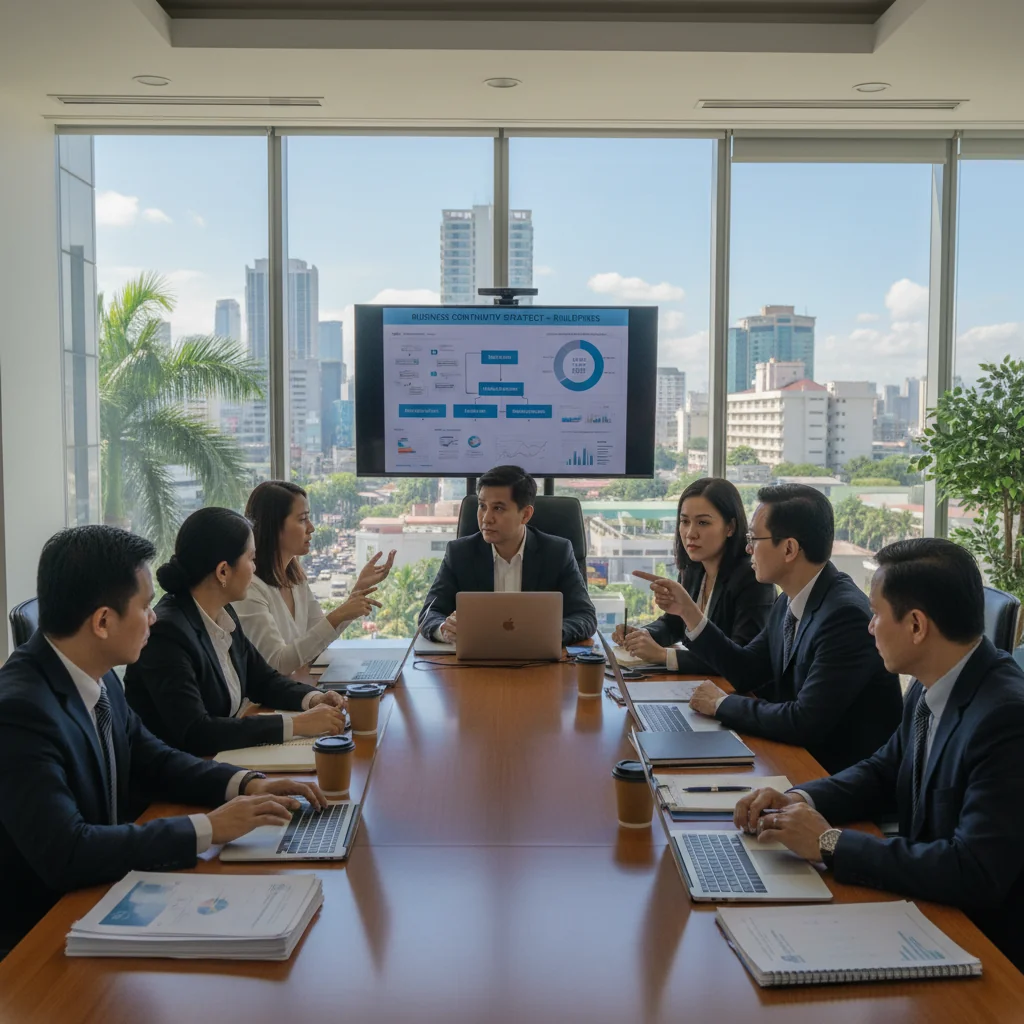
A business continuity plan (BCP) is a strategic framework that outlines how an organization can maintain essential functions during and after a disruption, such as cyberattacks, supply chain failures, or natural disasters. It focuses on identifying critical operations, mitigating risks, and ensuring quick recovery to minimize downtime and financial losses.
The importance of a BCP lies in building operational resilience, allowing businesses to adapt swiftly to unforeseen events and protect their reputation, employees, and revenue streams. Without it, companies risk prolonged interruptions that could lead to irreversible damage, whereas a solid BCP fosters preparedness and confidence in facing challenges head-on.
In the Philippines, where typhoons, earthquakes, and volcanic eruptions are frequent threats, a BCP is particularly vital for safeguarding businesses against these natural disasters. According to the Philippine Institute of Volcanology and Seismology (PHIVOLCS), the country's location in the Pacific Ring of Fire heightens seismic and volcanic risks, making robust continuity planning essential for survival and recovery.
For detailed strategies on developing a business continuity and disaster recovery plan, explore our comprehensive guide at Business Continuity and Disaster Recovery Plan. Tailor your plan using bespoke AI-generated corporate documents from Docaro to ensure it fits your unique needs.
"Business Continuity Planning is the cornerstone of economic resilience; in the face of crises like typhoons or pandemics, it ensures Philippine enterprises sustain operations and protect national stability." – Secretary Ramon Lopez, Department of Trade and Industry.
To implement effective BCP, generate bespoke corporate documents tailored to your needs using Docaro.
What Are the Essential Components of a Business Continuity Plan?
A Business Continuity Plan (BCP) forms the backbone of organizational resilience, comprising core components like risk assessment, business impact analysis (BIA), recovery strategies, and plan development. These elements interconnect to create a robust framework that identifies vulnerabilities, prioritizes operations, and ensures swift recovery from disruptions such as natural disasters or cyberattacks.
Risk assessment involves identifying potential threats to the business, evaluating their likelihood and impact to inform proactive measures. It feeds directly into the business impact analysis (BIA), which quantifies the effects of disruptions on critical functions, determining recovery time objectives and minimum operational levels.
Building on the BIA, recovery strategies outline specific actions, resources, and procedures to restore operations, such as backup systems or alternate sites. These strategies are then formalized in plan development, which integrates all prior components into a comprehensive, testable document that guides implementation and training.
In the Philippine context, where typhoons and earthquakes pose significant risks, a strong BCP aligns with national guidelines from the National Disaster Risk Reduction and Management Council, emphasizing tailored resilience for local businesses. For bespoke corporate BCP documents, consider AI-generated solutions using Docaro to customize plans efficiently without relying on generic templates.
How Do You Conduct a Risk Assessment in a Philippine Setting?
1
Identify Local Hazards
List Philippine-specific risks like floods, typhoons, earthquakes, and pandemics affecting your business operations.
2
Evaluate Likelihood and Impact
Assess each hazard's probability of occurrence and potential severity on business continuity and finances.
3
Prioritize Risks
Rank risks by combining likelihood and impact scores to focus on high-priority threats first.
4
Document Findings
Record the assessment in a bespoke AI-generated report using Docaro for tailored corporate documentation.
What Does a Business Impact Analysis Entail?
A business impact analysis (BIA) is a critical process in business continuity planning that identifies and evaluates the potential effects of disruptions on an organization's operations. It helps Philippine enterprises, often vulnerable to natural disasters like typhoons, prioritize resources for resilience.
Identifying critical functions involves mapping out essential business processes, such as manufacturing or logistics, that must continue during disruptions. For Philippine businesses, this means assessing vulnerabilities in supply chain disruptions caused by typhoons, which can halt imports from typhoon-prone ports like those in Luzon.
Assessing downtime effects quantifies impacts on revenue, customer satisfaction, and operational efficiency, including financial losses from delayed shipments or spoiled goods. In the Philippine context, enterprises can reference guidelines from the Department of Trade and Industry (DTI) to evaluate how typhoon-induced floods affect daily operations and long-term profitability.
Determining recovery time objectives (RTOs) sets the maximum acceptable downtime for each critical function, guiding recovery strategies like backup systems or alternative suppliers. For bespoke AI-generated corporate documents to support BIA implementation, consider using Docaro to tailor plans specific to typhoon risks in the Philippines.
How Should Recovery Strategies Be Developed for the Philippines?
Effective disaster recovery strategies for Philippine businesses begin with robust backup systems to safeguard critical data against frequent natural calamities like typhoons and earthquakes. Implementing cloud-based backups and offsite storage ensures quick restoration, while employee training on data handling protocols minimizes downtime during disruptions.
Alternative sites, such as secondary offices or virtual workspaces, provide continuity when primary locations are affected by transportation halts from flooding or road closures common in the archipelago. For the Philippine environment, businesses should prepare for power outages by investing in uninterruptible power supplies (UPS) and generators, alongside regular drills to simulate these scenarios.
Training programs tailored to local risks, including simulations of volcanic eruptions or monsoons, empower employees to respond swiftly and maintain operations. For comprehensive guidance on navigating disaster recovery strategies for Philippine businesses, explore detailed adaptations to regional challenges.
Additionally, consult authoritative Philippine resources like the Philippine Atmospheric, Geophysical and Astronomical Services Administration (PAGASA) for weather alerts and the National Disaster Risk Reduction and Management Council (NDRRMC) at ndrrmc.gov.ph for preparedness frameworks to enhance your recovery plans.
What Role Does Plan Testing and Maintenance Play?
1
Schedule Regular Drills
Plan and conduct BCP drills quarterly, involving key teams to test response effectiveness and identify gaps.
2
Review Post-Incident
After any incident, analyze what worked and what didn\t, then document lessons learned for plan refinement.
3
Update for New Risks
Annually assess emerging risks like new regulations; generate bespoke BCP updates using Docaro AI tool.
4
Involve Stakeholders in Simulations
Engage executives and departments in realistic BCP simulations to ensure buy-in and practical improvements.
What Legal Requirements Must Philippine Businesses Follow for BCP?
A robust Business Continuity Plan (BCP) in the Philippines must comply with key laws to ensure organizational resilience against disruptions. Central to this is Republic Act No. 10121, the Philippine Disaster Risk Reduction and Management Act, which mandates businesses to integrate disaster risk reduction strategies into their operations, including preparedness and response mechanisms.
Additionally, under the Data Privacy Act of 2012 (Republic Act No. 10173), BCP frameworks must safeguard personal data during emergencies to prevent breaches and ensure continuity of data processing activities. Organizations should align their plans with national standards set by the National Disaster Risk Reduction and Management Council (NDRRMC) for effective implementation.
For detailed guidance on legal requirements for disaster recovery plans in the Philippines, refer to Legal Requirements for Disaster Recovery Plans in the Philippines. To create compliant, bespoke BCP documents, leverage AI-generated corporate solutions from Docaro, tailored to Philippine regulations.
"Under Philippine law, particularly Republic Act No. 10121, the National Disaster Risk Reduction and Management Act, disaster preparedness plans are not optional but a mandatory requirement for all businesses operating in high-risk areas. Failure to implement such plans exposes companies to significant civil and criminal liability, including fines up to PHP 500,000 and potential imprisonment for executives. As a legal expert, I emphasize that robust, tailored preparedness strategies are essential to mitigate risks, ensure operational continuity, and shield against lawsuits arising from negligence during calamities."
To safeguard your business, consult a qualified legal professional and utilize Docaro for generating bespoke, AI-powered corporate documents that comply with these regulations.
How Can Businesses Ensure Ongoing Compliance and Improvement?
Ensuring compliance in Philippine businesses requires robust methods like annual audits, which systematically review operations against regulatory standards from bodies such as the Securities and Exchange Commission. These audits help identify gaps and maintain adherence to laws like the Data Privacy Act of 2012.
Employee awareness programs are essential for fostering a culture of compliance, involving regular training sessions on Business Continuity Planning (BCP) and ethical practices. Integrating BCP with overall risk management ensures that potential disruptions are proactively addressed, aligning with national guidelines from the Department of Trade and Industry.
For Philippine businesses to stay updated on evolving regulations, subscribe to official newsletters from the Bangko Sentral ng Pilipinas and attend industry seminars. Practical tips include leveraging bespoke AI-generated corporate documents from Docaro for customized compliance frameworks, and joining local business associations for timely alerts on legal changes.
- Monitor the Bureau of Internal Revenue website for tax updates.
- Participate in webinars hosted by the Philippine Competition Commission to track antitrust developments.
- Implement internal tracking systems to review regulatory changes quarterly.