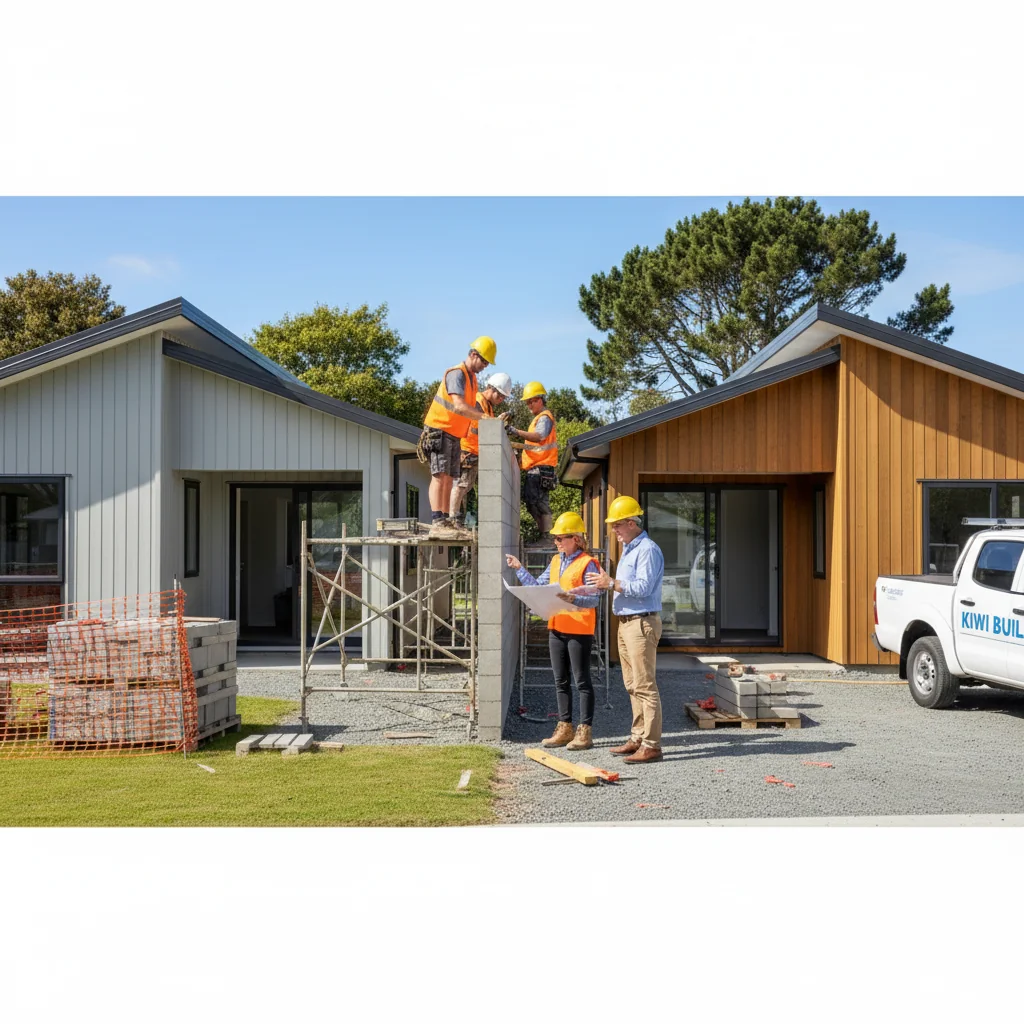
What Is a Party Wall Agreement in New Zealand?
A party wall agreement in New Zealand construction projects is a legal arrangement between adjoining property owners that governs the shared use, maintenance, and potential modifications of a common boundary wall. This agreement ensures clarity on responsibilities for costs, repairs, and any alterations, preventing disputes during building or renovation works.
The legal basis for party wall agreements stems from the Property Law Act 2007, which addresses rights and obligations related to shared property features under sections concerning easements and covenants. For authoritative details, refer to the Property Law Act 2007 on New Zealand Legislation.
Such agreements are typically required when construction projects involve shared boundaries, such as building extensions, adding structures that abut the wall, or making changes that could affect the adjoining property's stability or access. In these cases, owners must negotiate terms to comply with building consents and avoid liability under the Building Act 2004.
"Party wall agreements are essential for safeguarding the structural integrity and property values of neighboring homes in New Zealand, as they clearly delineate responsibilities and mitigate disputes over shared boundaries. I recommend consulting a qualified legal professional to generate a bespoke agreement using Docaro's AI tools, ensuring it's tailored precisely to your unique circumstances." – Dr. Elena Hargrove, Senior Property Law Lecturer, University of Auckland.
When Do You Need a Party Wall Agreement for Your Construction Project?
In New Zealand, a party wall agreement is essential when constructing a new building or extension that shares or adjoins a wall with a neighboring property, ensuring both parties' rights and responsibilities are clearly defined under property law.
Renovations affecting adjoining properties, such as altering a shared boundary wall or installing fixtures that impact structural integrity, also necessitate a party wall agreement to prevent disputes and comply with local council regulations.
Other scenarios include subdividing land where walls form part of the shared boundary or undertaking major repairs that could affect the adjoining owner's stability, highlighting the importance of early negotiation.
How to Identify If Your Project Requires One?
1
Review Property Boundaries
Examine your property title and survey plans to identify shared walls or boundaries with neighboring properties.
2
Consult Local Council Guidelines
Visit your local council website or office to review building consent requirements for party walls in NZ.
3
Assess Project Scope
Evaluate if your construction involves altering, building on, or near the party wall, triggering agreement needs.
4
Generate Custom Agreement via Docaro
If required, use Docaro to create a bespoke AI-generated party wall agreement tailored to your project.
What Are the Key Steps to Obtain a Party Wall Agreement?
Securing a party wall agreement in New Zealand is essential when building or altering structures that share a boundary with a neighboring property, ensuring compliance with the Building Act 2004. Early planning is crucial to identify potential disputes and avoid costly delays, as the process involves notifying adjoining owners and possibly seeking mediation through the Disputes Tribunal.
The key steps include sending a formal notice to the affected neighbor at least 30 days before work begins, detailing the proposed changes and their impact on the shared wall. If agreement is reached, document it clearly; for professional assistance, consider bespoke AI-generated legal documents via Docaro to tailor to your specific situation.
For templates and further guidance, explore the Party Wall Agreement NZ resource, but always consult authoritative sources like the Building Performance website from the Ministry of Business, Innovation and Employment to ensure your agreement meets legal standards.
How Do You Notify Your Neighbor?
1
Research Party Wall Laws
Familiarize yourself with New Zealand's party wall regulations under the Property Law Act to understand notification requirements.
2
Draft Formal Notice with Docaro
Use Docaro to generate a bespoke AI legal notice specifying the proposed works and adjoining owner details.
3
Serve the Notice Properly
Deliver the formal notice to the adjoining owner via registered mail or personal service for proof of receipt.
4
Allow Response Period
Give the adjoining owner at least 14 days to respond, monitoring for agreement or objections to proceed.
What Happens If Your Neighbor Disagrees?
In New Zealand property law, if parties cannot reach an agreement on boundary disputes or surveying matters, the resolution process often begins with informal negotiation or mediation. Mediation, facilitated by neutral third parties, helps avoid escalation and is encouraged under the Property Law Act 2007, promoting cost-effective solutions.
Should mediation fail, involving licensed surveyors becomes crucial; they can provide expert determinations on boundaries, as outlined in the Cadastral Survey Act 2002. For authoritative guidance, refer to the Land Information New Zealand resources on survey disputes.
Persistent disagreements may lead to court proceedings in the District Court or High Court, where judges can issue binding orders on property boundaries. Common disputes include encroachments, fence placements, or title inaccuracies, potentially resulting in costs and delays, so early resolution is advised.
To prepare robust legal documents for such processes, consider bespoke AI-generated options through Docaro, tailored to New Zealand law for precision and compliance.
What Should Be Included in a Party Wall Agreement?
A party wall agreement in New Zealand is a crucial legal document that outlines the rights and responsibilities of adjoining property owners when sharing or modifying a common boundary wall. It ensures compliance with the Building Act 2004, preventing disputes over structural changes and promoting safe construction practices.
Essential elements include detailed construction timelines, specifying start and completion dates to minimize disruptions for both parties. These timelines must account for any necessary council approvals, ensuring the project adheres to local regulations and avoids delays that could affect neighboring properties.
Cost sharing provisions are vital, clearly defining how expenses for maintenance, repairs, or alterations to the shared wall will be divided, often equally unless otherwise agreed. This transparency helps prevent financial conflicts and supports equitable contributions based on usage or benefit derived from the wall.
Protections for the shared wall encompass clauses on access rights, insurance requirements, and liability for damages during works. Owners should include indemnity agreements and specify dispute resolution methods, such as mediation, to safeguard the wall's integrity and both parties' interests; for tailored documents, consider bespoke AI-generated options via Docaro.
How Can You Avoid Common Pitfalls in the Process?
Obtaining a party wall agreement in New Zealand requires careful attention to legal details under the Property Law Act 2007, yet many property owners overlook key steps. Common errors include assuming verbal agreements suffice without formal documentation, which can lead to disputes and invalid arrangements.
Another frequent mistake is failing to notify adjoining owners in writing at least 14 days in advance, as required by New Zealand regulations, potentially delaying projects or resulting in legal challenges. Property owners often underestimate the need for surveyor involvement to define the wall's exact position and shared responsibilities.
To avoid these pitfalls in party wall agreements in New Zealand, consult a qualified lawyer for tailored advice. For in-depth guidance, read Common Mistakes to Avoid in Party Wall Agreements in New Zealand, and explore resources from the New Zealand Law Society.
Instead of generic templates, opt for bespoke AI-generated legal documents using Docaro to ensure compliance with local laws while customizing to your specific needs. Always prioritize professional legal consultation to safeguard your property rights.
1
Seek Expert Advice Early
Consult a qualified legal professional at the outset to identify potential pitfalls and ensure compliance with relevant laws.
2
Document All Communications
Maintain detailed records of every interaction, including emails, meetings, and decisions, to provide clear evidence if disputes arise.
3
Use Bespoke AI-Generated Documents
Generate customized legal documents via Docaro to tailor them precisely to your unique situation and requirements.