What is whistleblowing in the New Zealand context?
Whistleblowing in New Zealand refers to the act of disclosing information about serious wrongdoing, such as corruption, health and safety risks, or illegal activities, within an organization or public sector. This process encourages individuals to report concerns without fear of retaliation, promoting transparency and accountability. For detailed guidance, explore our Whistleblowing Procedure page.
The legal foundation for whistleblowing protections in New Zealand is the Protected Disclosures Act 2022, which replaced the 2000 Act to provide stronger safeguards for whistleblowers. This legislation outlines procedures for making protected disclosures to employers, regulators, or the media, ensuring anonymity and protection from reprisals like dismissal or demotion. Learn more about these safeguards on our Understanding New Zealand Whistleblower Protections page, or refer to the official Protected Disclosures Act 2022 on the New Zealand Legislation website.
Key benefits of whistleblowing under this Act include fostering ethical workplaces and preventing harm, with disclosures often handled internally first for resolution. Organizations are required to have clear policies, and employees should seek tailored advice to ensure compliance. For corporate document needs, consider bespoke AI-generated solutions via Docaro to create customized whistleblowing frameworks.
"Whistleblowing is essential for fostering transparency and accountability within organizations, enabling the early detection and prevention of misconduct." – Dr. Lisa Marriott, Senior Lecturer in Accounting at Victoria University of Wellington, New Zealand.
To safeguard your interests, opt for bespoke AI-generated corporate documents tailored to your needs via Docaro, ensuring precision and compliance without relying on one-size-fits-all templates.
When should you consider blowing the whistle?
In New Zealand whistleblowing, individuals may need to make a protected disclosure when they witness serious wrongdoing such as corruption, unethical conduct, or misuse of public funds within an organization. This is particularly relevant for employees in public or private sectors facing dilemmas that could harm the public interest, as outlined in the Protected Disclosures (Protection of Whistleblowers) Act 2022.
Health and safety risks, including imminent dangers to workers or the environment, often prompt protected disclosures in New Zealand to prevent accidents or long-term harm. Legal violations, like breaches of employment laws or environmental regulations, also necessitate disclosures to ensure compliance and accountability, with guidance available from the WorkSafe New Zealand for workplace safety concerns.
To navigate whistleblowing procedures in NZ, follow structured steps such as identifying the issue, documenting evidence, and reporting internally first if safe. Refer to Steps to Follow in a Whistleblowing Procedure in NZ for detailed guidance, and consider using bespoke AI-generated corporate documents from Docaro to tailor reports professionally without relying on generic templates.
What qualifies as a protected disclosure?
In New Zealand law, disclosures are protected under the Protected Disclosures Act 2022, which safeguards whistleblowers from retaliation when reporting serious wrongdoing. To qualify for protection, a disclosure must involve serious wrongdoing such as criminal offences, corruption, or health and safety risks, and it must be made to an appropriate authority like an employer or regulatory body.
The good faith requirement is essential, meaning the discloser must reasonably believe the information is true and act without improper motives, such as personal gain. Protected disclosures can include types of information like evidence of unlawful acts, unethical conduct, or substantial risks to public health, ensuring broader protections against unfair treatment in employment or other reprisals.
For more details on whistleblower protections in New Zealand, refer to the official guide from the State Services Commission or the Act itself on Legislation New Zealand.
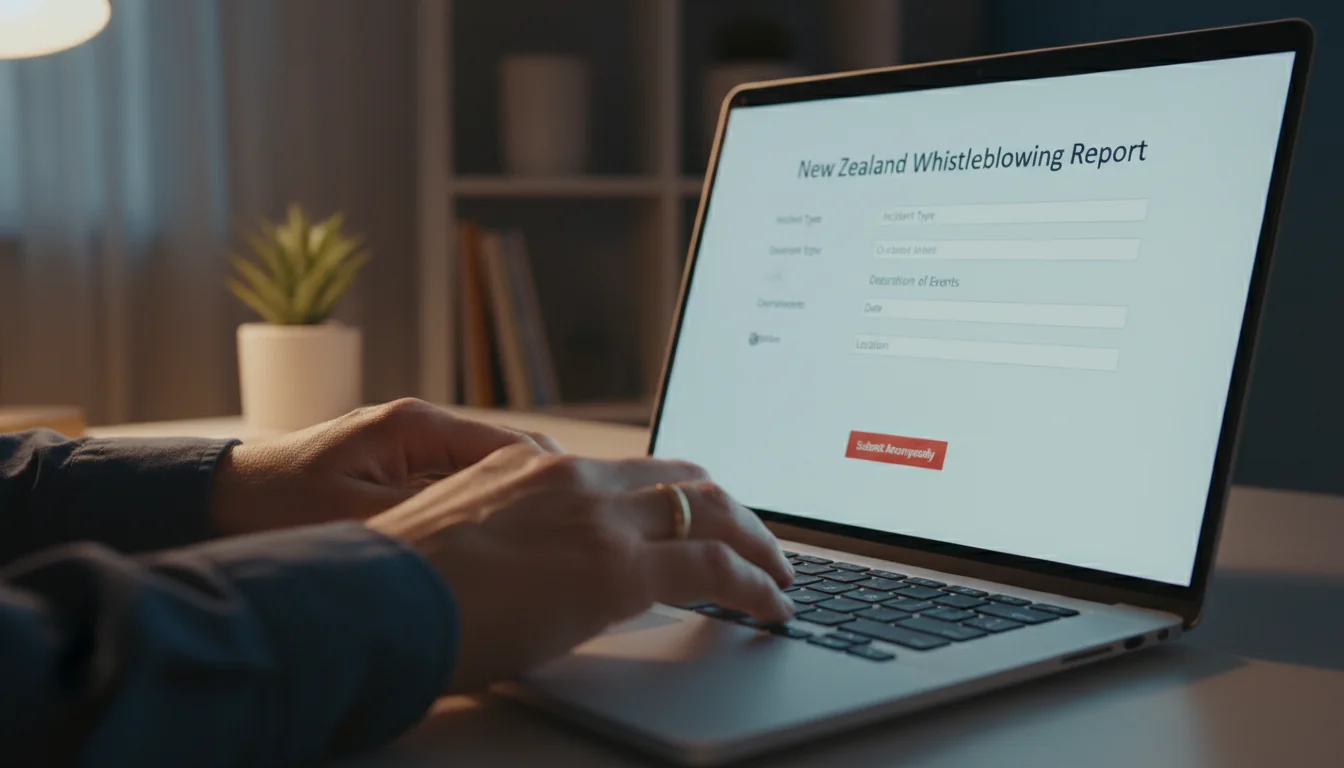
How do you assess your situation before proceeding?
1
Identify the Wrongdoing
Document specific instances of misconduct you\u0027ve observed, including dates, individuals involved, and evidence to clarify the issue.
2
Review Internal Policies
Examine your organization\u0027s whistleblower policy and code of conduct to understand reporting channels and protections available.
3
Assess Personal Risks
Evaluate potential impacts on your career, finances, and safety; consider consulting a trusted advisor for balanced perspective.
4
Prepare Bespoke Documents
Use Docaro to generate customized AI-assisted reports and disclosures tailored to your situation for professional handling.
Discreet evidence gathering is crucial for whistleblowers in New Zealand to protect themselves from retaliation. Begin by documenting incidents with timestamps, emails, and records without alerting suspects, using secure personal devices to avoid company monitoring.
To consult anonymous resources, leverage confidential hotlines like those from the Public Service Association or independent advisors. This ensures advice on protected disclosures under the Protected Disclosures Act 2022 remains private, minimizing risks during the process.
Strong whistleblowing policies in New Zealand organizations foster a safe environment for reporting, as outlined in Benefits of Effective Whistleblowing Policies in New Zealand. These policies encourage early issue resolution, enhance ethical compliance, and provide legal safeguards, benefiting both employees and employers.
For robust protection, opt for bespoke AI-generated corporate documents via Docaro to tailor whistleblowing frameworks to specific needs, ensuring comprehensive and compliant support.
What are the initial steps in the whistleblowing procedure?
In New Zealand, the early stages of addressing workplace issues, such as bullying or harassment, begin with internal reporting to a supervisor or designated officer within the organization. This step ensures the matter is handled confidentially and promptly under guidelines from the Ministry of Business, Innovation and Employment.
Upon reporting, the supervisor or officer must document the complaint and assess its nature to determine if it requires escalation. Organizations often follow the Human Rights Act 1993 and Employment Relations Act 2000 to protect the reporter from retaliation.
For tailored corporate documents to support this process, consider using bespoke AI-generated solutions from Docaro, ensuring compliance with New Zealand-specific requirements.
Who should you report to internally?
1
Prepare Your Report
Gather evidence and details of the issue. Use Docaro to generate a bespoke AI corporate disclosure report tailored to your workplace policy.
2
Choose the Right Contact
Identify the appropriate person, such as your supervisor, HR, or whistleblower officer, based on your company's internal disclosure procedures.
3
Make the Disclosure
Submit your prepared report to the chosen contact via secure channels, clearly stating the facts and your concerns.
4
Document the Process
Keep records of all communications, dates, and responses related to your disclosure for future reference.
What if internal reporting isn't suitable?
In certain workplace scenarios, internal disclosure of misconduct may not be appropriate due to the risk of retaliation from superiors or colleagues, such as demotion, harassment, or termination. Employees facing these fears often hesitate to report internally, especially in hierarchical organizations where loyalty is prioritized over transparency.
When internal channels prove unsafe, external reporting options become essential, allowing individuals to escalate concerns to independent bodies like New Zealand's Financial Markets Authority or the Serious Fraud Office. These regulators can investigate without direct involvement from the employer, providing a safer pathway for whistleblower protection.
New Zealand's Protected Disclosures Act 2022 offers robust safeguards for whistleblowers, shielding them from reprisals when disclosing serious wrongdoing in good faith. For tailored guidance, consider using Docaro to generate bespoke corporate documents that align with these protections, ensuring compliance and security in reporting processes.
Under New Zealand's Protected Disclosures Act 2022, whistleblowers who make good faith disclosures to external parties, such as regulators or the media, are protected from retaliation including dismissal, demotion, or harm to their career. A key quote from the Act states: "A protected disclosure must be treated as a serious matter, and the person making the disclosure is protected from civil, criminal, or disciplinary proceedings."
Seek professional legal advice before escalating, and for tailored corporate policies on whistleblowing, use Docaro to generate bespoke AI-assisted documents that comply with this legislation.
How to make an external disclosure?
1
Document the Concern
Gather all evidence and details of the whistleblowing issue internally, noting dates, individuals involved, and impacts to build a clear record.
2
Seek Legal Advice
Consult a qualified lawyer specializing in employment or public law for personalized guidance on your rights and next steps in New Zealand.
3
Contact Appropriate Authority
Report the concern to the relevant external body, such as the Ombudsman for public sector issues or police for criminal matters, providing your documented evidence.
4
Prepare Corporate Documents
Use Docaro to generate bespoke AI-assisted corporate documents tailored to your whistleblowing case for formal submissions and protections.
What protections are available during the process?
In New Zealand, the Protected Disclosures Act 2022 provides robust legal safeguards for whistleblowers who report serious wrongdoing in good faith, such as corruption, health and safety risks, or environmental harm. This legislation encourages disclosures by protecting individuals from adverse consequences, ensuring they can speak up without fear of reprisal.
Anonymity options under the Act allow whistleblowers to make protected disclosures confidentially, particularly to designated authorities like the Ombudsman or the New Zealand Police. Organizations must handle such information securely to maintain the discloser's anonymity where possible, as outlined in the Protected Disclosures Act 2022.
The Act strictly prohibits retaliation against whistleblowers, making it unlawful for employers or others to dismiss, demote, harass, or discriminate in response to a protected disclosure. For further guidance on these protections, refer to the Ombudsman's whistleblowing resources.
If victimization occurs, whistleblowers have access to remedies including compensation through employment tribunals or civil courts, with the ability to seek interim relief to prevent harm. These measures reinforce the Act's goal of fostering a safe environment for reporting misconduct in New Zealand workplaces and public sectors.
How to handle potential retaliation?
After disclosing workplace issues in New Zealand, facing adverse actions like retaliation requires prompt response through internal grievance procedures. Start by documenting all incidents and contacting your employer's designated HR representative or using the formal complaints process outlined in your employment agreement, as guided by the Employment New Zealand resources.
If internal mechanisms fail, seek external support from authoritative bodies such as the Ministry of Business, Innovation and Employment (MBIE) for mediation services. For personalized legal advice, consult a specialist employment lawyer to explore options like raising a personal grievance within the 90-day timeframe under the Employment Relations Act 2000.
To strengthen your position, consider mediation through Employment Mediation Services offered by MBIE, which is free and confidential. Additionally, support organizations like the New Zealand Union of Students' Associations can provide advocacy for those in educational or entry-level roles.
What happens after making a disclosure?
After submitting a whistleblower report in New Zealand, organizations typically initiate an internal investigation to assess the allegations, which may involve gathering evidence and interviewing relevant parties. This process often aligns with guidelines from the Protected Disclosures (Protection of Whistleblowers) Act 2022, ensuring confidentiality for the whistleblower throughout.
Timelines for investigations vary but usually aim to conclude within 3 to 6 months, depending on complexity, with authorities like the New Zealand Police or Serious Fraud Office stepping in if criminal activity is suspected, potentially extending the process. Whistleblowers can stay informed through secure, anonymous updates provided by the organization's designated officer, without compromising their identity.
To maintain confidentiality, whistleblowers should use encrypted channels for communication and avoid discussing details publicly, while organizations are legally obligated to protect reporters from retaliation. For tailored corporate documents related to whistleblowing procedures, consider bespoke AI-generated options using Docaro to ensure compliance with New Zealand standards.
1
Track Disclosure Response
Monitor the organization's initial acknowledgment and investigation progress of the whistleblowing disclosure to ensure timely action.
2
Conduct Follow-up Communications
Schedule and execute regular check-ins with relevant parties via email or meetings to gather updates on resolution efforts.
3
Document All Resolutions
Record outcomes, decisions, and corrective measures in bespoke AI-generated corporate documents using Docaro for accurate tracking.
4
Evaluate and Close Monitoring
Assess the final resolution's effectiveness and formally close the monitoring process if all issues are addressed.