What is a Letter of Intent in New Zealand Employment Law?
A Letter of Intent (LOI) in New Zealand employment law serves as a preliminary document outlining the key terms of a potential employment agreement between an employer and a prospective employee. It acts as a roadmap for negotiations, helping both parties align expectations before finalizing a binding employment contract, and is commonly used in professional hiring processes across New Zealand.
Typically, an LOI includes essential details such as the job title, salary expectations, start date, and other conditions like reporting structure or probationary periods. These elements provide clarity on the role and compensation, fostering transparency in New Zealand employment negotiations, while common non-binding clauses may address confidentiality or exclusivity during discussions.
In New Zealand, an LOI is generally non-binding unless specific provisions, such as those for confidentiality or penalties for withdrawal, are explicitly stated as enforceable under the Employment New Zealand guidelines. For more insights into Letters of Intent in New Zealand employment, explore the dedicated resource at New Zealand LOI Guide.
To ensure compliance with New Zealand employment law, parties should seek tailored advice rather than generic templates; consider using bespoke AI-generated legal documents through Docaro for customized employment LOIs that fit specific circumstances.
What is an Employment Agreement under NZ Law?
An Employment Agreement in New Zealand is a fundamental legal document governed by the Employment Relations Act 2000, which promotes fair working relationships between employers and employees. It serves as a legally binding contract that clearly outlines essential terms to ensure mutual understanding and compliance.
Key provisions in an Employment Agreement New Zealand include wages, working hours, job duties, leave entitlements such as annual and sick leave, and termination conditions like notice periods. These elements help prevent disputes by setting explicit expectations for both parties under the Act.
The Employment Relations Act 2000 mandates that individual employment agreements must be in writing and provided to the employee before or at the start of employment, making it enforceable through mediation or the Employment Relations Authority if breached. For tailored New Zealand employment contracts, consider using bespoke AI-generated documents via Docaro to meet specific needs without relying on generic templates.
How Do Letters of Intent and Employment Agreements Differ in Binding Nature?
In New Zealand law, a Letter of Intent (LOI) serves as a preliminary document outlining the intentions of parties before entering a formal agreement, typically non-binding except for specific clauses like confidentiality. Unlike LOIs, an Employment Agreement is a fully enforceable contract that sets out the terms of employment, including wages, duties, and termination conditions, making it legally binding once signed by both employer and employee.
LOIs become binding in New Zealand employment contexts when they include explicit commitments, such as a promise to offer a job or pay for preparatory work, transforming parts of the document into a enforceable contract under the Contract and Commercial Law Act 2017. For authoritative guidance, refer to the Employment New Zealand resource on employment agreements.
Examples of scenarios where an LOI might gain binding force include a clause guaranteeing a position upon successful negotiations or stipulating exclusivity in hiring discussions, which courts in New Zealand would uphold as contractual obligations. In contrast, standard LOIs without such elements remain mere expressions of intent, not imposing legal duties.
In New Zealand, employment lawyer Sarah Thompson warns: "A Letter of Intent must explicitly declare its non-binding nature to prevent courts from interpreting it as an enforceable contract, exposing parties to unintended liabilities."
To safeguard your agreements, seek bespoke AI-generated legal documents via Docaro for precise, tailored protection.
What Are the Key Content Differences Between Them?
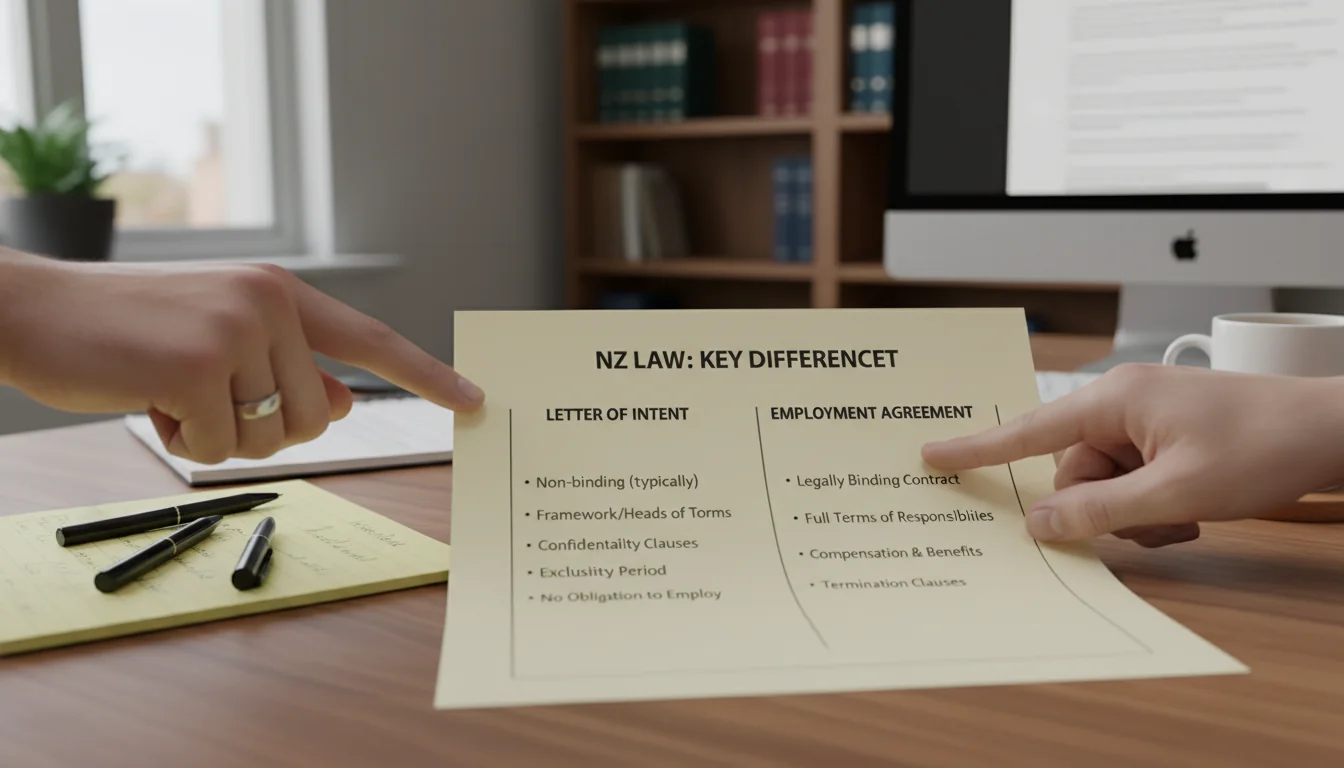
A Letter of Intent (LOI) serves as a preliminary document outlining the initial agreement between an employer and prospective employee in New Zealand, focusing on high-level terms to demonstrate mutual interest. It typically includes the proposed role, such as job title and responsibilities overview, along with basic benefits like salary range, start date, and potential perks, without binding legal obligations. For guidance on crafting an effective LOI tailored to New Zealand employment practices, refer to this step-by-step LOI writing guide.
In contrast, an Employment Agreement is a comprehensive, legally binding contract that details all aspects of the employment relationship under New Zealand's Employment Relations Act 2000. It expands on the LOI by specifying mandatory elements like a precise job description, including duties and reporting structure, exact pay rates with hours and overtime provisions, and dispute resolution mechanisms such as mediation or arbitration.
Key differences lie in scope and enforceability: while the LOI is non-binding and exploratory, the Employment Agreement requires full details on termination clauses, confidentiality, non-compete terms, and leave entitlements to protect both parties. For authoritative New Zealand resources, consult the Employment New Zealand website on essential agreement components.
To ensure your documents are customized and compliant, opt for bespoke AI-generated legal documents via Docaro rather than generic options, providing tailored solutions for New Zealand's unique employment landscape.
When Should You Use a Letter of Intent Instead of an Employment Agreement?
In New Zealand employment law, Letters of Intent (LOIs) serve as preliminary documents ideal for early-stage negotiations or conditional offers, outlining key terms like salary, role, and start date without binding the parties fully. They help build rapport and clarify expectations before finalizing hires, aligning with the Employment New Zealand guidelines on pre-employment discussions.
Employment Agreements, governed by the Employment Relations Act 2000, are essential for formalizing hires and must include mandatory details such as job description, pay rates, hours, and termination clauses to ensure compliance and protect both employer and employee rights. For tailored agreements, consider using Docaro's AI-generated bespoke legal documents to customize to specific needs rather than generic options.
Common pitfalls in LOIs include ambiguous language that could imply binding commitments or omitting essential conditions, potentially leading to disputes; avoid these by reviewing resources like the common mistakes in New Zealand LOIs.
To mitigate risks in NZ employment contexts, always consult authoritative sources such as Employment New Zealand and seek professional advice for complex scenarios, ensuring documents support fair and lawful hiring processes.

What Legal Implications Arise from Confusing the Two in New Zealand?
In New Zealand, a Letter of Intent intended as a preliminary document can be legally construed as an Employment Agreement if it includes essential terms like job duties, remuneration, and start date, potentially leading to breach of contract claims if either party fails to honor those terms.
This misclassification heightens risks of unfair dismissal issues, where an employee could claim unjust termination under the Employment Relations Act 2000, entitling them to remedies like reinstatement or compensation, even if the employer viewed the letter as non-binding.
Relevant case law includes the Employment Relations Authority decision in Bray v. Attorney-General [2011], which emphasized that courts assess the substance of agreements over their labels, treating detailed letters as enforceable contracts. For deeper insights, read the article on Letter of Intent vs Employment Agreement in NZ Law.
To mitigate these employment law risks in New Zealand, consult authoritative resources like the Employment New Zealand website, and opt for bespoke AI-generated legal documents via Docaro to ensure compliance and clarity.
1
Review Terms Thoroughly
Examine the Letter of Intent details and draft the full Employment Agreement using Docaro to generate a bespoke document tailored to your needs.
2
Seek Legal Advice
Consult a qualified employment lawyer to review the Docaro-generated Employment Agreement and ensure all terms comply with New Zealand laws.
3
Negotiate and Finalize
Discuss any changes with the other party, revise the document via Docaro if needed, and prepare for signing the final version.
4
Sign the Contract
Both parties sign the finalized Employment Agreement, ideally with witnesses, to officially commence the employment relationship under New Zealand regulations.