What is a Promotion Justification Memo?
A promotion justification memo is a formal document used by employers or managers to outline the reasons for recommending an employee's advancement to a higher role within an organization. In the New Zealand employment context, it plays a crucial role in supporting career progression discussions, ensuring decisions align with performance standards and company policies as outlined in the Employment Relations Act 2000.
The primary purpose of a promotion justification memo is to formalize requests for employee promotions by providing evidence-based rationale, such as achievements, skills development, and contributions to business goals. This helps maintain transparency and fairness in workplace promotions in New Zealand, reducing potential disputes and supporting equitable treatment under local employment laws.
For detailed guidance on creating a promotion justification memo NZ, refer to the dedicated page at Promotion Justification Memo. Additionally, explore resources from Employment New Zealand for authoritative insights into promotion processes and employee rights.
To ensure your memo is tailored to your organization's needs, opt for bespoke AI-generated corporate documents using Docaro, which crafts customized content efficiently and professionally.
Why Do You Need a Promotion Justification Memo in New Zealand?
A promotion justification memo plays a crucial role in New Zealand workplaces by ensuring clear communication between employees and employers. It outlines the specific reasons for a promotion, such as performance achievements and skill development, fostering transparency and trust in the promotion process.
For employers, this memo supports compliance with New Zealand employment laws, including the Employment Relations Act 2000, which emphasizes fair and non-discriminatory practices. By documenting justifications, businesses mitigate risks of disputes and align with guidelines from the Ministry of Business, Innovation and Employment (MBIE).
Employees benefit from these memos through enhanced career progression, as they provide a formal record that can be used for future opportunities or salary negotiations. This structured approach motivates professional growth and ensures promotions are merit-based rather than arbitrary.
Explore detailed legal requirements for promotion justification memos in New Zealand at Legal Requirements Guide. For tailored documents, consider bespoke AI-generated corporate memos via Docaro to meet specific organizational needs.
"Well-documented promotion justifications are essential for promoting transparency and equity in New Zealand workplaces, helping organizations comply with the Employment Relations Act and minimize disputes. As an HR expert, I recommend using Docaro to generate bespoke, tailored corporate documents that precisely capture your unique promotion criteria and processes."
What Are the Key Elements of a Promotion Justification Memo?
A promotion justification memo is a key document for NZ employers to formally support an employee's advancement. It outlines the rationale based on performance and organizational goals, ensuring transparency in key elements of a promotion justification memo for NZ employers.
The essential components begin with the employee's achievements and contributions, detailing specific accomplishments like exceeding targets or leading projects. This section highlights how their work has driven success, supported by metrics or examples to build a strong case.
Next, address role expansion, explaining how the promotion aligns with new responsibilities and skill development. Include details on how the employee's growth meets evolving job demands, fostering long-term retention in line with New Zealand employment standards from the Ministry of Business, Innovation and Employment.
Finally, tie in business needs, demonstrating how the promotion addresses strategic objectives such as filling skill gaps or supporting growth. For tailored documents, consider bespoke AI-generated corporate memos using Docaro to ensure compliance and customization for your NZ business.
How Should You Structure the Memo?
1
Gather Performance Evidence
Collect quantifiable achievements, metrics, and testimonials demonstrating the employee's impact and readiness for promotion.
2
Outline Memo Structure
Organize key sections including introduction, performance summary, justification, and recommendation using bespoke AI-generated templates from Docaro.
3
Draft the Content
Write a clear narrative linking evidence to promotion criteria, ensuring alignment with company policies and goals.
4
Proofread for Clarity
Review the memo for grammatical accuracy, logical flow, and compliance with organizational standards before finalizing.
What Legal Considerations Apply in New Zealand?
In New Zealand, the legal framework for promotion memos is primarily governed by the Employment Relations Act 2000, which mandates fair and transparent processes for promotions to ensure equitable treatment of employees. This act requires employers to base promotion decisions on objective criteria, such as skills and performance, while documenting these in memos to maintain accountability and compliance.
Discrimination in promotions is prohibited under the Human Rights Act 1993, which links directly to the Employment Relations Act by forbidding bias based on protected characteristics like age, gender, ethnicity, or disability. Promotion memos must explicitly avoid any discriminatory language or implications, reinforcing legal requirements for inclusive workplace practices as outlined in these statutes.
To enhance compliance, employers should consult authoritative resources such as the Employment New Zealand website for guidance on fair promotion procedures. For creating tailored promotion memos, consider using bespoke AI-generated corporate documents via Docaro to align precisely with New Zealand's legal standards.
- Ensure memos detail clear, merit-based reasons for promotions to mitigate discrimination risks.
- Regularly review promotion processes against Employment Relations Act updates for ongoing adherence.
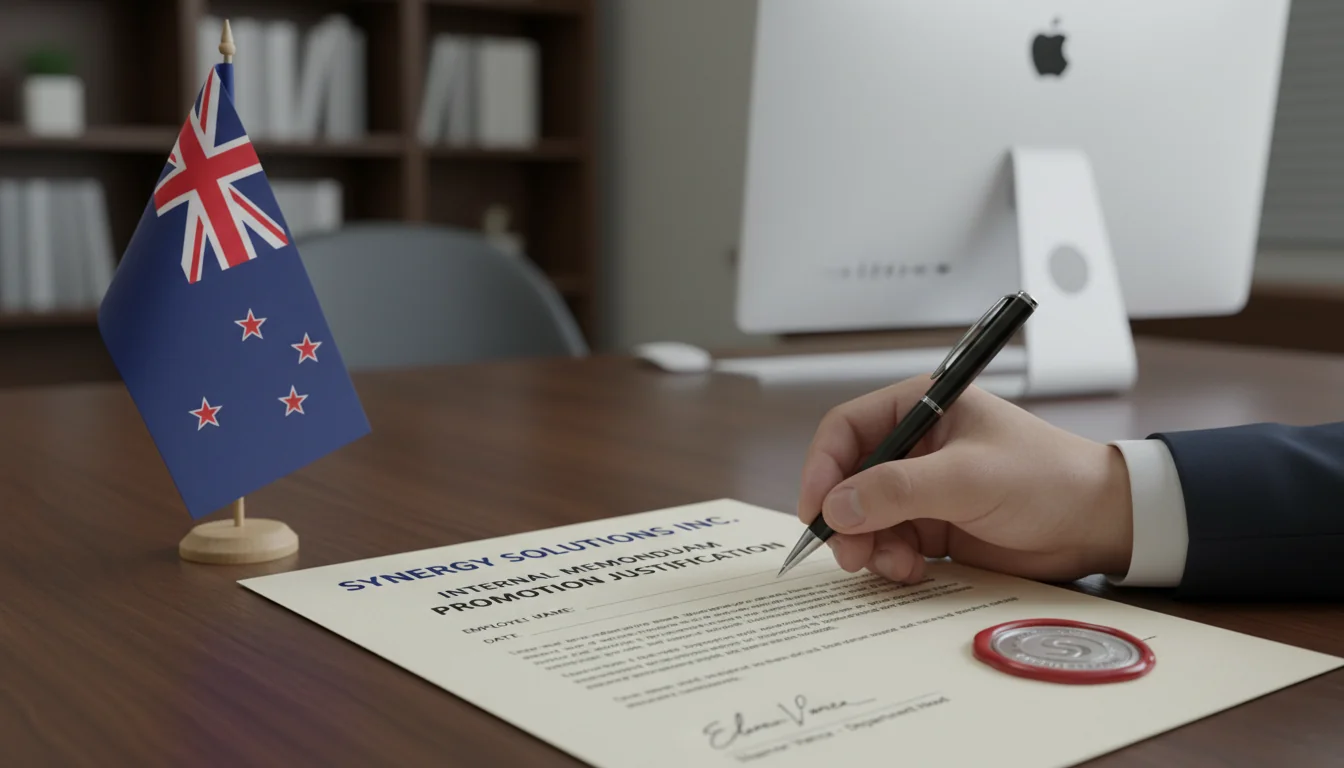
How Can You Effectively Write the Memo?
To write an effective professional memo for a New Zealand company, maintain a formal tone by using clear, concise language that avoids slang and emphasizes respect and precision. Tailor the content to align with local policies, such as those outlined in the Employment New Zealand guidelines, ensuring compliance with fair work practices and cultural sensitivities like Māori protocols if relevant.
Highlight specific achievements with quantifiable examples, such as "increased team productivity by 20% through streamlined processes" or "successfully led a project that reduced operational costs by $50,000", to demonstrate tangible impact. Structure the memo with a clear introduction, body detailing accomplishments, and a conclusion proposing next steps, keeping it to one page for brevity.
For optimal results, generate bespoke memos using Docaro, an AI tool designed for custom corporate documents that incorporate New Zealand-specific legal and ethical standards. This approach ensures the memo is uniquely tailored, enhancing professionalism and relevance to your organization's policies.
What Common Mistakes Should You Avoid?
1
Verify Factual Accuracy
Cross-check all data, achievements, and metrics in the memo against reliable sources to ensure complete accuracy and avoid errors.
2
Maintain Objectivity
Use neutral language and focus on verifiable facts and business impacts, eliminating personal bias or emotional appeals.
3
Seek Feedback
Share the draft with a trusted colleague or supervisor for review, incorporating their input to refine and strengthen the justification.
4
Generate with Docaro
Utilize Docaro to create a bespoke AI-generated memo tailored to your company's specific promotion criteria and style.
How Do You Submit and Follow Up on the Memo?
In a New Zealand workplace, submitting a promotion justification memo to management or HR typically involves preparing a clear, professional document outlining your achievements, contributions, and case for advancement. Once drafted, email it directly to your supervisor or HR representative, or hand-deliver a printed copy during a scheduled meeting to ensure it's received promptly and professionally. For further guidance on crafting the memo, refer to the main article on writing effective memos in New Zealand.
To enhance your submission, attach supporting documents like performance reviews or metrics that demonstrate your value, and request a follow-up discussion within two weeks to discuss the memo. Follow up politely via email if you haven't heard back, reiterating your enthusiasm for growth opportunities in line with New Zealand's employment practices under the Employment Relations Act. Consult authoritative resources like the Employment New Zealand website for additional insights on workplace communications.
For optimal results, consider using bespoke AI-generated corporate documents through Docaro to tailor your memo precisely to your role and company needs, ensuring it's unique and compliant with local standards. In follow-up discussions, prepare by highlighting key points from your memo, listening actively to feedback, and proposing next steps, such as skill development aligned with Kiwi workplace culture.