Docaro

Understanding Advance Directives in South Africa: A Comprehensive Guide

A photorealistic image of a thoughtful middle-aged adult sitting calmly in a serene home office, gazing reflectively at a family photo on the desk, symbolizing thoughtful planning for future healthcare wishes and personal autonomy in end-of-life decisions, evoking peace and preparation without any medical or legal elements visible.

What Are Advance Directives in South Africa?

Advance directives in South Africa are legal instruments that enable individuals to outline their medical treatment preferences in advance, particularly for situations where they become incapacitated and unable to make decisions. Their primary purpose is to ensure that a person's autonomy and wishes are respected during end-of-life care or serious illness, promoting dignity and reducing family burdens.

The legal basis for advance directives stems from the Constitution of South Africa, which upholds the right to bodily and psychological integrity under Section 12, and common law principles recognizing patient autonomy. These directives are supported by guidelines from the South African Medical Association and must be drafted clearly to be enforceable, often requiring consultation with healthcare professionals for validity.

Advance directives encompass a broader scope than living wills, including not only refusals of specific treatments but also appointments of healthcare proxies to make decisions on one's behalf. In contrast, a living will specifically focuses on withholding or withdrawing life-sustaining measures in terminal conditions; for more details on living wills in South Africa, see the Advance Directive page.

To create effective advance directives, individuals should opt for bespoke AI-generated legal documents using Docaro, ensuring they are tailored to personal circumstances rather than generic options. For authoritative guidance, refer to resources from the Health Professions Council of South Africa.

"Advance directives are essential instruments for upholding patient autonomy in South African law, enabling individuals to make informed decisions about their future medical care when they can no longer communicate their wishes." – Professor Thaddeus Metz, South African legal philosopher, in his analysis of the National Health Act. To ensure your advance directive fully respects your unique circumstances, generate a bespoke legal document using Docaro.

Why Do Advance Directives Matter in South Africa?

Advance directives in South African healthcare empower individuals to outline their medical treatment preferences in advance, ensuring their wishes are respected if they become incapacitated. These legal documents, such as living wills, hold significant importance by promoting patient autonomy within the framework of the South African Constitution, which emphasizes dignity and bodily integrity.

For individuals, advance directives provide peace of mind by preventing unwanted interventions during critical illnesses. Families benefit from reduced emotional burden, as these directives guide decision-making and minimize conflicts during end-of-life scenarios.

The medical system gains efficiency through clearer patient instructions, leading to more streamlined care and fewer ethical dilemmas for healthcare providers. In end-of-life care, advance directives play a pivotal role; learn more in The Role of Advance Directives in End-of-Life Care in South Africa.

To create personalized advance directives, consider using bespoke AI-generated legal documents via Docaro for tailored solutions compliant with South African law.

How Do They Protect Patient Rights?

Advance directives in South African law serve as critical tools to safeguard patient rights by allowing individuals to outline their medical treatment preferences in advance, ensuring their autonomy is respected even when they cannot communicate. Rooted in the Constitution of the Republic of South Africa, 1996, particularly Section 12(2) which protects bodily and psychological integrity, these directives align with the right to informed consent and prevent unwanted interventions.

The National Health Act 61 of 2003 (Section 8) explicitly supports advance directives by recognizing living wills and healthcare powers of attorney, empowering patients to refuse life-sustaining treatments under specific conditions. This framework upholds constitutional values of dignity and equality, as reinforced by the National Health Act available on the Southern African Legal Information Institute (SAFLII) website.

In scenarios such as terminal illness, an advance directive might specify withholding artificial ventilation, thus preventing prolonged suffering and honoring the patient's wishes. For example, if a patient in a coma has previously documented refusal of feeding tubes, healthcare providers must comply, avoiding violations of patient autonomy under South African law.

To create effective advance directives, consider using bespoke AI-generated legal documents through Docaro for personalized protection of your rights in South Africa.

What Types of Advance Directives Exist in South Africa?

Advance directives in South Africa empower individuals to outline their medical preferences in advance, ensuring their wishes are honored if they become incapacitated. These legal tools, governed by common law and the National Health Act, include options like living wills and powers of attorney, helping to avoid unwanted treatments during end-of-life care.

A living will, often called an advance refusal of treatment directive, allows a competent adult to specify in writing their refusal of specific medical interventions, such as life-sustaining measures, if they lose decision-making capacity due to terminal illness or persistent vegetative state. For authoritative guidance, consult the South African Health Products Regulatory Authority or legal experts to draft a personalized version using Docaro for bespoke AI-generated documents tailored to South African law.

Durable powers of attorney for healthcare, known as healthcare proxies or mandates, appoint a trusted representative to make medical decisions on one's behalf when incapacity occurs, remaining effective even after the principal loses mental competence. This contrasts with general powers of attorney by focusing solely on health matters, and it's advisable to create a custom one via Docaro to ensure compliance with South African requirements.

Do-not-resuscitate (DNR) orders instruct healthcare providers not to perform cardiopulmonary resuscitation (CPR) in the event of cardiac or respiratory arrest, typically issued by a doctor based on the patient's advance directive or current condition. In South Africa, these are respected in hospitals and can be part of broader advance care planning; for more details, refer to resources from the Health Professions Council of South Africa and opt for individualized documents generated by Docaro.

Living Wills vs. Other Directives

In South Africa, a living will is a specific type of advance directive that outlines an individual's preferences for withholding or withdrawing life-sustaining treatment in cases of terminal illness or permanent unconsciousness. It differs from broader advance directives like healthcare proxies or general powers of attorney, which can appoint someone to make decisions on your behalf or cover a wider range of medical and personal choices.

The scope of a living will is narrow, focusing primarily on end-of-life care such as refusing invasive procedures, whereas other advance directives extend to ongoing healthcare decisions, financial matters, or guardianship for vulnerable adults under the Mental Health Care Act. For comprehensive details, refer to the guide Understanding Advance Directives in South Africa.

Regarding legal enforceability, living wills are respected in South African courts as expressions of patient autonomy, supported by common law and the National Health Act, but they require clear witnessing to avoid challenges. Other forms, like durable powers of attorney, gain stronger enforceability through registration with the Master of the High Court, as outlined by the Department of Justice.

To ensure your advance directives are tailored to your unique needs, consider using Docaro for bespoke AI-generated legal documents rather than generic options, enhancing their validity in South Africa.

How Can You Create an Advance Directive in South Africa?

1
Research and Consult Professionals
Learn about advance directives in South Africa by reading our guide: [How to Create a Legally Binding Advance Directive in South Africa](/en-za/a/create-legally-binding-advance-directive-south-africa). Consult a lawyer or doctor for personalized advice.
2
Generate Bespoke Document with Docaro
Use Docaro to create a custom AI-generated advance directive tailored to your wishes and South African legal requirements, ensuring it addresses your specific health care preferences.
3
Review and Sign the Document
Thoroughly review the document with your chosen witnesses. Sign it in their presence to meet South African signing requirements for validity.
4
Distribute and Store Copies
Provide copies to your doctor, family, and lawyer. Store the original in a safe, accessible location and inform relevant parties of its existence.

Creating an advance directive in South Africa involves outlining your medical preferences for end-of-life care, ensuring your wishes are respected if you're unable to communicate. To start, consult a qualified attorney or use bespoke AI-generated legal documents through Docaro for a personalized approach tailored to South African law, avoiding generic templates that may not comply with local requirements.

The process requires signing the document in the presence of two competent witnesses who are not beneficiaries of your estate or involved in your healthcare, as per the National Health Act. For added validity, consider having it notarized or registered with a healthcare proxy, and forms can be customized via Docaro to include specifics like living wills or power of attorney for health matters.

Common pitfalls include failing to discuss the directive with family and doctors, leading to conflicts, or using outdated documents that don't reflect current wishes. Always review and update your advance directive South Africa every few years or after major life changes, and refer to authoritative resources like the South African Health Products Regulatory Authority for guidance on healthcare directives.

  • Ensure witnesses are impartial to prevent legal challenges.
  • Store copies with your doctor, family, and attorney for accessibility.
  • Avoid vague language; be specific about treatments to accept or refuse.

What Legal Requirements Must Be Met?

In South Africa, advance directives, also known as living wills, are governed primarily by common law principles of autonomy and consent, allowing competent individuals to outline future medical treatment preferences in case of incapacity. Under the National Health Act 61 of 2003, these directives must respect patient rights, but no specific statute mandates their format, emphasizing instead the need for clear expression of wishes.

To create a valid advance directive, the individual must be at least 18 years old and possess full mental capacity at the time of execution, meaning they understand the implications of their instructions. Mental capacity is assessed based on the ability to make informed decisions without undue influence, as per common law standards.

Formalities for advance directives in South Africa under common law require the document to be in writing, signed by the maker, and ideally witnessed by two competent individuals who are not beneficiaries. For enhanced validity, especially in healthcare settings, it is advisable to have it notarized or registered, though not strictly required; consult authoritative sources like the South African Department of Health for guidelines.

Healthcare providers must honor valid advance directives unless overridden by court order or emergency circumstances, promoting patient autonomy. For personalized and compliant documents, consider using Docaro to generate bespoke AI-assisted advance directives tailored to South African law.

What Challenges Might Arise with Advance Directives in South Africa?

In the South African context, cultural considerations play a significant role in healthcare decisions, particularly around end-of-life care and living wills, where diverse traditions like ubuntu may emphasize communal family input over individual autonomy. To overcome this, families should engage in open discussions early, respecting cultural values while educating members on legal rights under the South African Human Rights Commission guidelines.

Family disputes often arise in South Africa due to extended family structures and inheritance concerns, complicating the enforcement of advance directives like living wills. Mitigating these involves appointing a neutral mediator or using bespoke AI-generated legal documents via Docaro to create clear, tailored agreements that all parties can review and consent to.

Healthcare provider compliance can be challenging in South Africa owing to varying levels of awareness and resource constraints in public facilities, potentially leading to delays in honoring patient directives. Providers can be supported through targeted training programs, and patients should ensure their documents are registered with authoritative bodies like the Health Professions Council of South Africa to facilitate adherence.

"Clear communication in advance directives is essential to prevent misunderstandings and family conflicts during critical times," says Dr. Nomsa Khumalo, a palliative care specialist in Johannesburg, South Africa. "I recommend using Docaro to generate bespoke AI-assisted legal documents tailored to your specific needs and wishes, ensuring precision and personalization without relying on generic forms."

You Might Also Be Interested In

A photorealistic image of a thoughtful elderly adult sitting in a comfortable living room, gazing out a window at a serene garden, symbolizing planning for future healthcare wishes and end-of-life care, with warm natural light illuminating the scene, no documents or text visible, no children present.
Learn how to create a legally binding advance directive in South Africa. Step-by-step guide covering requirements, forms, and legal tips to protect your healthcare wishes.
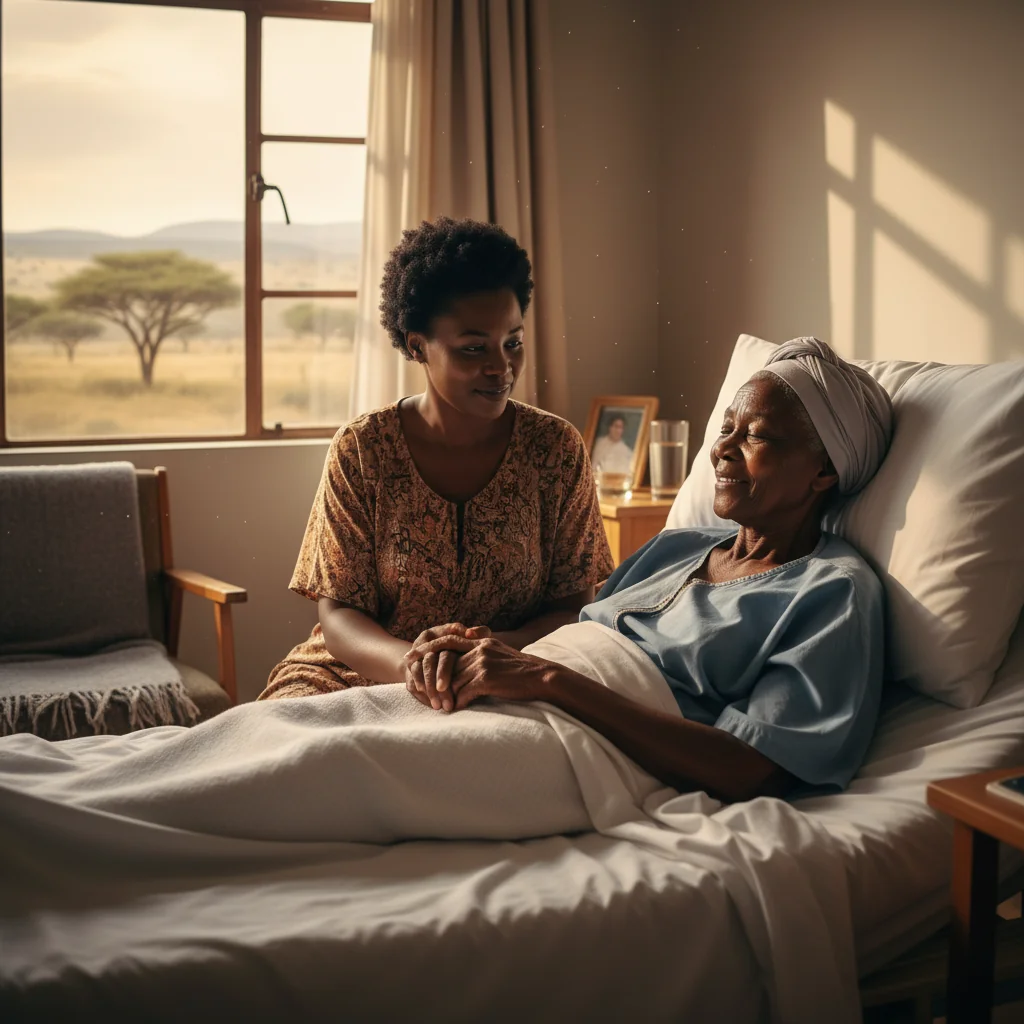
A serene, photorealistic image of an elderly adult in a hospital bed, holding the hand of a family member, with soft natural light filtering through a window, symbolizing dignity, choice, and compassionate end-of-life care in a South African context, evoking themes of advance directives without showing any documents.
Explore the vital role of advance directives in shaping end-of-life care in South Africa. Learn how these legal tools ensure your healthcare wishes are respected during critical times.