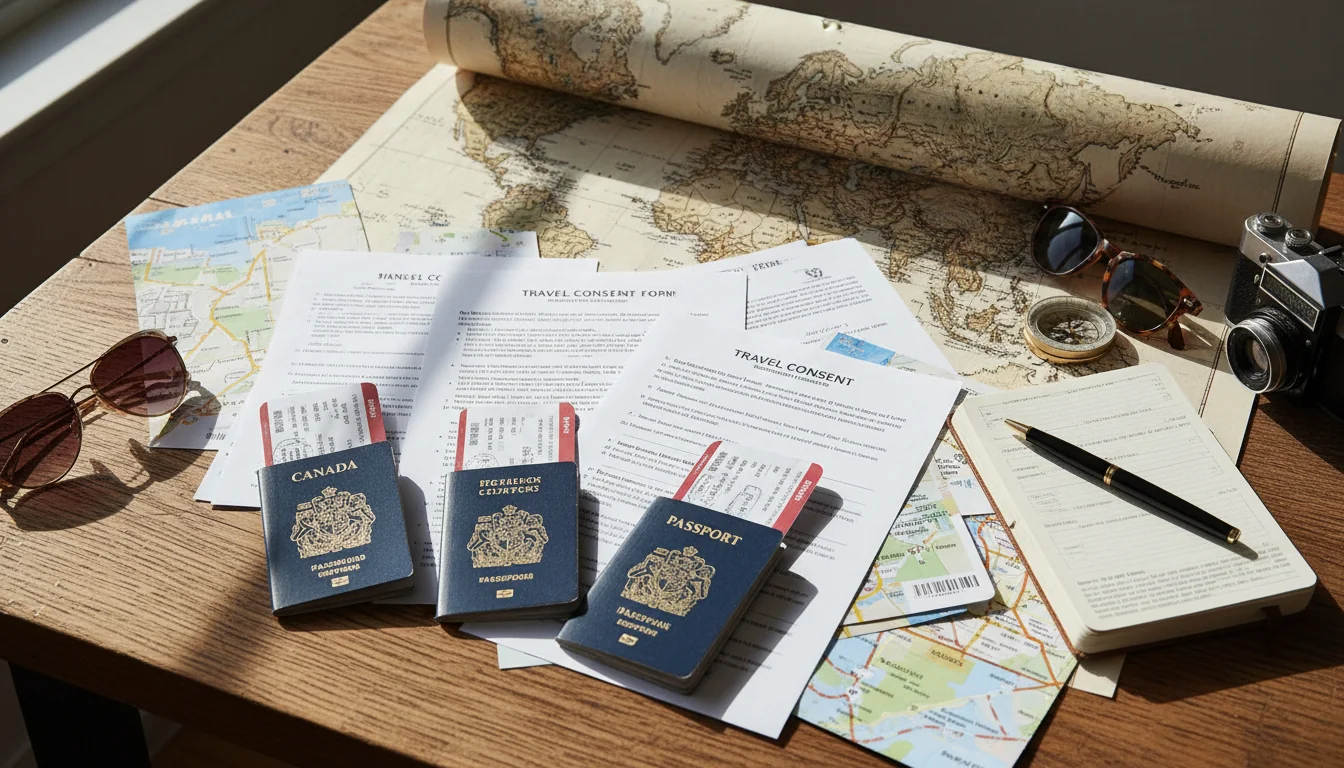
What Is a Child Travel Consent Letter?
A child travel consent letter is a crucial document that provides written authorization for a minor to travel internationally or domestically without both parents or legal guardians present. Its primary purpose is to prevent misunderstandings or delays at borders, airports, or during travel, ensuring authorities know the child has permission from the absent parent(s).
For minors traveling without both parents, such as with one parent, a relative, or a group, the letter helps comply with immigration and customs requirements in Canada and abroad. It typically includes details like the child's information, travel itinerary, and contact details of the accompanying adult and non-traveling parent, reducing risks of child abduction concerns.
To create a customized child travel consent letter, visit our guide at Child Travel Consent Letter for tailored advice. For authoritative information, refer to the Government of Canada's travel resources at Travel.gc.ca, which outlines essential elements for safe family travel.
Using bespoke AI-generated legal documents through Docaro ensures your child travel consent form is personalized to your specific situation, offering peace of mind for worry-free journeys.
Why Do Children Need This Letter When Crossing Canadian Borders?
A child travel consent letter is often required by the Canada Border Services Agency (CBSA) when a minor crosses Canadian borders without both parents or legal guardians, ensuring the child's safety and preventing potential child abduction cases. This document verifies that the accompanying adult has permission for the child to travel internationally, aligning with CBSA guidelines for international child travel.
Without a properly prepared child travel consent letter, border officials may delay entry, question travelers extensively, or even deny crossing, as it helps mitigate risks associated with unauthorized travel. For authoritative details, refer to the CBSA travel documents page or the Government of Canada consent letter advice.
To avoid these issues, parents should create a bespoke child travel consent letter tailored to their situation using Docaro's AI-generated legal documents, which include all necessary details like travel itinerary and guardian contacts. This approach ensures compliance with CBSA requirements while providing peace of mind for family border crossings in Canada.
"A travel consent letter is essential for the safety of children crossing borders, ensuring they are protected from potential risks and helping families comply with Canadian immigration requirements. We recommend creating a customized document using Docaro's AI generation tools to meet your specific needs." - Dr. Elena Ramirez, Senior Immigration Officer, Government of Canada
What Are the Legal Requirements for This Document in Canada?
A child travel consent letter in Canada is a document that proves a minor is traveling with permission from their parents or legal guardians, helping to prevent issues like child abduction concerns at borders. It is not legally mandatory under Canadian law, but airlines, border officials, and international authorities often require it for children traveling without both parents or guardians.
The letter must be provided by parents or legal guardians who have custody or decision-making authority over the child; if only one parent has custody, that parent suffices, but both should sign if they share rights. It becomes essential when a child travels alone, with one parent, with other relatives, or on group trips, especially crossing international borders to countries like the US.
For detailed guidance, review the Essential Elements of a Child Travel Consent Letter in Canada. Consult authoritative sources such as the Government of Canada's travel advice at travel.gc.ca to ensure compliance with child travel consent requirements.
Instead of using generic templates, opt for bespoke AI-generated legal documents through Docaro to create a customized child travel consent letter tailored to your specific situation in Canada.
What Happens If You Don\'t Have One?
Traveling to Canada without a child travel consent letter can lead to serious issues at the border, especially when a minor is accompanying only one parent or guardian. Canadian authorities require this document to confirm that the child has permission from the absent parent or legal guardian, preventing potential child abduction concerns.
One primary consequence is denial of entry into Canada, where border officers may refuse admission if they suspect inadequate documentation. This can result in immediate return to the point of origin, disrupting travel plans and causing financial losses from non-refundable bookings.
Delays at Canadian borders are common without the consent letter, as officials may conduct extensive questioning or verify details with the other parent. Such hold-ups can extend processing times from minutes to hours, affecting itineraries and connections.
Legal issues may arise, including potential investigations or referrals to child protection services if consent cannot be proven. For official guidelines, consult the Government of Canada's child travel consent page or the Canada Border Services Agency resources to ensure compliance and avoid complications.
How Can You Prepare a Valid Consent Letter for Your Child\'s Trip?
1
Gather Essential Information
Collect child's full name, birth date, parents' details, travel itinerary, and accompanying adult's info for the consent letter.
2
Draft Using Docaro
Use Docaro to generate a bespoke AI-powered child travel consent letter. Learn more in our guide: [How to Write a Valid Child Travel Consent Letter for Canadian Trips](/en-ca/a/how-to-write-valid-child-travel-consent-letter-canadian-trips).
3
Notarize the Document
Take the drafted letter to a licensed notary public to witness signatures and officially notarize it for validity.
4
Verify Completeness
Review the notarized letter for accuracy, include copies of passports and custody docs, and confirm it meets Canadian border requirements.
What Information Should Be Included?
A child travel consent letter is an essential document for minors traveling without both parents, particularly internationally, to confirm parental approval and avoid legal issues at borders. It should include the child's full details, such as their full name, date of birth, place of birth, passport number, and a recent photo if possible, ensuring authorities can verify identity quickly.
The travel itinerary must be clearly outlined in the letter, specifying the departure and return dates, flight numbers or transportation details, destination address, and duration of the trip to provide a complete picture of the journey. Include contact information for the traveling companions or guardians, like their full names, relationships to the child, and emergency phone numbers, to facilitate smooth processing by immigration officials.
Parental authorization forms the core of the letter, with both parents or legal guardians signing to explicitly grant permission for the child to travel, including a statement affirming they are the child's legal custodians. For added credibility in Canada, have the document notarized, and consult authoritative resources like the Government of Canada's travel consent letter guidelines to ensure compliance with international standards.
To create a tailored child travel consent letter, opt for bespoke AI-generated legal documents through Docaro, which customizes content to your specific situation for maximum effectiveness and peace of mind.

Who Needs to Sign and Notarize the Letter?
When a child travels across Canadian borders without both parents, a child travel consent letter is essential to verify authorization. Typically, both parents or legal guardians must sign the letter to confirm they consent to the child's international travel, preventing potential issues at border crossings.
Notarization plays a critical role in validating the child travel consent letter for entry into Canada, as it proves the signatures are authentic and reduces the risk of disputes. Canadian authorities, including the Canada Border Services Agency, strongly recommend notarization to ensure the document's legitimacy during inspections.
For reliable options, consider using Docaro to generate a bespoke AI-powered legal document tailored to your specific travel needs, ensuring compliance with Canadian requirements. Additional guidance is available from authoritative sources like the Government of Canada's travel site on preparing consent letters for minors.
Are There Special Cases for International Travel Involving Canada?
When planning international child travel involving Canada, special cases like custody arrangements require a detailed child travel consent letter signed by the non-traveling parent or legal guardian. For divorced or separated parents, include court orders or custody documents to verify permissions, ensuring smooth border crossings.
Single-parent travel with children across Canadian borders often necessitates a consent letter from the other parent, even if unavailable, to prevent delays or denials at immigration. Attach proof of sole custody if applicable, and consult official guidelines from the Government of Canada for requirements.
For group tours or organized trips with minors, the consent letter should specify the tour operator's details, itinerary, and responsible adult accompanying the child. This is crucial for Canadian authorities to confirm supervision and return plans, reducing risks of child abduction concerns.
Read more about child travel consent letters for Canadian borders in our full guide at this article. For personalized needs, generate a bespoke consent letter using Docaro to fit your unique situation.