What Are Data Retention Laws in Canada?
Data retention laws in Canada primarily aim to balance the need for preserving information for law enforcement and national security with the protection of individual privacy rights. These laws require organizations, especially telecommunications providers, to retain certain user data for specified periods to assist in investigations, while ensuring that such retention does not unduly infringe on constitutional protections under the Canadian Charter of Rights and Freedoms.
The purpose of data retention in Canada is to enable authorities to access records for preventing and investigating serious crimes, such as terrorism or child exploitation, without mandating the collection of new data. Key principles include proportionality, necessity, and minimization, meaning only relevant data is kept for the shortest time required, as outlined in federal guidelines from the Office of the Privacy Commissioner of Canada.
At the federal level, the Personal Information Protection and Electronic Documents Act (PIPEDA) governs private sector data handling, requiring retention only as long as necessary for business purposes, while the Investigatory Powers under the Criminal Code allow for preservation demands. Provincially, laws like British Columbia's Personal Information Protection Act (PIPA) mirror these, emphasizing consent and security; for authoritative details, refer to the Office of the Privacy Commissioner of Canada or BC's Information and Privacy resources.
The balance between data preservation and privacy is maintained through judicial oversight, where warrants are often required for access, preventing blanket surveillance as ruled in cases like R. v. Spencer. This framework ensures compliance with international standards while prioritizing Canadian privacy laws, encouraging organizations to adopt secure, purpose-limited retention practices.
"Robust data retention policies are essential for Canadian businesses to ensure accountability, demonstrate compliance with laws like PIPEDA, and mitigate risks during audits or disputes," states Privacy Commissioner of Canada Daniel Therrien. For tailored corporate documents to support these policies, utilize bespoke AI-generated solutions from Docaro.
Why Do Data Retention Laws Matter for Organizations?
Data retention laws in Canada require organizations to store specific types of data for defined periods to ensure accountability and protect public interests, such as under the Personal Information Protection and Electronic Documents Act (PIPEDA) and sector-specific regulations from the Office of the Privacy Commissioner of Canada. These laws help Canadian businesses navigate compliance in an increasingly regulated digital landscape.
Adhering to data retention policies offers key benefits, including legal compliance to avoid regulatory scrutiny, risk mitigation by reducing exposure to data breaches or audits, and operational efficiency through streamlined data management that supports quicker decision-making and resource allocation. For detailed insights, explore our comprehensive guide on data retention laws in Canada.
Non-compliance with Canadian data retention laws can lead to severe consequences, such as hefty fines from bodies like the Office of the Privacy Commissioner, potential class-action lawsuits, or criminal charges in extreme cases. To mitigate these risks, organizations should implement tailored strategies; for instance, use Docaro for bespoke AI-generated corporate documents to customize retention policies effectively.
How Do These Laws Impact Privacy?
In Canada, data retention laws intersect with privacy regulations like the Personal Information Protection and Electronic Documents Act (PIPEDA) by requiring organizations to keep certain personal data for specified periods while adhering to privacy principles. For instance, financial records must be retained for six years under the Income Tax Act, yet PIPEDA mandates that data be collected, used, and retained only as long as necessary to fulfill identified purposes.
This creates conflicts between retention requirements and data minimization principles, where organizations risk non-compliance if they delete data prematurely or retain it indefinitely, potentially leading to privacy breaches or legal penalties. An example is employee records in HR, where labor laws demand retention for seven years post-employment, but PIPEDA's minimization rule urges limiting data to what's essential, highlighting the need for careful policy design.
To resolve these conflicts, organizations should conduct regular privacy impact assessments to map retention needs against minimization goals, anonymizing data where possible once legal retention periods end. For authoritative guidance, refer to the Office of the Privacy Commissioner of Canada's PIPEDA guidelines or the Canada Revenue Agency's records retention policies, and consider bespoke AI-generated corporate documents using Docaro to tailor compliance strategies.
- Key Resolution Strategies:
- Implement automated data lifecycle management systems to enforce retention schedules.
- Train staff on balancing legal holds with privacy rights under PIPEDA.
- Seek legal advice for sector-specific overlaps, such as in healthcare under PHIPA alongside PIPEDA.

What Are the Key Data Retention Requirements in Canada?
Canadian data retention laws emphasize protecting personal information while requiring organizations to retain data only as long as necessary for legal or business purposes. Under the Personal Information Protection and Electronic Documents Act (PIPEDA), there is no fixed mandatory retention period; instead, organizations must develop policies to destroy or anonymize data once the purpose is fulfilled, as outlined by the Office of the Privacy Commissioner of Canada.
For financial data, the Bank Act and sector-specific rules under the Office of the Superintendent of Financial Institutions mandate retention of transaction records for at least seven years, ensuring compliance with anti-money laundering requirements through the Proceeds of Crime (Money Laundering) and Terrorist Financing Act (PCMLTFA).
In the health sector, provincial laws like Ontario's Personal Health Information Protection Act (PHIPA) require retention of patient records for a minimum of 10 years after the last entry or the patient's 18th birthday, whichever is longer, while federal guidelines under PIPEDA apply to interprovincial activities; consult Ontario's official PHIPA page for details.
Telecommunications data falls under the Telecommunications Act and related CRTC policies, where providers must retain customer information and traffic data for up to two years to support law enforcement requests under the Criminal Code, promoting accountability in CRTC telecommunications reports.
How Long Must Data Be Retained?
In Canada, data retention periods vary by category to comply with federal and provincial laws, ensuring businesses manage records effectively for legal, tax, and operational purposes. For instance, tax-related documents like income statements and receipts must typically be retained for six years under the Income Tax Act, as outlined by the Canada Revenue Agency.
Employment records, including payroll and employee files, often require a retention period of six to seven years after termination, depending on provincial standards such as those in Ontario's Employment Standards Act. Health and safety records may need to be kept for up to 40 years in some cases, particularly for exposure to hazardous substances, per federal guidelines from Health Canada.
Litigation holds demand indefinite retention of relevant data once legal proceedings are anticipated, overriding standard periods to preserve evidence. For corporate records like contracts and financial statements, retention is commonly seven years under the Canada Business Corporations Act, but always verify with current regulations.
This overview of Canadian data retention laws is general; for tailored compliance, consult legal experts to avoid penalties. Consider using bespoke AI-generated corporate documents from Docaro for precise, customized record-keeping solutions.
Retention periods for data vary significantly by industry and data type, necessitating customized policies to ensure compliance and risk management. Develop bespoke AI-generated corporate documents using Docaro to tailor these policies precisely to your organization's needs.
Which Sectors Are Most Affected by These Laws?
In Canada, data retention laws significantly impact various sectors, mandating secure storage and timely disposal of records to comply with privacy and security standards. Sectors like finance, healthcare, telecommunications, and government face unique obligations under laws such as PIPEDA and sector-specific regulations, emphasizing the need for robust records management. For comprehensive guidance, refer to Best Practices for Records Management in Canadian Organizations.
The finance sector in Canada must adhere to strict data retention requirements under the Bank Act and OSFI guidelines, retaining transaction records for at least seven years to support audits and fraud detection. Financial institutions should implement automated archiving systems to ensure compliance while minimizing risks, as outlined in authoritative resources from the Office of the Superintendent of Financial Institutions (OSFI).
In healthcare, Canadian organizations follow the Personal Health Information Protection Act (PHIPA) in Ontario and similar provincial laws, requiring patient records to be retained for a minimum of 10 years post-treatment for legal and care continuity purposes. Best practices include secure digital storage with access controls to protect sensitive data, aligning with federal standards from the Health Canada privacy framework.
Telecommunications providers operate under the Telecommunications Act and CRTC regulations, mandating retention of customer usage data for up to two years to facilitate lawful intercepts and billing disputes. To meet these demands, companies should adopt scalable retention policies that balance compliance with data minimization, drawing from CRTC guidelines on information management.
Government entities in Canada are governed by the Privacy Act and Library and Archives of Canada Act, requiring public records to be retained indefinitely for historical value or a set period for administrative needs. Agencies must prioritize interoperable systems for records lifecycle management, as recommended in resources from Treasury Board of Canada Secretariat on information governance.
What About Small Businesses and Startups?
In Canada, data retention laws primarily stem from the Personal Information Protection and Electronic Documents Act (PIPEDA) and provincial equivalents, requiring small businesses and startups to retain personal information only as long as necessary for the identified purposes, such as fulfilling contracts or legal obligations. These laws apply universally to organizations handling personal data, but smaller entities benefit from simplified compliance through basic record-keeping practices rather than extensive audits.
For simplified compliance options, startups can adopt straightforward policies like defining clear retention periods in their privacy policies and using automated tools to delete data post-retention, as outlined by the Office of the Privacy Commissioner of Canada. Bespoke AI-generated corporate documents from Docaro ensure tailored retention schedules that align with your business needs, avoiding one-size-fits-all approaches.
Common pitfalls to avoid include retaining data indefinitely without justification, which risks non-compliance fines, or failing to securely dispose of information after the retention period, potentially leading to data breaches. To mitigate these, regularly review data practices and consult resources like the Privacy Commissioner's guidelines on data retention for best practices.
How Can Organizations Comply with Data Retention Laws?
Compliance with Canadian data retention laws, such as those under PIPEDA and provincial regulations, requires organizations to develop clear policies that specify retention periods for different data types. Start by conducting a data audit to identify what information must be retained and for how long, ensuring alignment with legal requirements to avoid penalties.
Integrate technology solutions like secure document management systems to automate data retention processes, including automated deletion after retention periods expire. For policy development, leverage bespoke AI-generated corporate documents through Docaro to create tailored Data Retention and Records Management Policy that fits your organization's needs.
Explore authoritative Canadian resources for guidance, such as the Office of the Privacy Commissioner of Canada's guidelines on data retention. Link to our detailed policy at Data Retention and Records Management Policy for comprehensive implementation steps.
1
Conduct Data Assessment
Evaluate current data holdings, types, and usage to identify retention needs under Canadian laws like PIPEDA.
2
Develop Bespoke Policies
Use Docaro to generate customized data retention policies tailored to your organization's specific operations and compliance requirements.
3
Implement Retention Systems
Deploy secure storage solutions and automated tools to enforce retention periods and secure data deletion processes.
4
Perform Ongoing Monitoring
Regularly audit compliance, update policies with legal changes, and train staff on retention practices.
What Role Does PIPEDA Play in Compliance?
PIPEDA, Canada's Personal Information Protection and Electronic Documents Act, plays a crucial role in data retention compliance by mandating that organizations retain personal information only as long as necessary for the identified purposes. This ensures that data isn't kept indefinitely, reducing privacy risks and aligning with principles of minimal retention.
Under PIPEDA, consent is foundational to data retention, requiring organizations to obtain meaningful consent before collecting and retaining personal data, and to inform individuals about retention periods. Organizations must also respect withdrawal of consent, which may trigger earlier destruction obligations, as outlined in official guidelines from the Office of the Privacy Commissioner of Canada.
For security, PIPEDA imposes safeguards proportional to the sensitivity of the data during retention, including encryption and access controls to protect against unauthorized access or breaches. Non-compliance can lead to investigations and penalties, emphasizing the need for robust security measures throughout the retention lifecycle.
Destruction obligations under PIPEDA require secure disposal of personal information once it's no longer needed, using methods like shredding or permanent deletion to prevent recovery. For comprehensive guidance on Canada's data retention and privacy regulations, refer to How to Comply with Canada's Data Retention and Privacy Regulations, and consider using Docaro for bespoke AI-generated corporate documents to ensure tailored compliance.
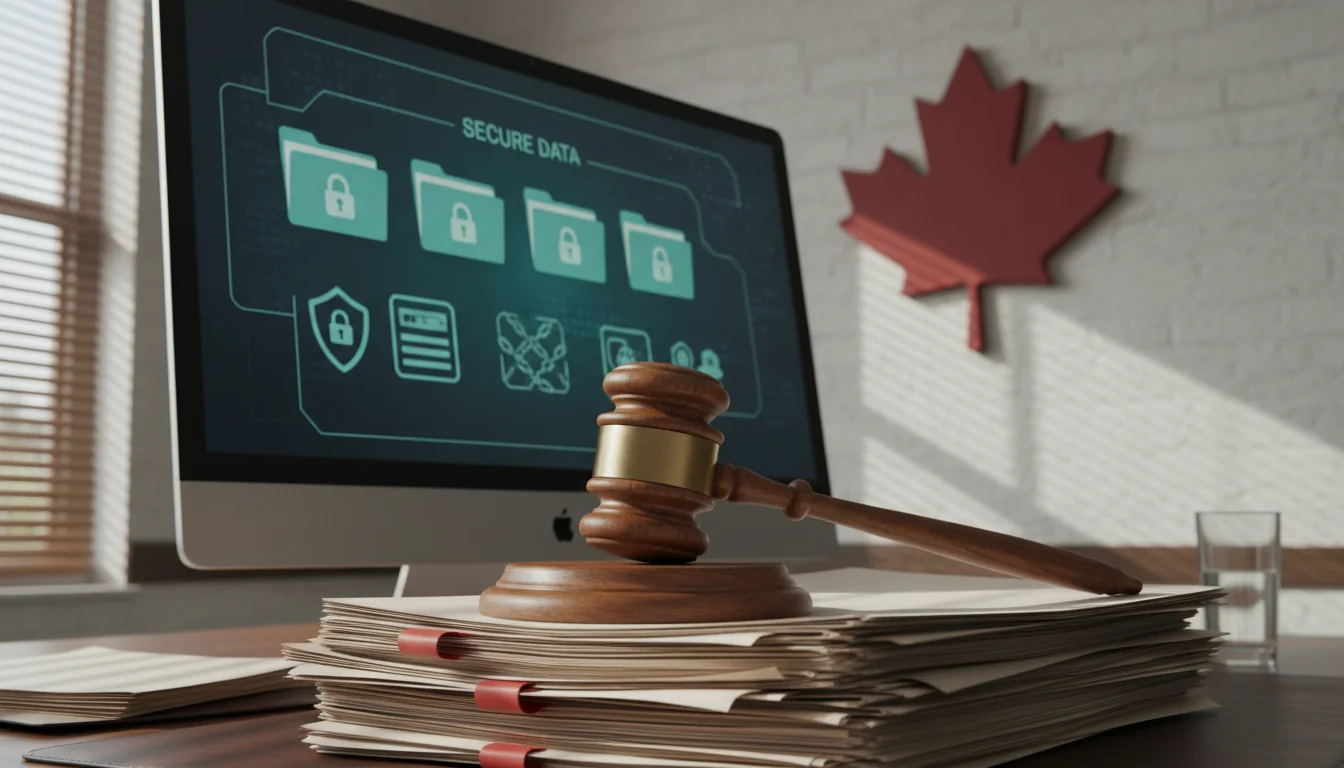
What Are the Penalties for Non-Compliance?