What is a Letter of Intent in Canadian Job Applications?
A letter of intent is a formal document used in the Canadian job market to express a candidate's strong interest in a specific position or organization, outlining their qualifications and career goals. Its primary purpose is to demonstrate genuine enthusiasm and alignment with the employer's values, often serving as an initial outreach before a formal job opening arises.
In the Canadian job market, a letter of intent is commonly used for networking, applying to unadvertised roles, or pursuing academic positions, providing a concise narrative that goes beyond a resume. Unlike a cover letter, which targets a specific job posting with tailored responses to requirements, a letter of intent focuses on broader intentions and mutual fit, making it versatile for exploratory applications.
Key differences between a letter of intent and a cover letter in Canada include their structure and focus: a cover letter emphasizes job-specific skills, while a letter of intent highlights long-term aspirations. For more details, refer to the differences between letter of intent and cover letter in Canada page.
- Letter of Intent: Broader and more personal, ideal for expressing interest without a direct job ad.
- Cover Letter: Targeted and skills-focused, directly addressing the job description.
- Both enhance job applications but serve distinct purposes in the Canadian job market.
For authoritative guidance on crafting these documents, consult resources from the Government of Canada's job search page, which offers tips tailored to the Canadian context.
"In the competitive Canadian job market, a well-crafted letter of intent is your key to standing out—tailor it to showcase your unique fit for the role and organization." – Dr. Elena Moreau, Career Strategist, Toronto Career Institute
Why Should You Use a Letter of Intent for Canadian Jobs?
In Canadian job applications, including a letter of intent allows candidates to highlight unique qualifications that may not fit neatly into a resume, such as specific skills or experiences tailored to the role. This document demonstrates genuine enthusiasm for the position and company, setting applicants apart by providing a personal narrative that showcases their fit and motivation.
In competitive job markets across Canada, where numerous qualified candidates apply for limited positions, a well-crafted letter of intent can elevate your application by addressing how your background aligns with the employer's needs. It serves as a strategic tool to convey passion and research into the organization, increasing the likelihood of advancing to interviews.
For guidance on crafting effective letters of intent in Canada, explore the general Letter of Intent page. Additionally, consider authoritative resources like the Government of Canada's job search tips to refine your approach.
When is a Letter of Intent Necessary?
In Canada, a letter of intent is often required or recommended for academic roles, such as applying to universities or graduate programs. For instance, when pursuing a master's degree at the University of Toronto, applicants may need to submit a letter outlining their research interests and career goals to demonstrate fit with the program.
For government positions in Canada, a letter of intent is recommended in competitive hiring processes, like those managed by the federal public service. An example is applying for a policy analyst role through the Government of Canada jobs portal, where it helps articulate motivation and alignment with public sector values.
Beyond academia and government, letters of intent are useful in business acquisitions or real estate deals in provinces like Ontario. For example, in a commercial property purchase in Toronto, it outlines preliminary terms before a formal agreement, as guided by resources from the Ontario Ministry of Government and Consumer Services.
To create effective letters of intent tailored to Canadian contexts, consider using bespoke AI-generated legal documents through Docaro for precision and compliance.
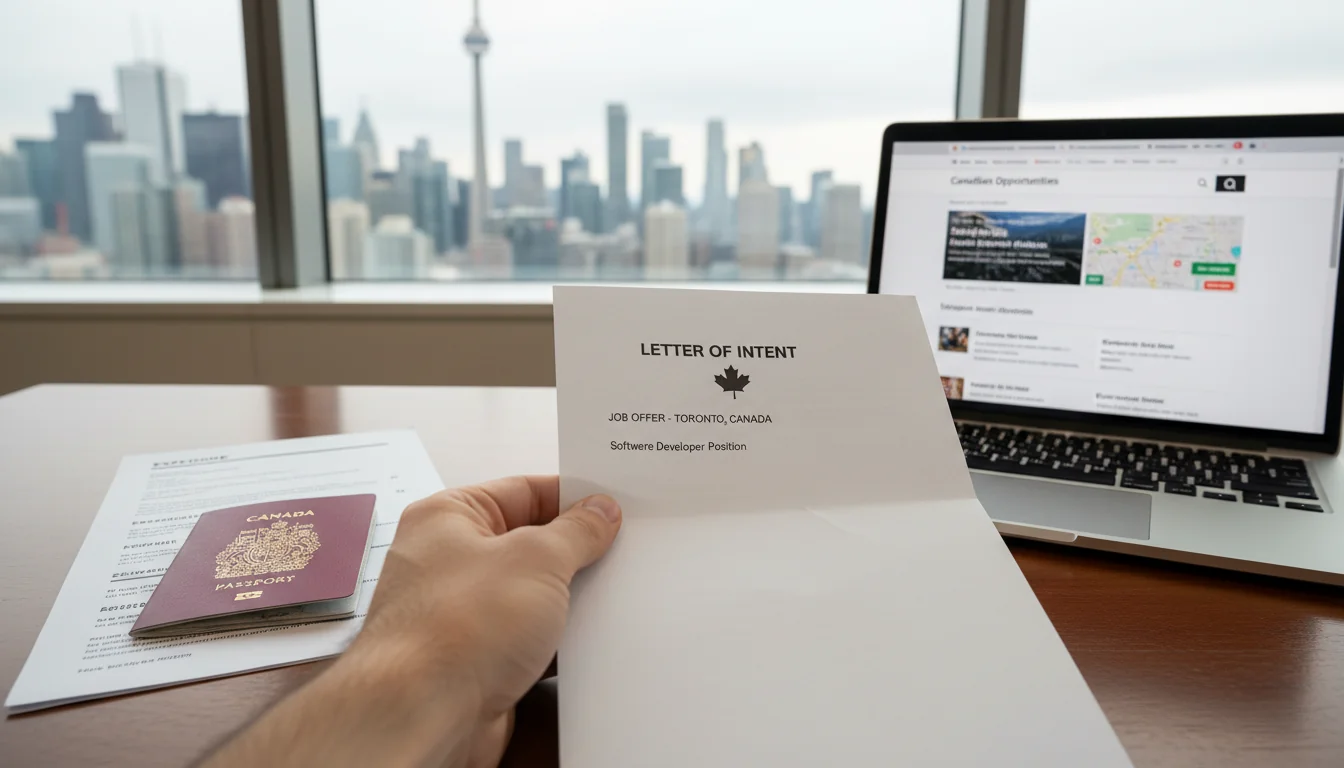
What Should You Include in a Letter of Intent?
1
Craft Introduction
Begin with a tailored greeting and state the position you're applying for in Canada. Highlight your enthusiasm and briefly mention how you found the job.
2
Develop Body
Detail your relevant skills, experiences, and achievements. Align them with the Canadian employer's needs, using specific examples to demonstrate fit.
3
Formulate Conclusion
Reiterate interest, mention availability for interview, and provide contact details. End with a professional closing.
4
Generate with Docaro
Use Docaro to create a bespoke AI-generated letter of intent, customizing it for your unique Canadian job application.
How Do You Tailor It to the Job?
To customize your cover letter for a Canadian job, carefully analyze the job description to identify key skills, experiences, and qualifications that align with your background. Incorporate these elements by weaving in specific examples from your career that directly mirror the employer's needs, ensuring your letter feels tailored and relevant.
If the role includes bilingual requirements, such as proficiency in English and French, highlight your language skills prominently, perhaps by mentioning certifications like those from the Canadian Language Benchmarks. This demonstrates your fit for Canada's multicultural workforce, especially in provinces like Quebec where bilingualism is often essential.
For other Canadian-specific aspects, reference familiarity with local regulations or cultural contexts, such as knowledge of the Canadian Human Rights Act, to show your understanding of the employment landscape. Use tools like Docaro for generating bespoke AI-assisted documents to refine your letter efficiently.
- Match keywords from the job posting to boost relevance.
- Keep the tone professional yet personable, reflecting Canadian workplace norms.
- Proofread for clarity and error-free content to make a strong impression.

How Do You Format a Letter of Intent for Canada?
A professional letter of intent in Canada follows a structured format to ensure clarity and adherence to business etiquette. Use a clean, readable font such as Arial or Times New Roman in 11- or 12-point size, with single spacing within paragraphs and double spacing between them. The document should typically span one page, focusing on conciseness to respect the recipient's time.
The layout begins with your contact information aligned to the right, followed by the date and the recipient's details on the left, creating a professional header. Include a clear subject line below the salutation, such as "Letter of Intent for [Project/Position]," to immediately convey purpose. For authoritative guidelines, refer to resources from the Government of Canada business services.
The body comprises three to four short paragraphs: an introduction stating intent, details of the proposal, mutual benefits, and a call to action. End with a polite closing like "Sincerely," followed by your signature and printed name. Opt for bespoke AI-generated documents using Docaro to tailor the letter precisely to your needs, ensuring it aligns with Canadian business standards.
- Font: Arial or Times New Roman, 11-12 pt
- Length: 1 page maximum
- Margins: 1-inch on all sides
- Alignment: Left-justified text with block paragraphs
What Tone and Language Should You Use?
In Canadian professional communication, maintaining a formal tone is essential, characterized by clear, concise language that respects hierarchies and promotes inclusivity. This approach fosters trust and professionalism, aligning with Canada's multicultural ethos as outlined by the Government of Canada's cultural guidelines.
Formal language in Canada avoids slang, contractions, and overly casual phrases like "hey" or "no worries," opting instead for structured sentences and polite expressions such as "please" and "thank you." For Canadian audiences, this ensures clarity across diverse linguistic backgrounds, including French-English bilingualism in regions like Quebec.
Cultural considerations for Canadian viewers emphasize sensitivity to Indigenous perspectives, gender neutrality, and regional differences, such as using "eh" sparingly in formal contexts to prevent unintended informality. Resources from the Canadian Charter of Rights and Freedoms highlight the importance of equitable language that upholds human rights and diversity.
What Common Mistakes Should You Avoid?
One common pitfall in writing letters of intent for Canadian jobs is being too generic, where the content fails to address the specific employer or role, making it seem like a mass application. To avoid this, research the company thoroughly using resources like the Government of Canada's business directory and tailor your letter to highlight how your skills align with their unique needs, such as referencing their recent projects or values.
Another frequent error is exceeding length limits, as Canadian employers often prefer concise documents of one page or less to respect their time. Keep your letter focused by outlining key qualifications in a structured format, aiming for 3-4 short paragraphs that directly respond to the job description without unnecessary details.
Failing to demonstrate genuine enthusiasm is a third pitfall, where the letter reads as a rote recitation of your resume rather than a passionate expression of interest in the Canadian job market. Counter this by incorporating specific examples of your excitement for the role, such as how it fits your career goals in Canada's diverse economy, and proofread for a professional tone.
Overlooking cultural nuances in Canadian job applications can also undermine your letter, such as ignoring the emphasis on inclusivity and bilingualism in certain provinces. Adapt your content to reflect these elements, for instance by mentioning relevant language skills or commitment to diversity, and consult authoritative guides like those from Job Bank Canada for region-specific advice.
A final common mistake is neglecting to customize for the application format, like submitting a formal letter when a brief email suffices for some Canadian postings. Review the job ad carefully and use tools like bespoke AI-generated documents from Docaro to create a personalized, error-free version that matches the required style and submission method.
"In job application letters, avoid the pitfalls of generic templates and vague achievements—tailor your content to the specific role and quantify your impacts with real metrics to stand out in a competitive Canadian market." – Dr. Elena Vasquez, Senior HR Director at MapleLeaf Recruitment, Toronto.
For personalized legal documents like employment contracts, opt for bespoke AI-generated options using [Docaro legal generator](https://docaro.com).
How Can You Proofread Effectively?
Proofreading a letter of intent as a non-native English speaker in Canada starts with reading it aloud to catch awkward phrasing and grammar errors. Use free tools like Grammarly, which highlights issues in real-time and suggests improvements tailored to Canadian English.
Next, focus on structure by checking if your letter clearly states your intentions, qualifications, and goals, ensuring it aligns with Canadian professional standards. Employ techniques like the reverse outlining method, where you summarize each paragraph in one sentence to verify logical flow.
For vocabulary and idioms, consult authoritative Canadian resources such as the Government of Canada's language portal to confirm appropriate usage. Break down your review into passes: one for spelling, another for clarity, and a final one for tone to make your document polished and professional.
Consider generating bespoke drafts with AI tools like Docaro for initial creation, then proofread iteratively to refine your unique voice without relying on generic templates.
Where Can You Find Examples and Templates?
When applying for Canadian jobs, a well-crafted letter of intent can set you apart by highlighting your qualifications and enthusiasm. For examples and templates tailored to job applications, explore our comprehensive guide at . To ensure your job-related letter is personalized and professional, consider using bespoke AI-generated documents from Docaro instead of generic templates.
For additional authoritative insights on Canadian employment letters, refer to these Canadian government resources: