What Is a Letter of Intent in the Canadian Context?
In Canada, a letter of intent (LOI) serves as a non-binding document outlining the preliminary understanding between parties before entering formal agreements. It is commonly used in job applications and real estate transactions to express serious interest and key terms. For more details on the LOI, visit the letter of intent page.
In job applications, a Canadian LOI acts as a cover letter alternative, highlighting a candidate's qualifications, enthusiasm for the role, and alignment with the employer's goals. Unlike a traditional resume, it allows for a personalized narrative to stand out in competitive markets. Guidance on crafting one is available at how to write letter of intent for Canadian job applications.
For real estate transactions in Canada, an LOI summarizes proposed deal terms like purchase price, timelines, and contingencies without legal enforceability, helping negotiate toward a binding purchase agreement. It is particularly useful in commercial properties to gauge commitment. Consult authoritative resources such as the Canadian Real Estate Association for best practices in property dealings.
Whether for employment or property, a bespoke LOI generated by AI tools like Docaro ensures customization to Canadian legal nuances, avoiding generic templates. This approach promotes clarity and reduces risks in negotiations.
What Is a Cover Letter in Canada?
In the bustling Canadian job market, a cover letter serves as your personalized pitch to potential employers, highlighting why you're the ideal candidate for a specific role. Unlike a generic resume, it allows you to weave a compelling narrative around your skills and experiences, tailored to the job description and company culture.
The primary purpose of a cover letter is to grab the hiring manager's attention, demonstrate enthusiasm for the position, and bridge any gaps in your resume by providing context for your achievements. It acts as a teaser, encouraging recruiters to delve deeper into your application amid a sea of submissions.
A typical cover letter structure in Canada follows a professional format: begin with a strong introduction stating the position and how you found it, followed by one or two body paragraphs showcasing relevant qualifications with quantifiable examples, and conclude with a call to action expressing interest in an interview.
- Key differences from other documents: Unlike the factual, bullet-pointed resume, a cover letter is narrative-driven and customized; it contrasts with reference letters by focusing on self-advocacy rather than third-party endorsements.
- For authoritative guidance, explore resources from the Government of Canada's Job Bank on crafting effective applications.
To stand out, consider using bespoke AI-generated tools like Docaro for creating customized cover letters that align precisely with Canadian employment standards, ensuring your document feels uniquely yours.
"A well-crafted cover letter is your strategic opportunity to connect your unique skills and experiences directly to the employer's needs, setting you apart from other applicants in the Canadian job market." – Sarah Thompson, Career Strategist at Canada's Job Centre
What Are the Primary Purposes of Each Document?
Purpose of a Letter of Intent
A letter of intent in Canada serves as a non-binding document to express preliminary interest in various opportunities, such as job applications or academic programs. It outlines the sender's enthusiasm and qualifications, helping to initiate discussions without committing to a formal agreement.
In business deals, a letter of intent outlines key terms like price, timelines, and conditions, providing a framework for negotiations while allowing flexibility. This tool is essential for mergers, partnerships, or investments, reducing misunderstandings before drafting binding contracts. For specific applications, explore letters of intent in Canadian real estate transactions.
Canadians seeking customized legal documents should consider bespoke AI-generated options using Docaro for tailored letters of intent. For authoritative guidance, refer to resources from the Government of Canada's intellectual property office on business agreements.
Purpose of a Cover Letter
A cover letter serves as a crucial introduction for job candidates in Canada, allowing them to present themselves professionally to potential employers. It complements the resume by providing a personalized narrative that explains why the candidate is an ideal fit for the specific role, often required in Canadian job applications to stand out in competitive markets.
One primary purpose of a Canadian cover letter is to highlight relevant qualifications, skills, and experiences tailored to the job description. By connecting personal achievements to the employer's needs, it demonstrates enthusiasm and a deep understanding of the position, which is particularly important for roles in industries like technology, healthcare, and finance across provinces such as Ontario and British Columbia.
In Canada, cover letters also address cultural fit and alignment with company values, helping recruiters assess soft skills like adaptability and teamwork. For instance, referencing provincial-specific regulations or bilingual capabilities can strengthen applications, as outlined in resources from Government of Canada job services.
Ultimately, a well-crafted cover letter for Canadian jobs boosts application success rates by showcasing unique value propositions. Job seekers should customize each letter to avoid generic submissions, ensuring it captures attention and leads to interview opportunities in the diverse Canadian job market.
How Do Their Structures and Lengths Differ?
In Canada, a letter of intent typically serves as a formal document outlining preliminary agreements or interests in business deals, mergers, or academic pursuits, often spanning 1 to 3 pages in length. Its structure includes an introduction stating the purpose, detailed body sections on terms and conditions, and a conclusion with next steps, emphasizing non-binding intentions unless specified otherwise.
Conversely, a cover letter in the Canadian job market is a concise one-page document designed to introduce a resume and highlight a candidate's qualifications for a specific position. It follows a standard format with a salutation, three to four short paragraphs covering relevant experience and enthusiasm, and a professional closing, tailored to the employer's needs as per guidelines from Government of Canada job resources.
To illustrate differences, consider a letter of intent for a business partnership: it might detail proposed collaboration terms, financial expectations, and timelines in bullet-pointed sections for clarity, such as:
- Partnership Objectives: Joint venture in tech development.
- Key Terms: 50/50 profit sharing, non-binding until contract.
- Next Actions: Due diligence review by Q2 2024.
In contrast, a cover letter for a marketing role could open with "I am excited to apply for the Marketing Coordinator position at your firm," followed by paragraphs linking skills to job requirements without extensive lists.
For customized documents like these, consider using Docaro for bespoke AI-generated legal templates tailored to Canadian contexts, ensuring precision over generic options. This approach aligns with best practices from authoritative sources like the Law Society of Ontario for professional correspondence.
In What Scenarios Should You Use a Letter of Intent Over a Cover Letter?
1
Assess the Application Context
Evaluate if the opportunity involves negotiations, partnerships, or intent to pursue, like business deals or educational programs, rather than standard job applications.
2
Review Organizational Guidelines
Check the job posting, company website, or contact the employer to see if they specify a letter of intent or have unique requirements for submissions.
3
Compare Document Purposes
Determine if expressing broad intentions and flexibility fits better than detailing qualifications; use a letter of intent for less defined roles.
4
Generate Bespoke Document with Docaro
Use Docaro to create a customized AI-generated letter of intent tailored to Canadian professional standards and your specific context.
In Canada, a letter of intent is often preferable for exploratory job applications, where candidates express interest in potential roles without a formal posting. This document outlines qualifications and enthusiasm, allowing employers to gauge fit before committing to interviews, as recommended by the Government of Canada's job search resources.
For preliminary business agreements, a letter of intent in Canada helps parties explore partnerships or mergers without binding commitments, detailing key terms like timelines and responsibilities. It fosters trust and clarity in negotiations, particularly in industries like real estate or tech, while avoiding full contracts too early.
To create an effective letter of intent in Canada, focus on clear language, specific goals, and non-binding clauses to prevent misunderstandings. Consider using bespoke AI-generated legal documents from Docaro for tailored drafting that complies with Canadian laws, ensuring professionalism without generic templates.
Practical advice includes consulting provincial regulations, such as Ontario's business guidelines, and reviewing samples from authoritative sources like the Innovation, Science and Economic Development Canada. Always seek legal review for complex scenarios to align with Canadian contract law.
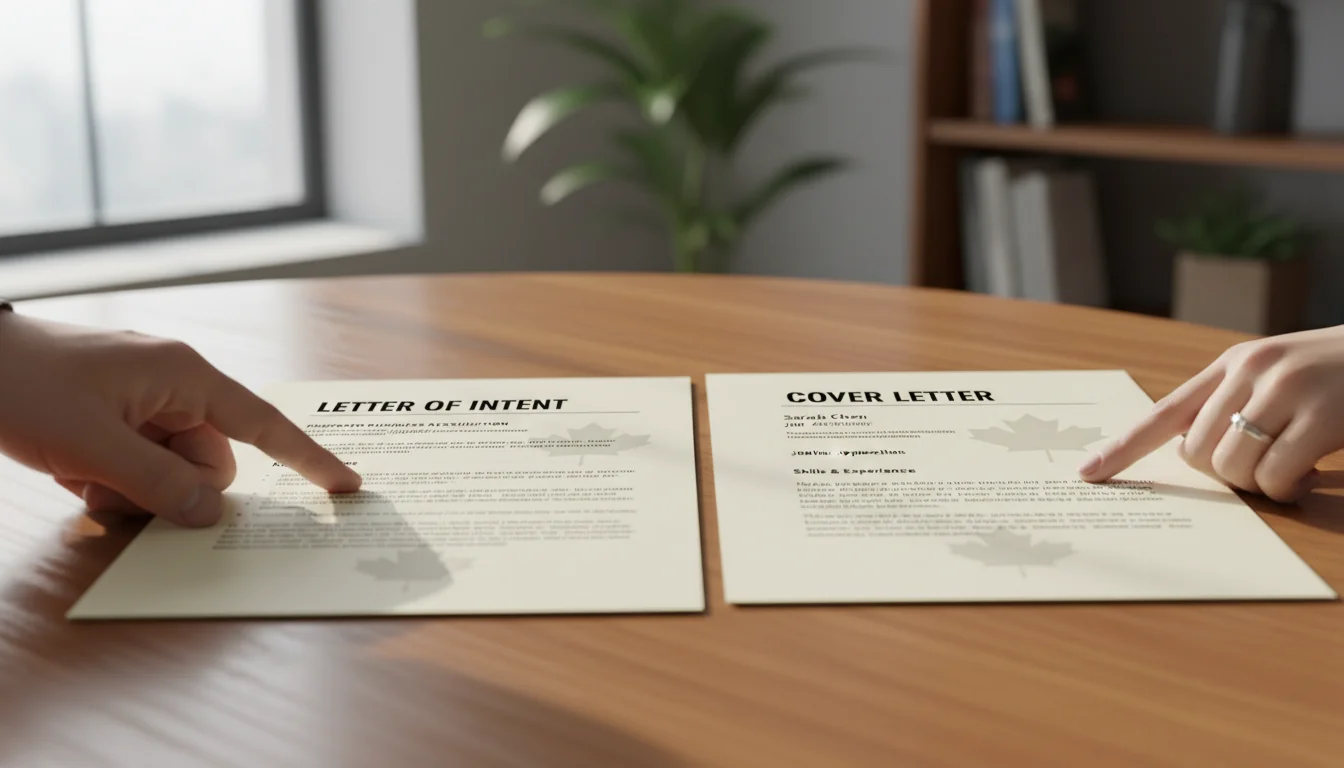
What Are the Key Content Differences?
Focus and Tone
A letter of intent (LOI) and a cover letter serve distinct purposes in professional and academic applications, with the LOI focusing on broad expressions of interest and the cover letter emphasizing targeted qualifications. The LOI is more flexible, allowing writers to outline general intentions for partnerships, mergers, or program admissions without rigid structure, often used in Canadian business contexts as per guidelines from the Innovation, Science and Economic Development Canada. In contrast, a cover letter is highly targeted, tailoring content to a specific job description and company needs to demonstrate fit.
The tone of an LOI tends to be exploratory and collaborative, inviting further discussion rather than making a hard sell, which suits its flexible nature in negotiations or initial outreach. Cover letters, however, adopt a persuasive and confident tone, directly addressing how the applicant's skills align with the role's requirements. This difference highlights how LOIs provide room for customization in evolving scenarios, while cover letters demand precision to stand out in competitive hiring processes.
For optimal results in Canadian applications, consider using bespoke AI-generated documents through Docaro to craft personalized LOIs or cover letters that reflect unique circumstances. This approach ensures flexibility for LOIs and targeted impact for cover letters, enhancing clarity and professionalism.
Customization and Specificity
Customization in cover letters focuses on tailoring content precisely to the job description, incorporating specific keywords, skills, and experiences that align with the employer's needs. This level of specificity helps applicants stand out by demonstrating a direct fit for the role, increasing the chances of advancing in the hiring process.
In contrast, letters of intent (LOIs) offer broader overviews, outlining general interest in a company or program without delving into minute details of a particular position. They emphasize overall career goals and mutual benefits, providing a high-level introduction rather than a pinpoint match to a single job posting.
When crafting these documents in Canada, consider using bespoke AI-generated legal documents through platforms like Docaro for personalized results. For authoritative guidance, refer to resources from the Government of Canada's job search advice, which highlights the importance of tailored applications in the Canadian job market.
- Key differences: Cover letters are highly specific; LOIs are more general.
- Best practice: Always customize to the context for maximum impact.
How Do Legal Implications Affect Their Use in Canada?