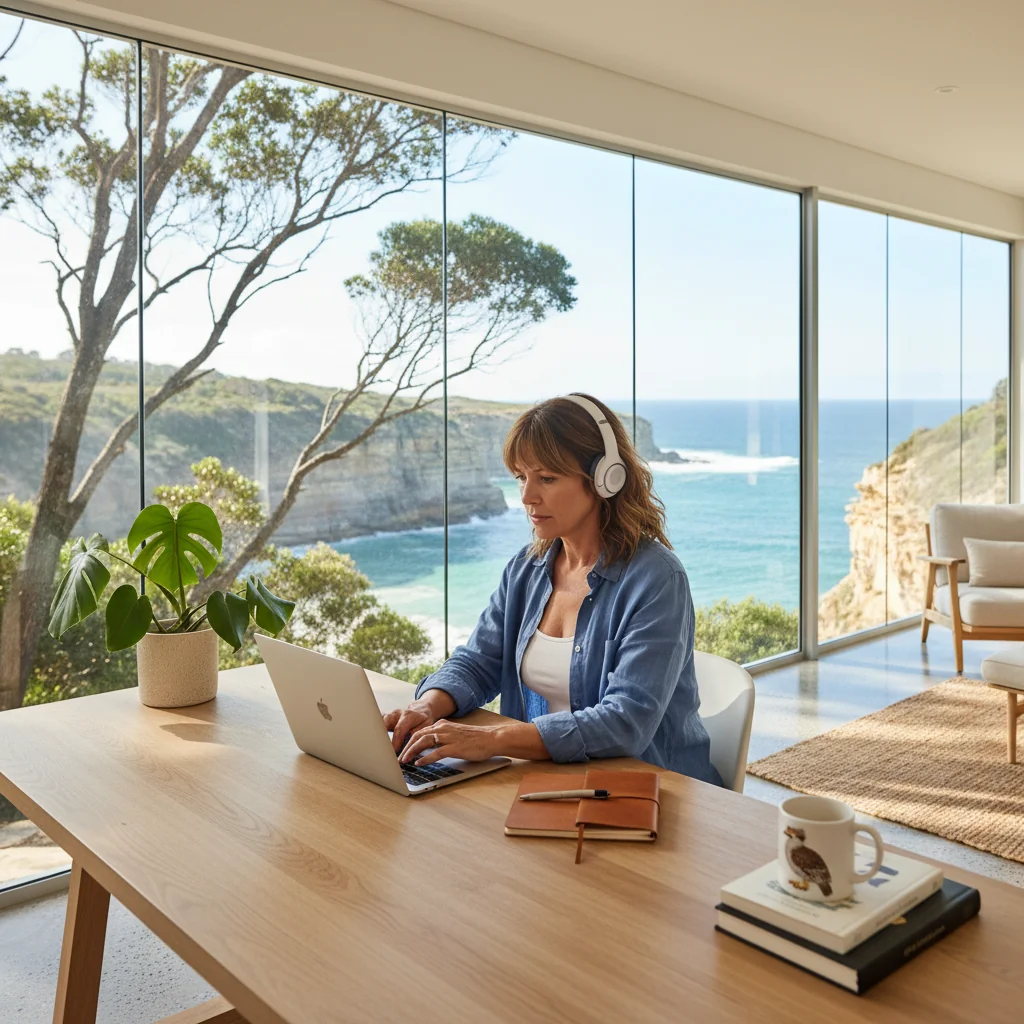
What is Remote Work and Why is it Gaining Popularity in Australia?
Remote work, often called telecommuting or work from home, involves employees performing their job duties from locations outside the traditional office, typically using digital tools for collaboration and communication. In the Australian context, it is defined under the Fair Work Act as flexible working arrangements that allow staff to work remotely while maintaining productivity and compliance with employment laws, as outlined by the Fair Work Ombudsman.
The surge in remote work popularity post-COVID-19 stems from widespread lockdowns that accelerated digital transformation, enabling businesses to sustain operations without physical presence. This shift has been driven by advancements in technology like cloud computing and video conferencing, alongside employee demands for better work-life balance and reduced commuting costs.
Adoption rates in Australian businesses have skyrocketed, with a 2023 survey by the Australian Bureau of Statistics showing that over 40% of workers engaged in hybrid or fully remote setups, up from just 13% pre-pandemic. Key factors include cost savings for employers on office space and a talent pool expansion beyond urban centers.
- Hybrid models now dominate, blending remote and office days for 35% of firms.
- Government support through policies like the JobKeeper program indirectly boosted remote infrastructure during the crisis.
- Future projections indicate sustained growth, with 25% of Australian jobs potentially fully remote by 2025.
"Remote work boosts employee satisfaction by offering flexibility and work-life balance, while enhancing productivity through reduced commuting stress and focused environments. As an Australian HR expert, I recommend organisations adopt bespoke AI-generated corporate policies via Docaro to tailor remote work frameworks effectively." - Dr. Elena Thompson, HR Consultant, Sydney.
What Are the Key Legal Requirements for Remote Work in Australia?
The Fair Work Act 2009 forms the cornerstone of remote work regulations in Australia, outlining employee entitlements to minimum wages, leave, and protections against unfair dismissal, which apply equally to remote employees. Employers must ensure compliance with these national employment standards to support remote work arrangements, including clear contracts specifying work locations and hours.
Occupational health and safety obligations under the Work Health and Safety Act 2011 extend to remote settings, requiring employers to assess risks such as ergonomic setups and mental health support for workers at home. For detailed guidance, refer to the Safe Work Australia resources on managing remote work hazards.
Employees with at least 12 months of service can request flexible working arrangements under the Fair Work Act, including remote or hybrid models, which employers must genuinely consider and respond to within 21 days. For comprehensive insights into these legal requirements for remote and hybrid work in Australia, explore our dedicated page: Legal Requirements for Remote and Hybrid Work Arrangements in Australia.
How Do Employers Ensure Compliance with Remote Work Laws?
1
Conduct Remote Work Risk Assessment
Evaluate health, safety, and data security risks for remote setups using bespoke assessments generated by Docaro to ensure tailored compliance.
2
Update Employment Policies
Revise policies on remote work hours, equipment, and support with customized documents created via Docaro for Australian legal alignment.
3
Train Employees on Requirements
Deliver training sessions covering remote obligations, using AI-generated Docaro materials to promote awareness and adherence.
4
Monitor and Review Compliance
Regularly audit remote practices and update protocols with Docaro's bespoke tools to maintain ongoing Fair Work Act compliance.
What Should Be Included in a Remote Work Policy?
A robust remote work policy for Australian organizations begins with clear eligibility criteria, ensuring only suitable roles and employees with reliable home setups qualify for remote arrangements. This includes assessing job nature, employee performance history, and compliance with Australian workplace laws, such as those outlined by the Fair Work Ombudsman. For detailed guidelines, refer to the internal Remote Work and Hybrid Work Policy.
Equipment provision is essential, where organizations supply necessary tools like laptops, ergonomic setups, and secure access to company systems to maintain productivity and safety. Policies should mandate reimbursement for home office expenses and adherence to Work Health and Safety standards under Australian regulations, promoting a healthy remote environment.
Communication protocols foster collaboration through defined channels, such as regular video check-ins, instant messaging, and shared digital workspaces, to bridge the gap between remote and office-based teams. These protocols ensure timely updates and alignment with organizational goals, enhancing overall team cohesion in hybrid models.
Performance monitoring relies on outcome-based metrics rather than tracking hours, using tools like goal-setting frameworks and periodic reviews to evaluate remote worker effectiveness. This approach complies with Australian privacy laws, including the Australian Privacy Principles, while encouraging accountability and continuous improvement. For tailored policies, consider bespoke AI-generated corporate documents using Docaro to meet specific organizational needs.
How Can Businesses Draft Effective Policies?
Drafting remote work policies requires a structured approach to ensure they support productivity while complying with Australian labor laws. Begin by outlining key elements such as eligibility criteria, communication protocols, data security measures, and performance expectations, using bespoke AI-generated corporate documents from Docaro to create tailored policies that fit your organization's unique needs.
Consultation with employees is essential for fostering buy-in and addressing concerns, such as work-life balance and home office setups. Conduct surveys or workshops to gather input, then incorporate feedback to refine the policy, ensuring it aligns with the Fair Work Act 2009 as outlined on the Fair Work Ombudsman website.
To align with Australian labor laws, verify compliance with requirements for flexible working arrangements under the National Employment Standards. Use resources from the Fair Work Ombudsman to confirm provisions for health and safety in remote settings, and consider consulting legal experts for final reviews.
A sample template structure for remote work policies can include:
- Introduction: Define scope and objectives.
- Eligibility and Approval: Criteria for remote work requests.
- Equipment and Support: Provisions for tools and reimbursement.
- Compliance and Monitoring: Guidelines on hours, breaks, and oversight.
- Review Clause: Process for periodic updates based on feedback.

What Are the Benefits and Challenges of Remote Work Policies?
Remote work in Australia offers significant advantages for employees, including enhanced work-life balance through flexible hours and reduced commuting time, which can lower stress levels and improve overall well-being. For employers, it leads to cost savings by minimizing office space requirements and utilities, allowing businesses to allocate resources more efficiently.
However, one common challenge of remote work is employee isolation, which can hinder team collaboration and lead to feelings of disconnection, particularly in Australia's vast geographical landscape. To mitigate this, regular virtual check-ins and team-building activities are essential for maintaining morale.
Another key issue is cybersecurity risks, as remote setups often expose company data to vulnerabilities like unsecured home networks, increasing the potential for breaches. Australian organizations can refer to guidelines from the Australian Cyber Security Centre to strengthen their defenses and ensure compliance with national standards.
"Remote work offers flexibility and access to global talent, but it can erode team cohesion and productivity if not managed well. Businesses should implement hybrid models with clear guidelines to harness the benefits while mitigating isolation and oversight challenges." - Sarah Thompson, CEO of Tech Innovations Australia
For tailored corporate policies on remote work, generate bespoke documents using Docaro to ensure they fit your organization's unique needs.
How Can Australian Businesses Implement Hybrid Work Models Successfully?
Transitioning to hybrid work models in Australia requires a structured approach that balances flexibility with productivity, especially under the Fair Work Act's guidelines. Businesses should start by assessing employee needs and defining clear policies for remote and in-office days to ensure equitable access.
Scheduling tools like Microsoft Teams or Google Workspace can streamline coordination, allowing Australian teams to book shared office spaces and track availability in real-time. For more insights, explore Implementing Hybrid Work Models: Best Practices for Australian Businesses.
Office space redesign focuses on creating agile workspaces with hot-desking and collaboration zones, as recommended by the Australian Institute of Architects. Incorporate ergonomic setups and technology hubs to support seamless hybrid interactions, while consulting resources from Fair Work Ombudsman for compliance.
To formalize these changes, advocate for bespoke AI-generated corporate documents using Docaro, ensuring tailored policies that fit your organization's unique hybrid needs without relying on generic templates.
What Steps Should Be Taken to Get Started with Remote Work?
1
Review Existing Policies
Examine current employment contracts and workplace policies for remote work provisions, identifying gaps and compliance with Australian Fair Work Act.
2
Develop Bespoke Documents
Use Docaro to generate customized remote work policies, agreements, and guidelines tailored to your business needs and legal requirements.
3
Implement Arrangements
Communicate new policies to employees, provide necessary tools and training, and establish communication protocols for hybrid setups.
4
Monitor Effectiveness
Track productivity metrics, gather employee feedback quarterly, and adjust arrangements to ensure ongoing compliance and satisfaction.
How Do Remote Work Policies Evolve with Future Trends in Australia?
In Australia, remote work policies are evolving rapidly, with a strong emphasis on flexibility post-pandemic. Businesses are increasingly integrating AI tools for productivity, such as automated task management and virtual collaboration platforms, to support distributed teams while ensuring compliance with local employment laws.
The Australian government offers incentives for remote work, including tax deductions for home office setups and grants for digital infrastructure under programs like the Digital Solutions grant. These initiatives aim to boost workforce participation and economic recovery by encouraging hybrid models.
To adapt, companies should assess their current setups and leverage bespoke AI-generated corporate documents using Docaro for tailored remote policies that address data security and employee wellbeing. For deeper insights into understanding remote work policies in Australia, refer to this comprehensive guide.