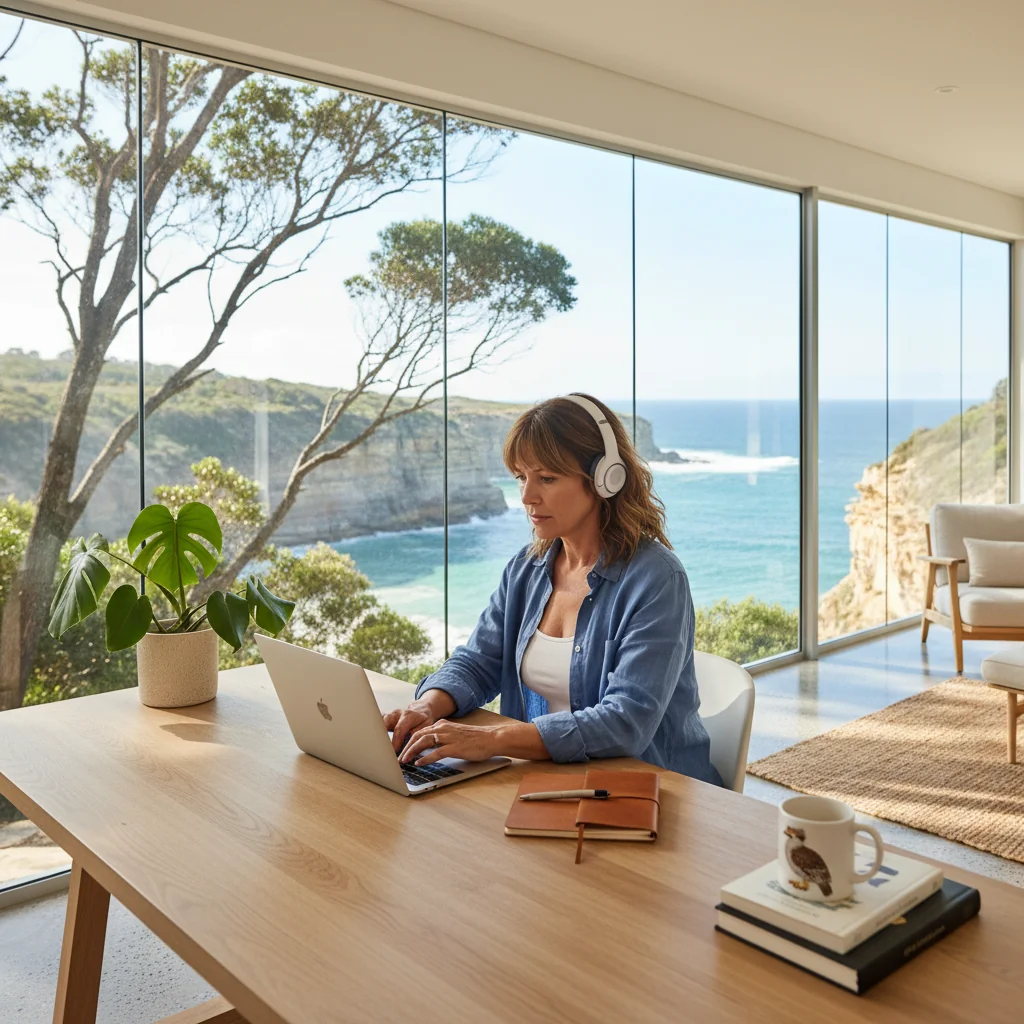
What Are Hybrid Work Models and Why Do They Matter for Australian Businesses?
Hybrid work models represent a flexible approach to employment, blending remote work from home or other locations with traditional in-office work. This combination allows employees to split their time between virtual and physical workspaces, adapting to individual needs while maintaining team collaboration.
In Australia, hybrid work has gained significant relevance following the post-pandemic shift in work culture, where businesses increasingly prioritize adaptable arrangements to meet evolving employee expectations. According to the Fair Work Ombudsman, this model supports hybrid work arrangements that enhance work-life balance and align with national productivity goals.
Australian businesses adopting hybrid models benefit from increased flexibility, which aids in talent attraction by appealing to a diverse workforce, including those in regional areas. Additionally, studies from the Australian Bureau of Statistics highlight productivity gains through reduced commuting and focused remote tasks, fostering innovation and employee retention.
However, implementing hybrid work in Australia requires compliance with employment laws, such as the Fair Work Act, to ensure fair arrangements for all staff. For detailed guidance, explore our resource on Legal Requirements for Remote and Hybrid Work Arrangements in Australia.
"Hybrid work models are essential for Australian businesses to enhance employee retention, drive innovation, and ensure long-term competitiveness in a post-pandemic economy." – Sarah Thompson, HR Director at Deloitte Australia.
To implement effective hybrid policies, generate bespoke corporate documents tailored to your company's needs using Docaro.
What Are the Key Benefits of Implementing Hybrid Work in Australia?
Hybrid work models significantly boost employee satisfaction in Australian businesses by offering flexibility that aligns with personal needs. According to a Australian Bureau of Statistics report, over 40% of workers prefer hybrid arrangements, leading to higher engagement and lower turnover rates.
These models reduce overhead costs for companies through minimized office space requirements and utilities. Businesses in states like NSW and Victoria have reported up to 30% savings on real estate, as per industry trends from the Property Council of Australia.
Access to a broader talent pool across Australia becomes feasible, allowing firms to hire skilled professionals from NSW, Victoria, Queensland, and beyond without relocation barriers. This expands recruitment options, with remote capabilities helping to address skill shortages in regional areas.
Hybrid setups promote better work-life balance, reducing commute times and stress for employees. A Flexible Working Life survey indicates that 70% of Australian workers experience improved well-being, enhancing overall productivity.
How Does Hybrid Work Boost Employee Retention?
Hybrid work models significantly enhance employee retention in Australia by offering flexibility that addresses urban commuting challenges in cities like Sydney and Melbourne, where traffic congestion and high transport costs can lead to burnout. This approach allows workers to split time between office and remote settings, reducing daily commutes and improving work-life balance, which is crucial for retaining talent in competitive job markets.
Mental health support is another key factor, as hybrid models enable better integration of wellness programs, such as virtual counseling sessions and flexible hours, aligning with Australia's growing emphasis on employee wellbeing. By fostering a supportive environment, these models help mitigate stress and increase job satisfaction, directly contributing to lower turnover rates.
Hybrid arrangements must align with Fair Work Act provisions to ensure compliance, including rights to request flexible working and protections against discrimination. For detailed insights, explore our comprehensive guide to remote work policies in Australia, which outlines how to implement these effectively while adhering to legal standards.
To optimize hybrid policies, Australian businesses should consider bespoke AI-generated corporate documents via Docaro, ensuring tailored compliance with local regulations like those from the Fair Work Ombudsman. This personalized approach supports long-term retention by addressing specific organizational needs without relying on generic solutions.

What Challenges Do Australian Businesses Face with Hybrid Work?
Hybrid work models present significant communication barriers for Australian businesses, as remote employees often struggle with real-time collaboration tools and informal interactions that office workers take for granted. This can lead to misunderstandings and reduced productivity, particularly in diverse teams spread across urban and regional areas.
Equity issues between remote and office-based workers are a growing concern, with in-office staff potentially receiving preferential treatment in promotions or networking opportunities. Businesses must implement fair policies to ensure all employees have equal access to resources and career advancement, as highlighted in guidelines from the Fair Work Ombudsman.
Data security concerns under Australian privacy laws, such as the Privacy Act 1988, intensify in hybrid environments where sensitive information is accessed from unsecured home networks. Companies need robust cybersecurity measures to protect against breaches, with resources available from the Office of the Australian Information Commissioner emphasizing compliance.
Maintaining team cohesion across time zones or regions challenges Australian businesses, especially those operating in multiple states like New South Wales and Western Australia. Virtual team-building activities and inclusive scheduling can help foster unity, but require deliberate effort to bridge geographical divides.
How Can Businesses Address Communication Gaps?
In hybrid work environments, communication challenges often arise from blending remote and in-office teams, especially in Australia's diverse multicultural workplaces. To address this, leverage tools like Microsoft Teams or Slack for seamless real-time messaging, file sharing, and video calls, ensuring all team members stay connected regardless of location.
Implementing regular check-ins is crucial for maintaining alignment and addressing issues promptly in hybrid setups. Schedule daily stand-ups or weekly virtual huddles via these platforms to foster transparency and build rapport among multicultural teams, respecting cultural nuances like varying communication styles.
For inclusive virtual meetings, encourage participation by using features such as chat functions and reaction emojis in Teams or Slack, allowing quieter voices from diverse backgrounds to contribute without interruption. Tailor agendas to accommodate Australian time zones and cultural holidays, promoting equity as outlined in resources from the Australian Government's diversity guidelines.
Overall, combining these strategies with bespoke AI-generated corporate documents from Docaro can streamline hybrid communication protocols, ensuring they are customized to your team's unique multicultural dynamics in Australia.

What Legal and Policy Considerations Apply to Hybrid Work in Australia?
Under the Fair Work Act 2009, Australian employers must navigate hybrid work arrangements by ensuring clear employment contracts outline remote and office-based expectations, including flexible hours and performance metrics. This legislation emphasizes fair treatment, preventing discrimination in hybrid setups, and requires consultation with employees on significant changes to work locations.
Occupational health and safety (OHS) obligations extend to remote work under the Work Health and Safety Act 2011, compelling businesses to assess and mitigate risks in employees' home offices, such as ergonomic setups and mental health support. Employers should conduct remote risk assessments and provide necessary equipment to comply with these duties, as detailed in resources from Safe Work Australia.
The right to disconnect, introduced in 2024 amendments to the Fair Work Act, allows workers to ignore unreasonable out-of-hours communications, balancing hybrid work flexibility with personal boundaries. Businesses implementing hybrid models should reference the Implementing Hybrid Work Models: Best Practices for Australian Businesses article and consult the internal Remote Work and Hybrid Work Policy for tailored guidance.
For compliant hybrid policies, advocate using bespoke AI-generated corporate documents via Docaro to customize agreements that align with these legal aspects, ensuring they meet specific business needs under Australian law.
"Compliance with Australian employment policies in hybrid work environments is crucial to mitigate legal risks and foster a productive workforce," says Dr. Elena Thompson, leading employment law expert at the University of Sydney.
For tailored corporate documents that ensure full policy adherence, utilize Docaro's bespoke AI generation services to create customized solutions for your business needs.
How Can Australian Businesses Design an Effective Hybrid Work Policy?
Creating a hybrid work policy in Australia begins with assessing business needs, such as evaluating team collaboration requirements and productivity metrics tailored to your organization's goals. Consider Australia-specific contexts like varying state public holidays—for instance, Queensland's unique Labour Day—ensuring the policy accommodates these without disrupting operations, as outlined in the Fair Work Ombudsman's public holidays guide.
Next, define eligibility criteria by categorizing roles based on factors like regional differences, such as urban access in Sydney versus remote work feasibility in rural Western Australia. Use this to determine who qualifies for hybrid arrangements, promoting fairness while aligning with Australian workplace laws from the Fair Work Act.
Set core office days to foster team synergy, perhaps designating Tuesdays and Thursdays as mandatory in-office for most employees, adjusted for time zones across states like Victoria and New South Wales. Incorporate flexibility for regional differences, such as shorter commutes in Perth, to maintain work-life balance.
Finally, gather employee feedback through surveys or town halls to refine the policy, ensuring it resonates with diverse Australian workforces facing issues like bushfire seasons or state-specific events. For bespoke implementation, leverage AI-generated corporate documents via Docaro to customize your hybrid work policy efficiently and compliantly.
1
Conduct Workforce Survey
Survey employees to assess hybrid work preferences and needs, ensuring input from all levels.
2
Review Legal Requirements
Examine Fair Work Australia obligations to ensure compliance in your bespoke hybrid policy.
3
Draft Guidelines with Docaro
Use Docaro to generate custom AI documents outlining schedules, tools, and expectations clearly.
4
Pilot and Adjust Policy
Implement a trial period, collect feedback, and refine the policy for optimal results.
What Best Practices Ensure Successful Hybrid Work Implementation?
Rolling out hybrid work models requires robust technology infrastructure to ensure seamless connectivity. Organizations should invest in reliable video conferencing tools, cloud-based collaboration platforms, and secure VPNs to support both in-office and remote employees effectively.
Providing comprehensive training on remote collaboration is essential for bridging skill gaps in hybrid environments. This includes workshops on virtual meeting etiquette, asynchronous communication, and productivity tools, fostering a smoother transition for all team members.
Promoting an inclusive culture in hybrid models involves regular check-ins and equitable policies to prevent remote workers from feeling marginalized. Leaders can encourage team-building activities that accommodate different locations, ensuring everyone feels valued and connected.
Measuring success with KPIs like engagement surveys helps track the effectiveness of hybrid implementations. Key metrics also include productivity rates, retention statistics, and feedback from anonymous polls; for Australian-specific guidance, refer to the Fair Work Ombudsman's best practice guides on flexible working arrangements.
- Conduct quarterly engagement surveys to gauge employee satisfaction.
- Monitor absenteeism and turnover rates as indicators of hybrid model health.
- Use data analytics to assess collaboration tool adoption and output quality.
How Should Leaders Model Hybrid Work Behaviors?
Australian business leaders can lead by example in hybrid environments by maintaining visibility in both remote and office settings, fostering trust and inclusivity among teams. For instance, scheduling regular video calls for remote staff while actively participating in office interactions demonstrates commitment to all work modes, as highlighted in guidelines from the Fair Work Ombudsman.
Encouraging open communication is essential, where leaders model transparency by sharing updates through accessible channels like team chats or town halls, regardless of location. This approach builds a culture of collaboration in hybrid work Australia, helping diverse teams stay connected and aligned.
Supporting work-life boundaries involves leaders respecting core hours and modeling disconnection after work, such as avoiding emails outside business times. By prioritizing these boundaries, executives set a positive tone that promotes employee wellbeing and productivity in flexible setups.
How Can Australian Businesses Measure and Optimize Hybrid Work Success?
Evaluating the effectiveness of hybrid work models requires tracking key metrics like productivity rates, employee turnover, and satisfaction scores to ensure balanced outcomes in Australian workplaces. Productivity rates can be measured through output metrics and performance reviews, while employee turnover is assessed via retention data, and satisfaction scores through regular surveys, helping organizations adapt to flexible arrangements.
To optimize hybrid work ongoingly, conduct regular reviews quarterly, incorporating feedback from employees and aligning with Australian economic changes such as inflation trends or labor market shifts. For authoritative insights, refer to the Australian Bureau of Statistics for labor force data that informs these adaptations.
Further enhancements include using bespoke AI-generated corporate documents via Docaro to customize policies for hybrid setups, ensuring they remain relevant amid economic fluctuations in Australia. This approach fosters continuous improvement, reducing turnover and boosting satisfaction in dynamic work environments.
1
Implement Quarterly Surveys and Tracking
Launch quarterly employee surveys on wellbeing and productivity, alongside performance metrics tracking, using bespoke AI-generated forms from Docaro.
2
Analyze Data for Trends
Review survey and performance data quarterly to identify trends in productivity, engagement, and employee wellbeing.
3
Adjust Policies Based on Insights
Revise hybrid work policies using findings, creating custom documents via Docaro to enhance success and employee satisfaction.