Docaro

Mejores Prácticas en la Implementación de Planes de Respuesta a Incidentes

Created: - Actualizado:
[object Object],[object Object],[object Object],[object Object],[object Object],[object Object],[object Object],[object Object],[object Object],[object Object],[object Object],[object Object],[object Object],[object Object],[object Object],[object Object],[object Object],[object Object],[object Object],[object Object],[object Object],[object Object],[object Object],[object Object],[object Object],[object Object]

A photorealistic image of a professional team in a modern office responding to a cybersecurity incident, with individuals at computers analyzing data on screens, looking focused and collaborative, conveying preparedness and quick response in a crisis situation.

También te Podría Interesar

A photorealistic image depicting a professional cybersecurity team in a modern control room in Mexico, actively responding to a cyber incident on multiple computer screens showing alerts and code, with Mexican flags or subtle cultural elements in the background, conveying preparedness and urgency, no children present.
Descubre cómo crear un plan de respuesta a incidentes efectivo en México. Guía con normativas, estrategias y consejos prácticos.
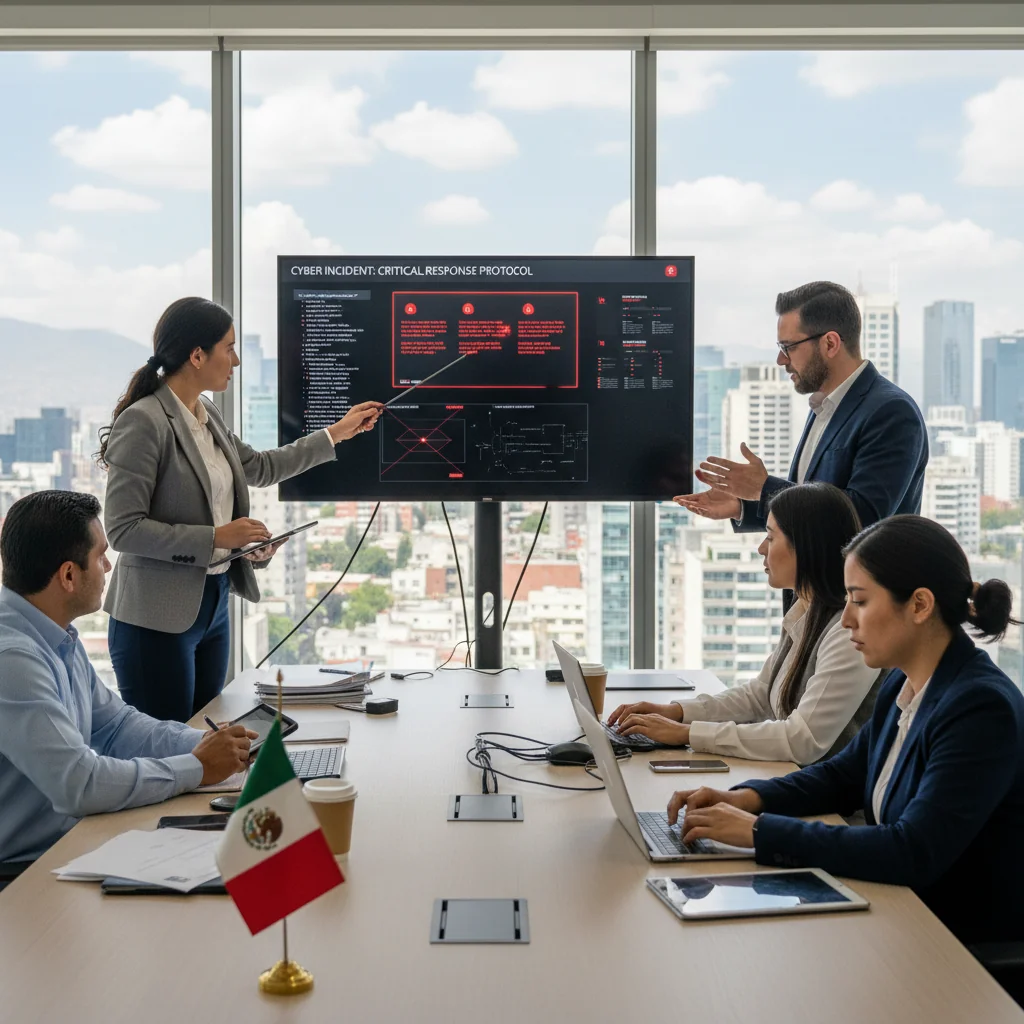
A photorealistic image depicting a professional team of adults in a modern Mexican office or conference room, actively responding to a simulated cybersecurity incident. They are gathered around a computer screen showing alert notifications, with one person pointing at the display while others discuss strategies, conveying preparedness and collaboration in incident response, adapted to Mexican regulatory context. The scene includes elements like the Mexican flag subtly in the background, diverse adult professionals in business attire, no children present.
Descubre ejemplos de planes de respuesta a incidentes adaptados a la normativa mexicana para ciberseguridad y cumplimiento legal.