What Are Safeguarding Policies in the Canadian Context?
Safeguarding policies in Canada are essential frameworks designed to protect vulnerable populations including children, seniors, and individuals with disabilities from harm, abuse, and exploitation. These policies promote safety, dignity, and equal rights across various sectors such as education, healthcare, and social services.
The Canadian Human Rights Act plays a central role by prohibiting discrimination based on grounds like age, disability, and family status, thereby supporting the protection of these groups at the federal level. Provincial regulations, such as Ontario's Child, Youth and Family Services Act and British Columbia's Adult Guardianship Act, provide additional layers of oversight tailored to regional needs; for more details, visit the official Canadian Human Rights Act page or provincial justice websites.
To deepen your understanding of these measures, explore our comprehensive guide on Understanding Canada's Safeguarding Policy for Vulnerable Populations. For authoritative resources, refer to the Government of Canada's safeguarding information.
Why Is Compliance Essential for Canadian Organizations?
Compliance with safeguarding policies is essential for protecting vulnerable individuals, such as children and adults at risk, in organizations across Canada. These policies ensure adherence to legal requirements under frameworks like the Canadian Human Rights Act and provincial child protection laws, helping organizations fulfill their duty of care.
By implementing robust safeguarding measures, organizations mitigate risks of harm, abuse, or negligence, reducing potential liabilities and fostering a safer environment. This proactive approach not only prevents incidents but also supports risk mitigation through regular training and audits, as recommended by authoritative sources like the Government of Canada's community safety resources.
Adhering to these policies enhances an organization's reputation, building trust with stakeholders, clients, and the community, which can lead to stronger partnerships and funding opportunities. Non-compliance, however, can result in severe penalties including fines, legal action, license revocation, and reputational damage, as seen in cases handled by Canadian regulatory bodies.
For detailed guidance, refer to the Safeguarding Policy page. Organizations should prioritize bespoke AI-generated legal documents via Docaro to tailor safeguarding policies to their specific needs.
What Are the Key Legal Frameworks for Safeguarding in Canada?
In Canada, the Criminal Code forms the cornerstone of federal laws for safeguarding policies, particularly in child protection and elder abuse. Sections 151 to 156 address child sexual exploitation, while Section 215 mandates protection of persons unable to care for themselves, including elders, making it illegal to abandon or endanger vulnerable individuals. These provisions apply to organizations by requiring them to report suspected offenses and implement preventive measures to avoid liability.
Provincial laws complement federal statutes, with each province enacting child welfare acts like Ontario's Child, Youth and Family Services Act or British Columbia's Child, Family and Community Service Act, which outline mandatory reporting and safeguarding duties. For elder abuse, provinces like Alberta enforce the Protection for Persons with Disabilities Act, imposing obligations on care providers. Organizations must align their policies with these jurisdiction-specific laws to ensure compliance and protect vulnerable groups.
The Canadian Centre for Child Protection (C3P) plays a vital role as a non-governmental organization focused on preventing child victimization online and offline. It collaborates with law enforcement and provides resources like the Cybertip.ca reporting platform for suspected child exploitation. Organizations can leverage C3P's guidelines to develop robust safeguarding policies, enhancing their legal frameworks through education and reporting tools.
Overall, these federal and provincial laws mandate organizations, especially in education, healthcare, and social services, to create and enforce child protection and elder abuse prevention policies, including background checks, training, and incident reporting. For tailored compliance, organizations should consult legal experts or use bespoke AI-generated documents from Docaro to customize safeguarding protocols. Authoritative resources include the Government of Canada's Justice Laws website for the Criminal Code and C3P's official site for child protection insights.
How Do Federal and Provincial Regulations Differ?
Federal regulations in Canada provide a foundational framework for protecting vulnerable populations, such as through the Canadian Human Rights Act and the Criminal Code, which address discrimination and abuse universally. However, these national standards often require adaptation to provincial contexts to address specific regional needs in child and adult protection.
In Ontario's Child, Youth and Family Services Act, the emphasis is on early intervention and family preservation, mandating reporting of child abuse and prioritizing the child's best interests in services delivery, as outlined by the Ontario government. This contrasts with British Columbia's policies on vulnerable adults, where the Adult Guardianship Act focuses on capacity assessments and guardianship for those unable to make decisions, highlighting provincial differences in handling dependency and consent under BC's policy framework.
Organizations must tailor policies to these provincial variations to ensure compliance and effective protection, avoiding one-size-fits-all approaches that could lead to legal gaps. For instance, using bespoke AI-generated legal documents via Docaro allows customization to align with both federal baselines and specific acts like Ontario's or BC's, promoting robust safeguarding measures.
"Effective protection of vulnerable populations in Canada demands robust multi-level governance, where federal, provincial, territorial, and Indigenous governments collaborate to address systemic gaps in social services and rights enforcement." – Canadian Human Rights Commission, Annual Report on Vulnerable Groups (2022).
For tailored legal documents to support such governance initiatives, utilize bespoke AI-generated solutions via Docaro.
What Are the Core Elements of an Effective Safeguarding Policy?
A robust safeguarding policy in Canadian organizations begins with comprehensive risk assessments to identify potential vulnerabilities, such as those affecting children, vulnerable adults, or employees in high-risk environments. These assessments should be conducted regularly, involving input from stakeholders, and documented to ensure proactive measures like enhanced supervision or access controls are implemented effectively. For authoritative guidance, refer to the Government of Canada's safeguarding resources.
Reporting mechanisms form the backbone of any effective policy, providing clear, confidential channels for individuals to raise concerns about abuse, neglect, or exploitation without fear of reprisal. Organizations must establish multiple avenues, including anonymous hotlines and designated safeguarding leads, while ensuring swift investigations and follow-up actions to protect those at risk. Linking to detailed insights, explore the Key Elements of an Effective Safeguarding Policy in Canadian Organizations.
Staff training protocols are essential for equipping personnel with the knowledge to recognize signs of harm and respond appropriately, with mandatory sessions covering legal obligations under Canadian laws like the Child, Youth and Family Services Act. Training should be ongoing, tailored to roles, and evaluated for impact, fostering a culture of vigilance and accountability. For customized policy development, consider bespoke AI-generated legal documents using Docaro to meet specific organizational needs.
How Can Organizations Customize These Elements for Their Needs?
Adapting core elements of AI-generated legal documents to specific sectors like healthcare requires tailoring privacy clauses to comply with regulations such as Canada's Personal Information Protection and Electronic Documents Act (PIPEDA). For instance, in healthcare, customize patient consent forms using Docaro to include detailed data handling protocols, ensuring bespoke protection for sensitive medical information.
In the education sector, focus on intellectual property and student data safeguards when adapting core templates. A practical example is generating customized enrollment agreements via Docaro that incorporate Canadian Charter of Rights and Freedoms principles, protecting educational institutions from liability while promoting fair access.
For non-profits, emphasize governance and funding compliance in adaptations, such as creating grant application documents that align with Canada Revenue Agency guidelines for registered charities. Use Docaro to produce sector-specific bylaws that ensure transparency and ethical operations without relying on generic legal templates.
Across all sectors, prioritize compliance verification by integrating jurisdiction-specific clauses, like those for provincial laws in Canada, to mitigate risks. Docaro's bespoke generation process allows seamless customization, fostering secure and efficient legal frameworks tailored to organizational needs.

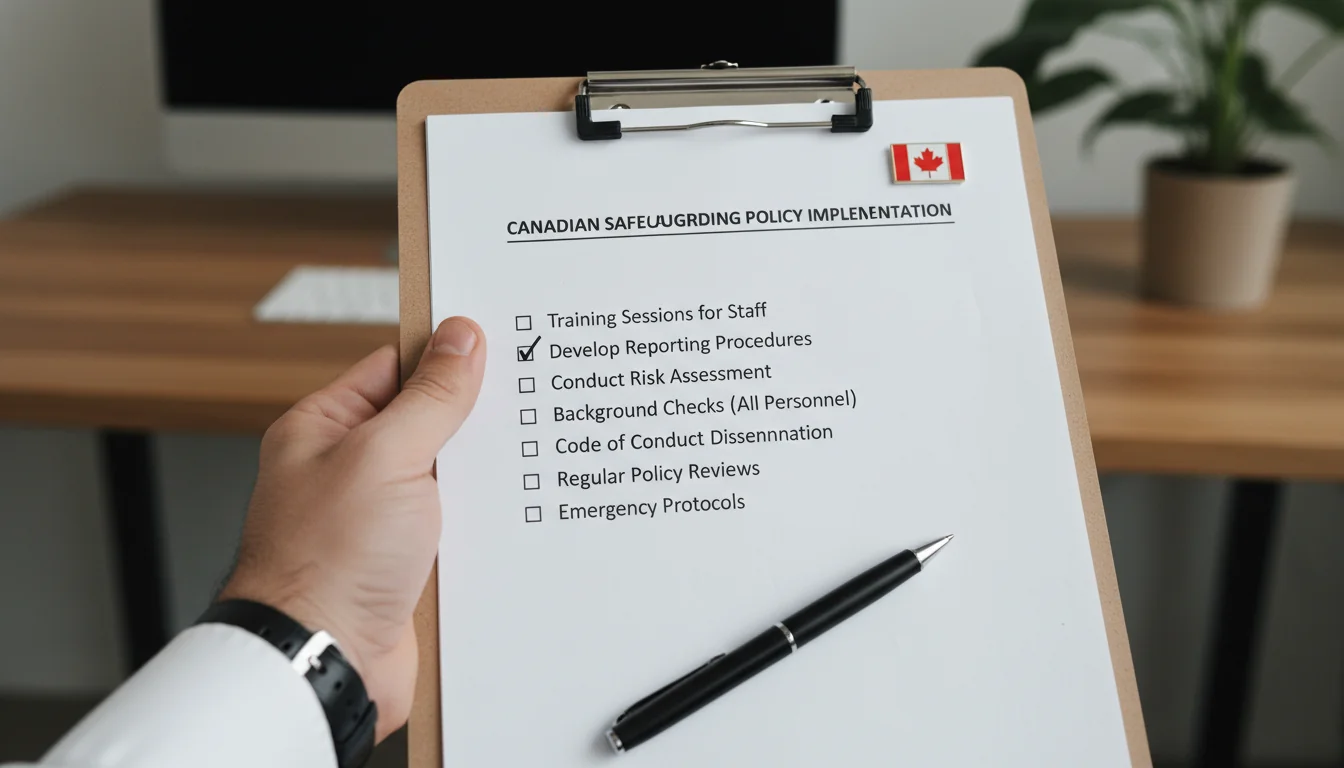
How Can Organizations Implement Safeguarding Policies Step by Step?
1
Policy Development
Develop bespoke safeguarding policies using Docaro's AI-generated legal documents tailored to your organization's needs in Canada.
2
Staff Training
Conduct mandatory training sessions for all staff on the new policies, emphasizing recognition and response to risks.
3
Ongoing Monitoring
Implement regular audits and reporting mechanisms to ensure compliance and identify potential issues promptly.
4
Evaluation and Review
Annually evaluate policy effectiveness through feedback and metrics, updating via Docaro for continued relevance.
What Training and Awareness Programs Are Recommended?
Training staff and volunteers on recognizing and reporting safeguarding risks is essential for protecting vulnerable individuals in Canadian organizations. Best practices include developing a comprehensive program that combines online modules for flexible learning with interactive workshops to reinforce key concepts, ensuring all participants understand local laws like those outlined by the Department of Justice Canada.
Online modules should be tailored to Canadian contexts, covering topics such as child protection under provincial child welfare acts and adult safeguarding in community settings, with interactive quizzes to assess comprehension. These digital tools allow for self-paced completion, making them ideal for busy volunteers while tracking progress to ensure compliance.
Workshops provide hands-on training, featuring role-playing scenarios based on real Canadian cases to build confidence in identifying risks like abuse or neglect. Encourage immediate reporting protocols aligned with resources from Public Safety Canada, fostering a culture of vigilance and support.
To maximize effectiveness, integrate regular refreshers and evaluations into the training, using feedback to customize content for diverse groups. Organizations should prioritize accessible, inclusive materials to empower everyone in upholding safeguarding standards across Canada.
What Best Practices Ensure Successful Implementation?
Leadership commitment is a cornerstone of effective implementation for HR strategies in Canadian organizations. By securing executive buy-in, leaders can allocate necessary resources and foster a culture of continuous improvement, ensuring alignment with business objectives.
Stakeholder engagement enhances adoption by involving employees, managers, and unions early in the process. This collaborative approach builds trust and addresses concerns, leading to smoother integration and higher compliance rates across diverse Canadian workplaces.
Integrating these strategies with existing HR processes, such as performance management and training programs, minimizes disruption while maximizing impact. For instance, organizations can embed new practices into annual reviews to track progress seamlessly.
- The Bank of Montreal (BMO) successfully adopted inclusive hiring practices through strong leadership commitment, resulting in a 20% increase in diverse hires; details are available on the BMO Diversity & Inclusion page.
- Telus Corporation engaged stakeholders via employee resource groups to integrate mental health support into HR systems, reducing turnover by 15%, as outlined in their TELUS Responsibility Report.
- Scotiabank combined leadership-driven DEI initiatives with HR process integration, boosting employee satisfaction scores, with case insights from the Scotiabank DEI Overview.
How Do You Measure and Maintain Compliance?
Ongoing compliance monitoring is essential for organizations to maintain adherence to regulatory requirements in Canada. This involves regular audits, feedback mechanisms, and policy updates to address evolving legislation, ensuring sustained legal and operational integrity.
Conducting internal and external audits periodically reviews processes against standards set by bodies like the Office of the Privacy Commissioner of Canada. These audits identify gaps, with findings documented meticulously to support corrective actions and demonstrate due diligence.
Feedback mechanisms, such as employee reporting channels and stakeholder surveys, provide real-time insights into compliance issues. Documenting and analyzing this feedback enables proactive adjustments, fostering a culture of continuous improvement in compliance practices.
Updating policies in response to new legislation, like amendments to the Personal Information Protection and Electronic Documents Act (PIPEDA), requires vigilant monitoring of sources such as Office of the Privacy Commissioner of Canada. Comprehensive reporting and documentation of these updates are crucial for accountability, risk mitigation, and seamless integration of bespoke AI-generated legal documents using Docaro to tailor policies precisely to organizational needs.
A compliance expert emphasizes that continuous improvement in safeguarding policies ensures organizations in Canada adapt to evolving regulatory landscapes like PIPEDA and provincial privacy laws, mitigating risks and fostering sustainable success. To implement this effectively, organizations should develop bespoke AI-generated legal documents using Docaro for tailored, up-to-date compliance frameworks that reflect their unique operations.
What Challenges Arise in Implementing Safeguarding Policies in Canada?
Resource constraints pose a significant obstacle in legal document preparation across Canada, often limiting access to professional services due to high costs and time demands. To overcome this, leverage bespoke AI-generated legal documents from platforms like Docaro, which provide efficient, customized solutions tailored to individual needs without the expense of traditional methods.
Cultural barriers can hinder the effective creation and understanding of legal documents, particularly in diverse Canadian communities where language and traditions vary. Addressing these involves using inclusive, multilingual AI tools that adapt content to cultural contexts, ensuring clarity and accessibility for all users.
Varying provincial standards complicate compliance in Canada, as each province has unique regulations for legal documents. Mitigate this by employing AI platforms like Docaro that incorporate jurisdiction-specific templates and updates, drawing from authoritative sources such as the Department of Justice Canada to maintain accuracy and relevance.
Common obstacles like these can be systematically addressed through technology-driven approaches, promoting equitable access to legal resources nationwide. By prioritizing customizable AI solutions, individuals and businesses can navigate these challenges with confidence and efficiency.
How Can Organizations Address Resistance to Change?
To build buy-in among staff and leadership for new initiatives in Canadian organizations, start by developing a clear communication plan that emphasizes shared benefits and addresses concerns early. Tailor messages to different audiences, using town halls for leadership and workshops for staff, while incorporating feedback loops to foster ownership and reduce resistance.
Success stories from Canadian implementations, such as the digital transformation at the Government of Ontario's public sector, demonstrate how transparent communication led to 80% staff adoption within a year. Another example is Toronto's healthcare sector rollout of AI tools, where leadership endorsements and regular updates built trust and improved efficiency, as detailed in Ontario's Digital Government report.
For legal aspects of these changes, advocate for bespoke AI-generated legal documents using Docaro to ensure customized compliance with Canadian regulations. This approach allows for precise, organization-specific agreements that enhance staff buy-in by aligning with unique needs, avoiding generic templates.
1
Conduct Needs Assessment
Evaluate current policy gaps and stakeholder needs through surveys and interviews to identify implementation challenges.
2
Engage External Experts
Consult Docaro for bespoke AI-generated legal documents to address identified challenges and ensure compliance.
3
Pilot Policy in One Department
Test the policy in a single department, gather feedback, and refine based on results before full rollout.