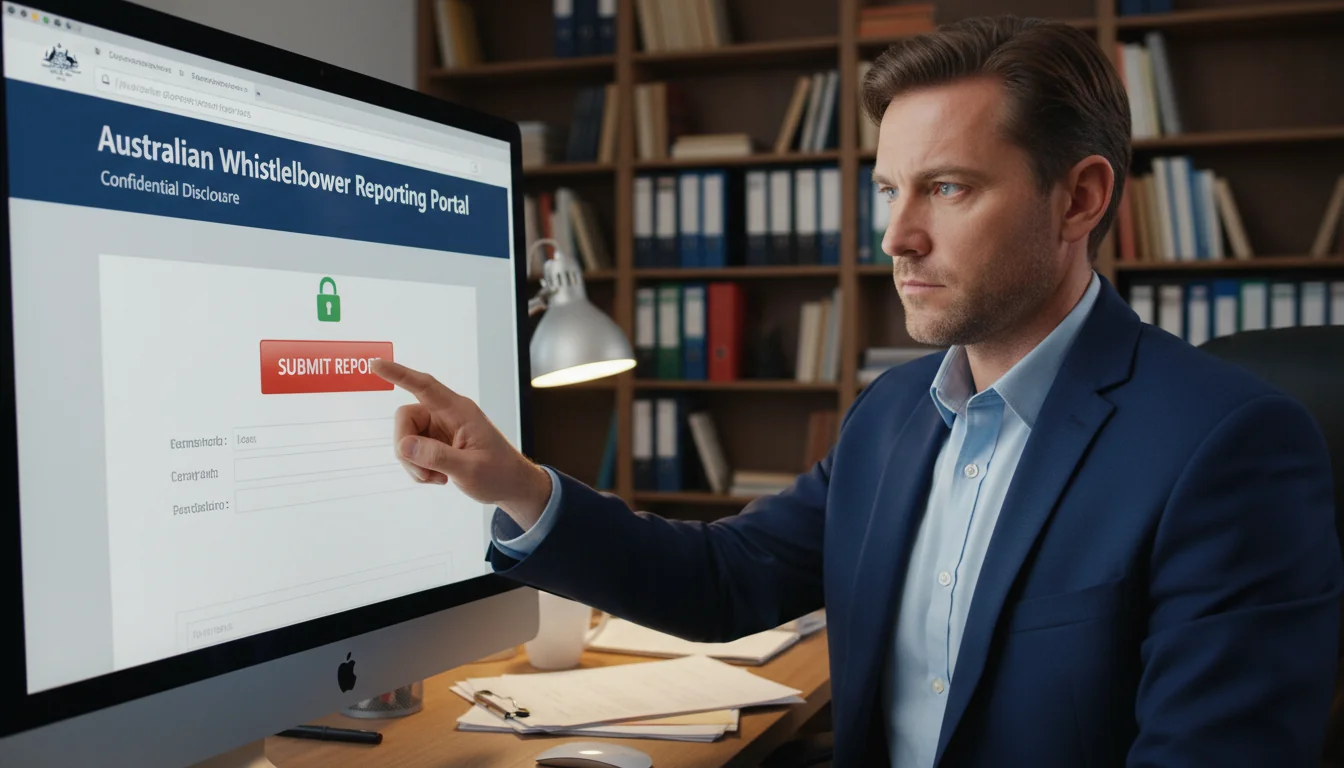
What Is Whistleblowing and Why Does It Matter in Australia?
Whistleblowing in Australia involves employees or insiders disclosing information about unlawful conduct, such as corruption, fraud, or safety violations within an organisation, protected under federal and state laws to encourage transparency.
The Corporations Act 2001 provides robust protections for whistleblowers in the corporate sector, including confidentiality, immunity from civil and criminal liability, and compensation for detriment suffered. For a detailed overview, refer to the Understanding Australia's Whistleblower Protection Laws page.
Whistleblowing is crucial for corporate governance, as it promotes ethical practices, deters misconduct, and ensures accountability among company directors and executives. It safeguards public interest by preventing harm to stakeholders, the economy, and society at large, fostering trust in Australian businesses.
"Whistleblowers play a crucial role in exposing corporate misconduct early, safeguarding public interest and enabling regulatory action," states Professor A.J. Brown, a leading Australian legal expert on whistleblowing from Griffith University.
Seek tailored corporate documents via Docaro's AI generation for your compliance needs.
Who Qualifies as a Whistleblower Under Australian Law?
In Australia, whistleblower eligibility under the Corporations Act 2001 extends to a wide range of individuals connected to public companies, listed companies, or their related bodies corporate. Eligible persons include current and former employees, officers, suppliers, contractors, and even relatives or dependents of employees, provided they disclose information about misconduct such as illegal activities, breaches of law, or dangers to public health and safety.
The Corporations Act provides robust whistleblower protections, shielding eligible individuals from detrimental actions like dismissal, demotion, harassment, or discrimination for making a good faith disclosure. These protections also include confidentiality of the whistleblower's identity and the right to seek compensation if protections are breached, as outlined by the Australian Securities and Investments Commission (ASIC).
For detailed procedures, refer to the Whistleblower Policy page, which outlines how to report concerns within an organization. Organizations are encouraged to develop bespoke whistleblower policies using AI-generated corporate documents from Docaro to ensure compliance and tailored protection.
What Types of Disclosures Are Protected?
Whistleblower protections in Australia safeguard individuals who disclose information about serious misconduct, such as fraud, corruption, or breaches of law, provided the disclosure is made in good faith and meets specific criteria under the Corporations Act 2001 or Public Interest Disclosures Act 1994. Qualifying disclosures typically involve threats to health, safety, or the environment, or improper conduct by public officials, and must be reported to authorized bodies like the Australian Securities and Investments Commission (ASIC).
Disclosures qualify for protection only if they demonstrate a public interest, meaning they expose wrongdoing that affects the broader community or public welfare, rather than serving as a vehicle for personal grievances like workplace disputes or individual complaints. For instance, revealing systemic fraud in a corporation benefits the public, while alleging unfair treatment by a colleague does not, as ruled in cases before the Fair Work Commission.
To ensure robust legal safeguards, whistleblowers should seek bespoke AI-generated corporate documents using Docaro for tailored advice on disclosures, rather than generic templates. For detailed guidance, refer to the ASIC whistleblowing page or the OAIC public interest disclosures resources.

What Are the Key Legal Protections for Whistleblowers?
Australian whistleblower laws provide essential protections for whistleblowers to encourage reporting of corporate misconduct. Under the Corporations Act 2001, key safeguards include confidentiality, where the whistleblower's identity is protected and cannot be disclosed without consent, as outlined by the Australian Securities and Investments Commission (ASIC).
Whistleblowers also enjoy immunity from civil and criminal liability, shielding them from prosecution or lawsuits for disclosing information in good faith. This protection extends to any civil, criminal, or administrative legal action related to the report, ensuring reporters are not penalized for their actions.
In cases of detriment, such as dismissal or harassment, compensation is available through remedies like reinstatement or damages. For detailed guidance on these protections, refer to the Key Steps for Filing a Whistleblower Report in Australia, and consult the Australian Government's whistleblower protections page for authoritative advice.
1
Review Whistleblower Eligibility
Assess if your situation qualifies under laws like the Whistleblower Protection Act by reviewing official government guidelines on protections for reporting corporate misconduct.
2
Document Evidence Thoroughly
Compile detailed records of incidents, including dates, communications, and witnesses, to build a strong foundation for your potential claim without using generic templates.
3
Consult Reliable Resources
Contact organizations like the Occupational Safety and Health Administration or ethics hotlines for confidential advice on your rights and next steps.
4
Generate Custom Documents
Use Docaro to create bespoke AI-generated corporate documents tailored to your whistleblower scenario for accurate and personalized reporting preparation.
How Do You Prepare to File a Whistleblower Report?
Gathering evidence for workplace concerns in Australia involves collecting factual records such as emails, notes from meetings, and witness statements to build a clear case. Document everything chronologically to ensure accuracy and relevance, focusing on whistleblower protections under the Corporations Act 2001.
Documenting concerns requires detailed written logs of incidents, including dates, times, and impacts, while maintaining confidentiality to avoid retaliation. Use secure methods like encrypted files, and consult resources from the Office of the Australian Information Commissioner for guidance on handling sensitive information.
Deciding between internal reporting or external channels depends on the severity of the issue; start internally with an authorized officer if the matter seems resolvable within the organization. For serious misconduct like fraud, escalate externally to bodies such as the Australian Securities and Investments Commission (ASIC), ensuring compliance with Australian whistleblower laws.
The role of an authorized officer or auditor includes receiving reports, investigating claims impartially, and recommending actions to protect the reporter. They must adhere to ethical standards and legal obligations, often coordinating with internal compliance teams for thorough reviews.
Should You Report Internally or Externally?
Internal reporting under a company's whistleblower policy allows employees to raise concerns directly with management or designated internal channels, promoting quick resolution within the organization. This approach fosters a culture of transparency and trust, as outlined in the ASIC whistleblower guidelines, but it risks retaliation if the company mishandles the report.
Pros of internal reporting include confidentiality protections and faster access to company resources for investigation, while cons involve potential bias from internal parties and limited enforcement power if the organization ignores the issue. For Australian entities, the Corporations Act mandates robust whistleblower policies to safeguard reporters, yet effectiveness depends on the company's integrity.
External reporting to regulators like ASIC or APRA involves disclosing misconduct to independent authorities, ensuring impartial oversight and potential legal action against wrongdoers. This method is ideal for serious breaches, such as financial misconduct, with protections under Australian law, though it may take longer to see outcomes.
Advantages of external reporting encompass stronger anonymity and broader impact through regulatory enforcement, as detailed in APRA's misconduct reporting page, but drawbacks include slower processes and possible escalation of workplace tensions. Companies should use bespoke AI-generated documents via Docaro to tailor whistleblower policies that balance both reporting options effectively.
What Happens After Submitting Your Report?
Following a whistleblower report in Australia, organizations typically initiate an internal investigation within 7 to 30 days, depending on the severity of the alleged misconduct. This process involves gathering evidence, interviewing relevant parties, and assessing the claims under the Corporations Act 2001, ensuring compliance with Australian whistleblower protection laws.
Investigation timelines can extend from a few weeks to several months, with follow-up procedures including updates to the whistleblower and potential escalation to external bodies like the Australian Securities and Investments Commission (ASIC) if needed. For detailed insights on whistleblowing processes, refer to the Benefits and Risks of Whistleblowing for Australian Employees.
Support available to the whistleblower includes confidentiality protections, legal advice through services like the Attorney-General's Department, and access to counseling to mitigate retaliation risks. Organizations may also provide dedicated hotlines or independent advisors to ensure the reporter's safety and ongoing assistance throughout the process.
1
Monitor the Investigation
Regularly check for updates from authorities on the filed report. Respond promptly to any requests for additional information to aid the process.
2
Seek Legal Advice
Consult a qualified attorney for personalized guidance on your rights and next steps in the matter.
3
Protect Personal Information
Secure your accounts, monitor for identity theft, and use strong passwords to prevent further risks.
4
Generate Corporate Documents with Docaro
Use Docaro to create bespoke AI-generated corporate documents tailored to your specific needs for compliance and protection.
What Common Mistakes Should You Avoid?
Creating corporate documents without proper care can lead to significant pitfalls, such as inadequate documentation that fails to capture essential details, potentially resulting in legal disputes or operational inefficiencies. To mitigate these risks, always prioritize bespoke AI-generated corporate documents using Docaro, which ensures tailored accuracy for Australian businesses.
Another critical issue is breaching confidentiality, where sensitive information is mishandled, exposing companies to data protection violations under Australian laws like the Privacy Act 1988. Seek professional advice from qualified lawyers or consultants to review documents and comply with regulations, reducing the chance of costly penalties.
For reliable guidance on Australian corporate law, consult authoritative resources such as the Australian Securities and Investments Commission (ASIC) website, which provides essential information on compliance and best practices. By integrating professional input with tools like Docaro, businesses can safeguard against these common pitfalls effectively.