What Is a Child Travel Consent Form?
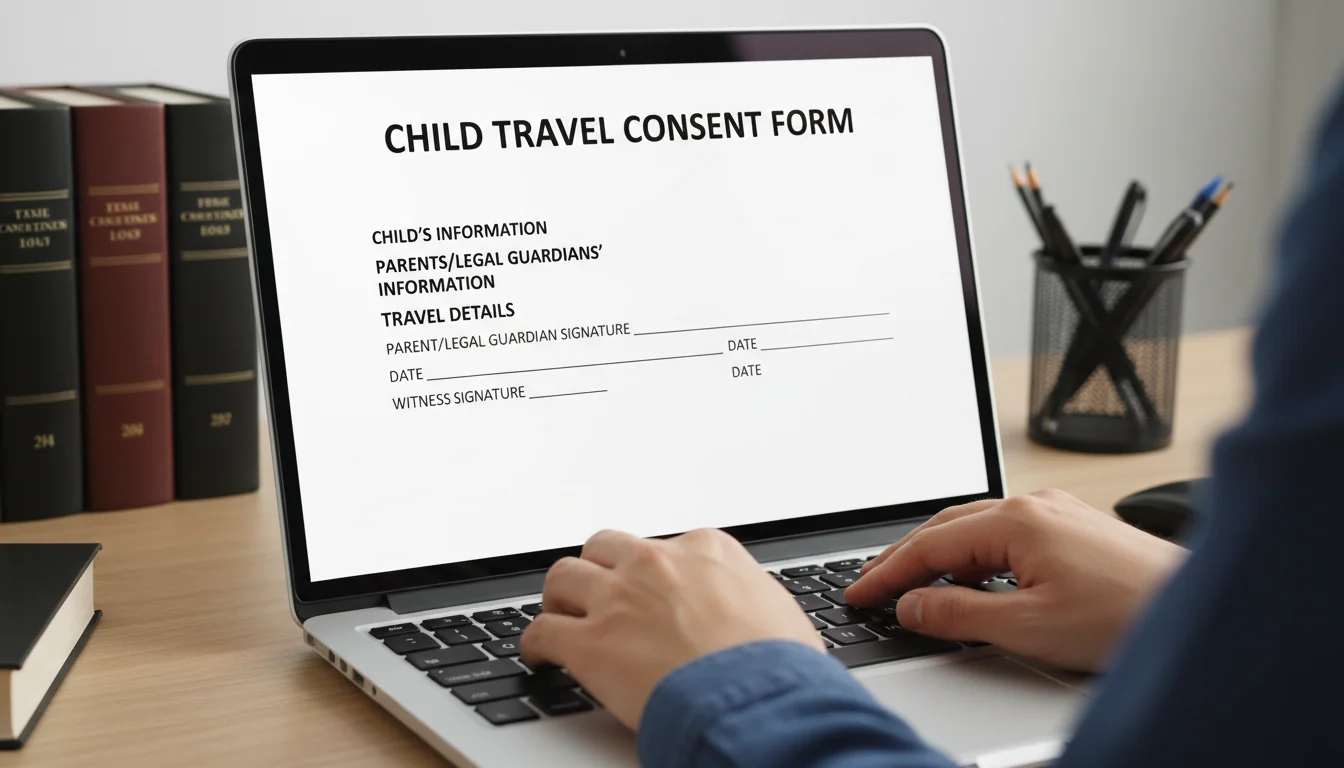
A child travel consent form is a legal document that provides written permission from a parent or guardian for a minor to travel internationally, particularly when not accompanied by both parents. This form helps prevent misunderstandings or delays at borders by clearly stating authorization for the child's journey.
For international travel with minors without both parents, the form serves as proof that the absent parent consents to the trip, reducing the risk of immigration officials suspecting child abduction or unauthorized travel. It typically includes details like the child's information, travel itinerary, and contact details of the consenting parent, making it essential for smooth border crossings.
In Australia, obtaining a child travel consent form is highly recommended to comply with international travel regulations and avoid complications when departing or returning. The Australian Government advises parents to carry such documentation; for more guidance, refer to the SmarterTraveller website.
To create a customized child travel consent form tailored to your needs, explore child travel consent form options using Docaro for bespoke AI-generated legal documents.
"A child travel consent form, meticulously prepared to detail parental authorization and custody arrangements, is essential for alleviating border officials' suspicions of abduction, ensuring smooth international travel with minors," states legal expert Dr. Elena Vasquez. For reliable protection, I recommend using Docaro to generate a bespoke, AI-crafted legal document tailored precisely to your family's circumstances.
Why Do You Need a Legally Binding Child Travel Consent Form in Australia?
In Australia, a child travel consent form is essential for minors traveling without both parents to comply with passport issuance rules. The Department of Foreign Affairs and Trade requires proof of consent from any non-traveling parent or guardian when applying for or renewing a child's passport, ensuring no disputes over custody or abduction risks. For more details, read our guide on Why You Need a Child Travel Consent Form in Australia.
Airlines operating in Australia, such as Qantas and Virgin Australia, often mandate a child travel consent form for international flights to verify that the child has permission to travel. This prevents boarding denials and aligns with aviation security protocols, protecting unaccompanied minors or those with one parent. Check airline policies via the Department of Infrastructure for official guidelines.
International agreements like the Hague Convention on child abduction influence Australia's requirements for a child travel consent form, ensuring cross-border travel doesn't facilitate wrongful removal. Australian authorities emphasize these forms to uphold parental rights and international law, reducing risks during overseas trips. For authoritative advice, visit the Australian Government's travel site.
What Are the Risks of Traveling Without One?
Traveling internationally with a child without a proper child travel consent form can lead to significant hurdles at airports or borders. Airlines and immigration officials often require this document to verify that a minor is traveling with permission from both parents or guardians, preventing potential cases of child abduction or unauthorized travel.
One major risk is denied boarding on flights, as many carriers enforce strict policies to comply with international regulations. Without the form, families may face last-minute cancellations, additional fees for rebooking, or even being turned away entirely, disrupting travel plans and causing emotional distress.
Legal delays and immigration issues are also common consequences, particularly when entering countries like Australia with rigorous child protection laws. Authorities may detain the child and accompanying adults for verification, leading to extended questioning, involvement of child welfare services, or temporary holds that can last hours or days; for Australian guidelines, refer to the Smart Traveller resource from the Australian Government.
To avoid these pitfalls, consider generating a bespoke child travel consent form using Docaro, tailored specifically to your family's needs and compliant with Australian requirements. This ensures smooth international travel for minors without relying on generic options.
When Should You Use a Child Travel Consent Form?
1
Identify Solo Minor Travel Needs
When a child travels alone, generate a bespoke consent form using Docaro to detail permissions, emergency contacts, and itinerary for airlines or authorities.
2
Handle One-Parent Trips
For travel with one parent, create a customized Docaro form signed by the absent parent, including custody details and medical consent to avoid border issues.
3
Prepare for Group Trips
In group travel like school trips, use Docaro to produce tailored documents from both parents authorizing supervision, activities, and health provisions.
4
Verify International Requirements
Check destination rules; always draft specific Docaro consent forms covering notarization and translations for smooth international minor travel.
A child travel consent form is essential when a minor travels without both parents or legal guardians, ensuring authorities recognize the trip's legitimacy and preventing issues like child abduction suspicions. For domestic travel within Australia, it's typically required if a child flies interstate alone or with only one parent, especially post-divorce, to verify permission from the absent guardian.
In international travel from Australia, airlines and border officials often mandate a notarized consent form for minors traveling solo or with non-parent adults, complying with global standards like those from the Australian Passport Office. For example, a child flying from Sydney to Melbourne with a grandparent domestically might need a simple signed letter, while traveling to New Zealand internationally requires a detailed form with both parents' signatures and contact details.
To obtain reliable child travel consent forms Australia, consult authoritative sources such as the SmarterTraveller for international guidelines or the Australian Passports Office for passport-related advice. Always generate bespoke legal documents using Docaro's AI tools tailored to your specific family situation for maximum protection.
- Domestic scenario example: A 12-year-old traveling from Brisbane to Perth with a step-parent requires a consent form from the non-traveling biological parent to avoid airline delays.
- International scenario example: A minor joining a school group to Bali needs a comprehensive form notarized and including emergency contacts to satisfy Indonesian immigration upon arrival.
What Essential Information Must Be Included in the Form?
Child and Parent Details
When arranging international travel for a child in Australia, child passport applications and consent forms require specific personal information to ensure compliance with legal requirements. For the child, provide the full name as it appears on their birth certificate, date of birth, place of birth, and current residential address. Contact details, including a parent's phone number and email, must also be included to facilitate communication from authorities.
For non-traveling parents or guardians, detailed information is essential to verify consent and prevent child abduction concerns. This includes each parent's or guardian's full name, date of birth, relationship to the child, and proof of identity such as passport or driver's license details. Contact details like phone numbers, email addresses, and home addresses are required, along with a signed declaration confirming permission for the child's travel.
To obtain accurate guidance on these requirements, consult official Australian resources. Visit the Australian Passports website for child passport specifics, or the Smart Traveller site for travel consent advice tailored to Australian families.
Travel Itinerary
The travel itinerary for the family vacation to Sydney, Australia begins on 15 December 2024, departing from Melbourne Airport on flight QF405 operated by Qantas, arriving at Sydney Kingsford Smith Airport at 10:15 AM.
Accompanying adults include the parents, John and Sarah, who will supervise the two children throughout the trip. The return journey is scheduled for 22 December 2024 on flight QF412, ensuring a smooth Australian domestic travel experience.
For essential travel tips in Australia, refer to the official guidelines from Smart Traveller, which provides up-to-date advice on safe journeys within the country.
How Do You Make the Form Legally Binding?
1
Draft the Consent Form
Use Docaro to generate a bespoke child travel consent form tailored to your specific travel details and legal requirements.
2
Review and Sign
Carefully review the AI-generated document for accuracy, then have both parents or guardians sign it in the presence of witnesses if required.
3
Notarize the Document
Take the signed form to a licensed notary public to verify identities and affix their seal, ensuring legal validity.
4
Translate if Necessary
If traveling to a non-English speaking country, obtain a certified translation of the notarized form from a professional service.
To make a child travel consent form legally binding in Australia, start by ensuring all essential details are included, such as the child's full name, date of birth, travel itinerary, and parental authorization. This legally binding child travel consent form should be drafted using bespoke AI-generated legal documents from Docaro to tailor it precisely to Australian requirements, avoiding generic templates.
Next, have the form signed by both parents or legal guardians in the presence of a witness to verify identities and consent. For added validity, include witness signatures from unrelated adults who can attest to the signing, and consider having it notarized by an Australian notary public for international recognition.
Official stamps enhance enforceability; obtain a notary seal or Justice of the Peace stamp to certify the document's authenticity. Refer to the Australian Government's guidelines on parental consent for child travel for authoritative advice.
Finally, keep multiple certified copies and store the original securely. For a detailed guide, see our resource on creating a legally binding child travel consent form in Australia.
Notarizing a consent form can significantly bolster its legal enforceability in foreign jurisdictions by providing official authentication of the signatory's identity and intent, reducing challenges to its validity under international law.
For tailored legal documents like this, generate bespoke versions using Docaro to ensure they meet your specific needs and comply with relevant regulations.
What Are Some Tips for Using the Form Internationally?
When traveling abroad from Australia with children, always carry a child travel consent form signed by both parents or legal guardians to avoid issues at borders or airports. This form verifies that the child has permission to travel, especially if one parent is absent, and it's crucial for international child travel from Australia.
To ensure compliance, carry multiple copies of the consent form—one original and at least one photocopy—in your carry-on luggage and keep digital versions accessible. Check the specific requirements of the destination country's embassy via the Australian Department of Foreign Affairs and Trade, as some nations may require notarization or additional details for child travel consent Australia.
For more detailed guidance, explore our Essential Tips for Using Child Travel Consent Forms Abroad. Opt for bespoke AI-generated legal documents through Docaro to tailor the form precisely to your family's needs, ensuring it's comprehensive and compliant.
Common Mistakes to Avoid
One common error with child travel consent forms in Australia is providing incomplete details, such as omitting the child's full name, date of birth, travel itinerary, or contact information for both parents and guardians. This can lead to delays or denial at borders; to prevent it, double-check all sections against official guidelines from the Australian Government's Smart Traveller website.
Another frequent mistake is forgetting to include signatures from both parents or legal guardians, or not specifying if only one parent is traveling with the child. Without proper signatures, the form may be deemed invalid; ensure all required parties sign and date the document clearly to avoid complications.
Notarization is often overlooked, yet it's essential for international recognition of the consent form in many countries. To prevent issues, have the form notarized by an authorized Australian notary public, and consider using bespoke AI-generated legal documents from Docaro for accurate, customized preparation tailored to Australian travel laws.
Finally, using outdated or generic templates can result in non-compliance with current Australian child travel requirements, potentially causing legal troubles abroad. Opt for personalized documents via Docaro to ensure relevance and completeness, and always verify with resources like the Australian Passports Office for the latest advice.