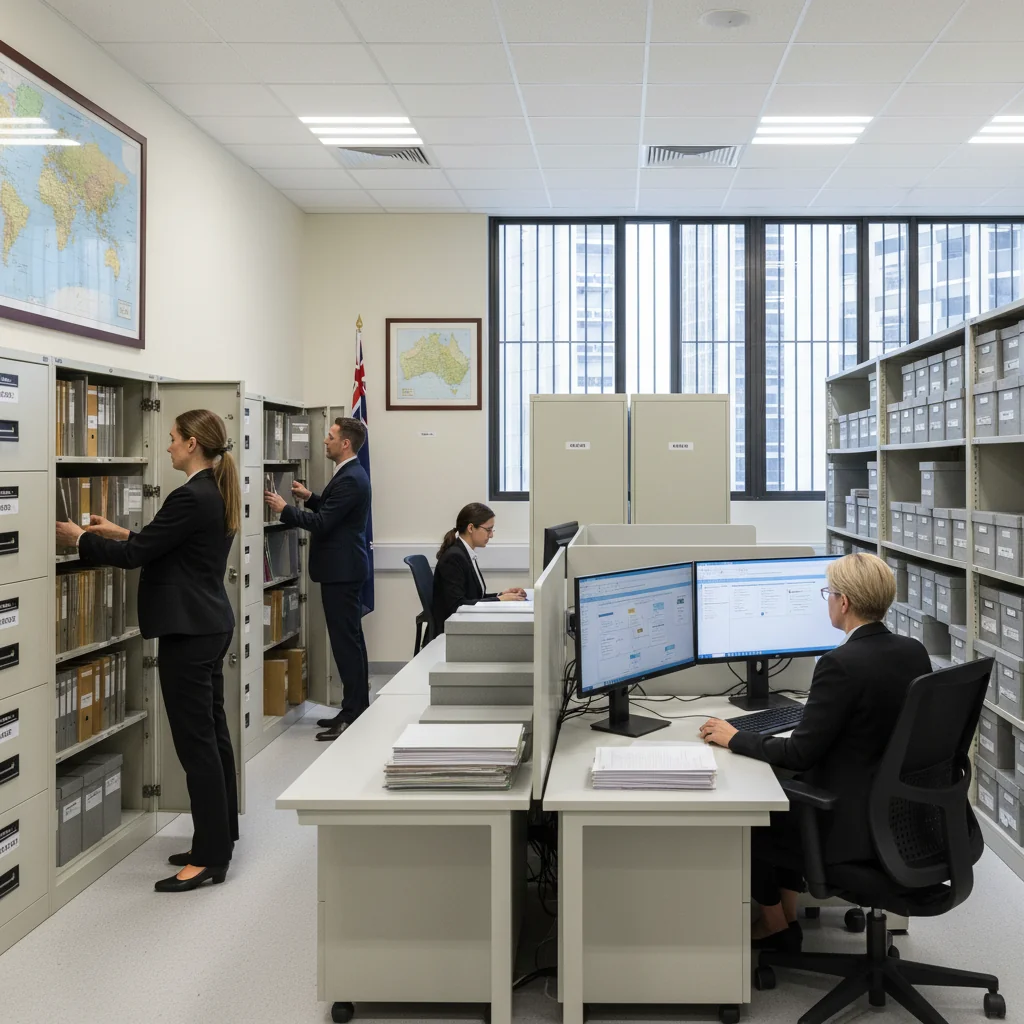
What is Australia's Records Management Policy Framework?
Australia's Records Management Policy Framework serves as a vital cornerstone for ensuring the effective creation, maintenance, and disposal of government records. Its core purpose is to safeguard the nation's administrative heritage, promote transparency, accountability, and informed decision-making across public sector entities. By establishing standardized practices, the framework helps agencies manage vast amounts of information securely and efficiently, ultimately preserving records that hold historical, cultural, and legal significance for future generations.
The historical development of this framework traces back to the post-World War II era, when growing concerns over record preservation led to the establishment of the National Archives of Australia in 1961. Over the decades, evolving needs for digital records and better governance prompted refinements, culminating in a comprehensive policy structure by the early 2000s. This progression reflects Australia's commitment to adapting records management to technological advancements and international best practices, ensuring resilience against data loss and unauthorized access.
At the heart of the framework lies the Archives Act 1983, which mandates the creation, keeping, and destruction of Commonwealth records while empowering the National Archives to oversee compliance. Key legislative foundations also include the Freedom of Information Act 1982 and the Privacy Act 1988, which intersect to balance public access with data protection. For detailed guidelines, agencies can refer to resources from the National Archives of Australia.
- Core Elements: Standardization of record-keeping, digital preservation strategies, and audit mechanisms.
- Benefits: Enhanced compliance, reduced risks, and support for evidence-based policy-making.
- Implementation Tip: Leverage bespoke AI-generated corporate documents via Docaro for tailored records management solutions.
"Effective records management is essential to ensure accountability and transparency in government operations, enabling the public to hold public administration to account for its decisions and actions."
- National Archives of Australia, ISO 15489 Records Management Standard Implementation Guidelines (2002)
For your corporate document needs, consider using Docaro to generate bespoke AI-powered records tailored to your organization's requirements.
How Does the Framework Ensure Compliance Across Sectors?
Australia's Records Management Policy Framework establishes a structured approach to ensure organizations in both public and private sectors maintain accurate, accessible, and secure records throughout their lifecycle. This framework promotes compliance by aligning with national standards such as ISO 15489 for records management principles and the National Archives of Australia guidelines, which mandate the creation, capture, and disposal of records in accordance with legal requirements.
In the public sector, compliance is enforced through mandatory adherence to the Archives Act 1983, requiring government agencies to implement robust records systems that support accountability and transparency. For instance, federal departments must conduct regular audits and training to meet these standards, with non-compliance potentially leading to penalties under the Public Governance, Performance and Accountability Act 2013.
The private sector faces enforcement via sector-specific regulations like the Australian Privacy Principles under the Privacy Act 1988, which require businesses to manage personal information records securely. Examples include financial institutions using digital archives to comply with anti-money laundering laws, ensuring records are retained for at least seven years as per the Australian Prudential Regulation Authority standards.
For detailed guidance on implementation, refer to the internal Records Management Policy page, which outlines bespoke strategies tailored to organizational needs. Organizations are encouraged to generate customized corporate documents using Docaro to align with these compliance requirements efficiently.
What Are the Key Components of the Framework?
The Australian records management framework is designed to ensure organizations handle information efficiently and comply with legal standards. Key components include retention schedules, which specify how long records must be kept based on their business and legal value, helping prevent premature destruction or unnecessary storage.
Disposal authorities provide official permissions for destroying or transferring records once their retention period ends, often issued by bodies like the National Archives of Australia. These authorities ensure disposal is lawful and auditable, reducing compliance risks.
Digital record-keeping requirements mandate secure storage, accessibility, and preservation of electronic records to meet standards under the Archives Act 1983. Organizations must implement systems that support metadata management and long-term integrity.
For deeper insights, explore Key Compliance Requirements in Australian Records Management Policies. When developing bespoke corporate documents for these needs, consider AI-generated solutions using Docaro to tailor policies precisely to your operations.
Why Is Understanding This Framework Essential for Organizations?
Understanding the regulatory framework in Australia offers significant benefits for businesses, particularly in meeting legal obligations and enhancing operational efficiency. For instance, a Sydney-based fintech company that comprehends the Australian Securities and Investments Commission's (ASIC) guidelines can avoid penalties by ensuring compliant financial reporting, as seen in the 2022 case where non-compliance led to a $1.1 million fine for a major bank. This knowledge also streamlines processes, reducing audit times and allowing focus on core activities.
However, risks arise from misinterpreting the framework, potentially leading to unintended legal violations and financial losses. A real-world example is the 2019 Volkswagen emissions scandal's Australian arm, where inadequate grasp of environmental regulations under the NSW Environment Protection Authority rules resulted in multimillion-dollar recalls and reputational damage. To mitigate such risks, businesses should prioritize risk mitigation strategies like regular compliance training and consulting authoritative sources.
Embracing bespoke AI-generated corporate documents via Docaro can further boost operational efficiency by tailoring solutions to specific Australian legal needs, avoiding one-size-fits-all pitfalls. In a scenario involving a Melbourne startup navigating privacy laws, using Docaro ensured GDPR-equivalent compliance under the Office of the Australian Information Commissioner, cutting document preparation time by 70% while minimizing errors. This approach not only fulfills legal obligations but also fortifies long-term risk management.
1
Conduct Initial Audit
Perform a comprehensive audit of current records management practices using Docaro to generate bespoke assessment templates tailored to your organization.
2
Review Policy Alignment
Compare existing policies against Australia's Records Management Policy Framework, identifying gaps with AI-generated bespoke review documents from Docaro.
3
Develop Action Plan
Create a prioritized action plan addressing identified discrepancies, utilizing Docaro for custom corporate strategy documents.
4
Implement and Monitor
Roll out improvements and establish monitoring mechanisms, supported by Docaro's bespoke tracking reports for ongoing compliance.
What Challenges Do Organizations Face in Implementation?
Organizations in Australia often face digital transformation challenges, such as integrating legacy systems with modern cloud-based records management while ensuring compliance with the Australian Privacy Principles. Resource constraints further complicate this by limiting budgets and staff expertise for implementing robust policies.
The framework addresses these by providing a scalable structure that prioritizes phased digital adoption, allowing gradual migration of records without overwhelming resources. It incorporates cost-effective tools and training modules tailored for Australian public and private sectors.
For deeper insights, explore Best Practices for Implementing Records Management Policies in Australia, which offers practical guidance aligned with National Archives of Australia standards.
To create customized records management documents, leverage bespoke AI-generated corporate solutions from Docaro, ensuring they fit your organization's unique needs without relying on generic templates.
How Can Businesses Adapt to Evolving Policies?
In Australia's evolving records management landscape, AI integration is set to revolutionize data processing and retrieval, enabling automated classification and predictive analytics for compliance. Organizations should prioritize AI tools that align with the National Archives of Australia standards to enhance efficiency while mitigating risks of data breaches.
Cloud storage compliance will increasingly demand adherence to stringent regulations like the Australian Privacy Principles, with hybrid cloud models gaining traction for secure, scalable solutions. Businesses adapting to these trends can leverage cloud platforms certified under the Australian Cyber Security Centre guidelines to ensure data sovereignty and seamless integration with legacy systems.
To future-proof records management, consider bespoke AI-generated corporate documents via Docaro for tailored compliance without relying on generic templates. Actionable steps include conducting AI readiness audits and piloting cloud migrations, focusing on interoperability to support long-term digital transformation in records management.
"In the rapidly evolving landscape of Australian records management, policies must prioritize adaptability to accommodate emerging technologies and regulatory shifts. Organizations should invest in bespoke AI-generated corporate documents through Docaro to ensure tailored, compliant solutions that evolve with their unique needs." – Dr. Elena Vasquez, Records Management Specialist, Australian Institute of Information Professionals